About Virola sebifera Aubl.
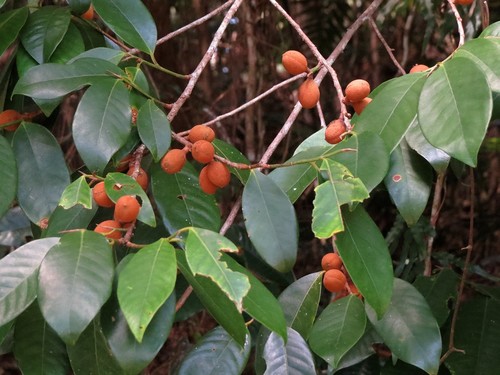
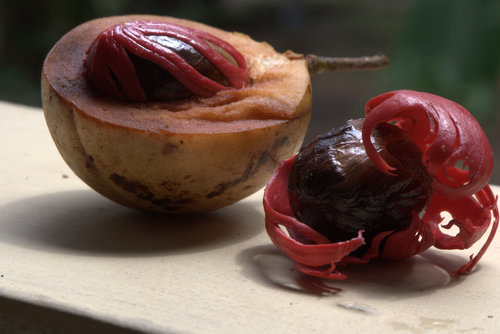
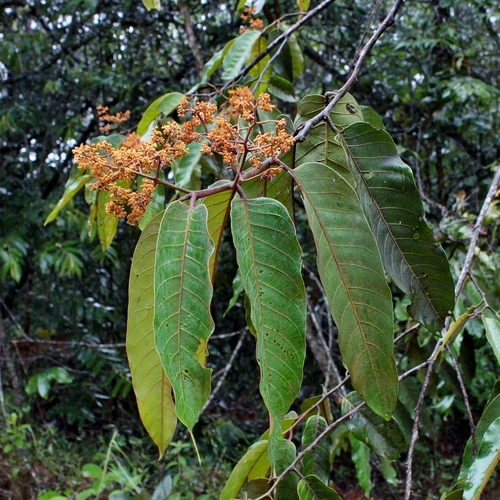
Virola sebifera Aubl. is a tall, slender tree that reaches 5–30 meters (16–98 feet) in height. Its leaves are simple, and can grow up to 30 centimeters (12 inches) long. This species produces small single-sex flowers that grow in panicles. Its fruit is reddish and oval-shaped, measuring about 10–15 millimeters (0.39–0.59 inches) long and around 11 millimeters (0.43 inches) in diameter. Species within the Virola genus, which contains 40 to 60 total species, are generally difficult to tell apart from one another. For industrial use, the seeds of Virola sebifera are processed to extract yellow, aromatic fats. These fats smell like nutmeg, turn rancid quickly, and are used in industrial production of fats, candles, and soaps. The fat extracted from this species has similar properties to cocoa butter and shea butter. The wood of Virola sebifera has an approximate density of 0.37 g/cm³ (0.013 lb/cu in). In traditional Venezuelan indigenous practice, shamans use smoke from the tree’s inner bark to treat fever, or cook the bark to expel evil ghosts. A homeopathic preparation called Myristica sebifera (abbreviated Myris) is made from the fresh red juice collected from injured bark of this tree. Homeopathic practice uses this preparation to treat conditions including abscesses, phlegmon, paronychia, furuncles, anal fissures, parotid gland infections, bacterial tonsillitis, and other ailments. To date, there is no empirical evidence that Myristica sebifera has any medical effectiveness, and any physiological effect would be highly implausible from a biochemical perspective.