About Vireolanius melitophrys Bonaparte, 1850
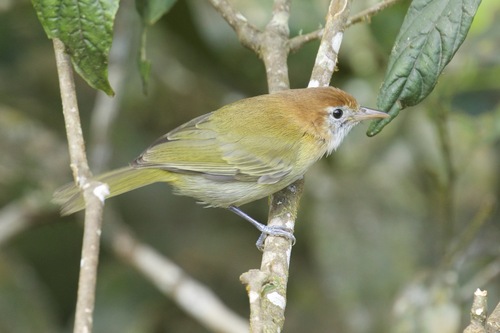
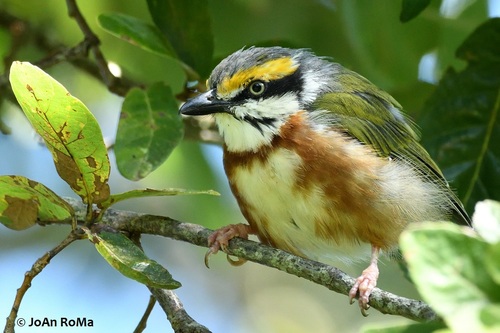
Vireolanius melitophrys, commonly called the chestnut-sided shrike-vireo and sometimes the honey-browed shrike-vireo, is a bird species belonging to the Vireonidae family. It is likely the largest species within the entire family. It is a widespread species that occurs in subtropical and tropical moist montane forests, ranging from Jalisco and San Luis Potosí, Mexico in the north to southern Guatemala.
This species is a specialist of humid pine-oak habitats, and is restricted to montane areas from central Mexico (Jalisco and San Luis Potosí) to southern Guatemala. It is not common anywhere, and has one of the lowest relative abundances among all medium-sized songbirds in Oaxacan pine-oak forests. Across all regions it occurs, it is confined to tropical and subtropical forest zones, mostly above 1,800 metres (5,900 ft). In San Luis Potosí, it lives mainly at elevations between 1,200 m (4,000 feet) and 2,000 m (6,700 feet). A study in Jalisco only recorded this species above 1,400 metres (4,600 ft), with most individuals found between 1,800 metres (5,900 ft) and the study area’s highest elevation of 2,000 metres (6,600 ft).
The chestnut-sided shrike-vireo forages for arthropods, which include caterpillars, wasps, grasshoppers, bugs, spiders, and beetles. It mostly forages among leaves and epiphytic vegetation in the inner foliage of trees. It beats large arthropods over approximately 70 millimetres (2.8 in) to death against branches, and sometimes holds prey in its feet while dissecting it with its bill. Less commonly, it eats vegetation and consumes fruit. It prefers to remain in the mid-height of trees, but will sometimes move nearly to the ground or up into higher portions of tree vegetation. It forages alone or in pairs, and is most active during the morning and late afternoon. It typically moves methodically from perch to perch in increments of around 1 metre (3.3 ft), and will occasionally join mixed-species foraging flocks.