About Vireo leucophrys (Lafresnaye, 1844)
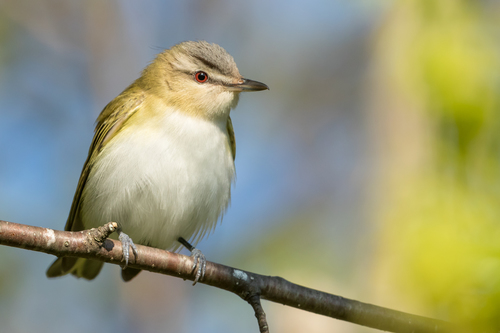
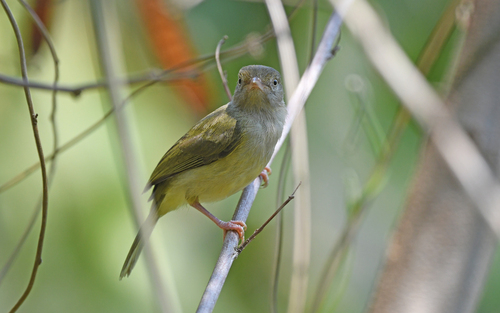
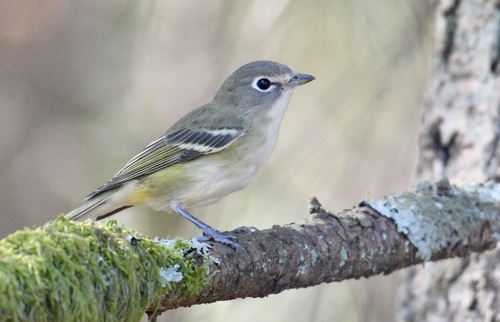
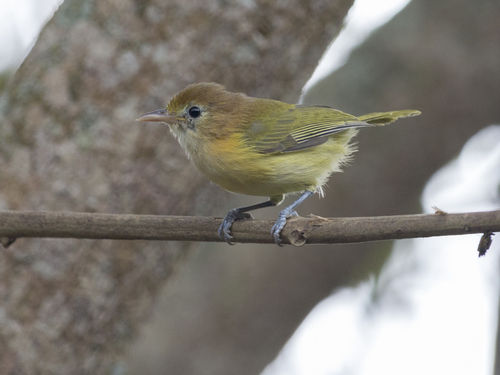
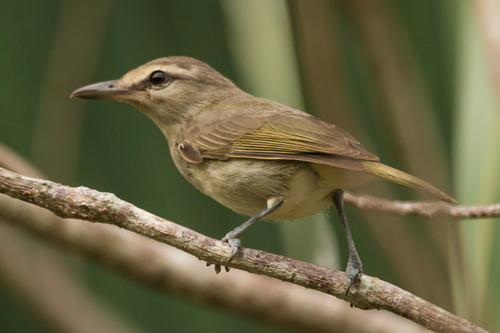
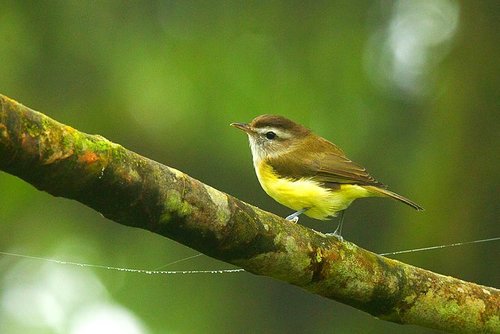
The brown-capped vireo (scientific name Vireo leucophrys, first described by Lafresnaye in 1844) measures 11.5 to 12.5 cm (4.5 to 4.9 in) in length and weighs approximately 12 to 13.5 g (0.42 to 0.48 oz). Males and females have identical plumage. Adults of the nominate subspecies V. l. leucophrys have an olive-brown crown, a white supercilium, a dusky lores spot, a dusky streak behind the eye, and grayish white ear coverts. Their upperparts, wings, and tail are grayish olive to brownish olive-green, with yellow edges on the wing coverts. Their throat and upper breast are grayish white, while the rest of their underparts are pale yellow. The other recognized subspecies differ from the nominate and each other in the following ways: V. l. eleanorae has a browner, less olive crown than the nominate; V. l. dubius has a browner, less olive crown than the nominate; V. l. amauronotus has a browner, less olive crown than the nominate; V. l. strenuus has a browner crown and upperparts than the nominate; V. l. bulli has a more blackish brown crown, blackish olive upperparts, and whiter underparts than other subspecies; V. l. palmeri is overall brighter than the nominate, with a somewhat more greenish back; V. l. costaricensis has a sooty brown crown and white throat; V. l. chiriquensis has a dark brown crown, grayish olive-green upperparts, and paler underparts than the nominate; V. l. dissors has a grayer crown and greener upperparts than the nominate; V. l. mirandae has a dark brown crown; V. l. josephae has a dark brown crown, dark olive back, and white throat and breast; V. l. maranonicus is similar to josephae, but has a lighter crown and more yellowish throat and breast; V. l. laetissimus has a brown crown. All subspecies share the same physical traits for soft parts: a brown iris, a dark brown, gray, or black maxilla, a horn or whitish mandible with a blue-gray streak, and blue gray or bluish gray legs and feet. Each subspecies of brown-capped vireo has a distinct geographic range: V. l. eleanorae occurs in the Sierra Madre Oriental of northeastern Mexico, from southern Tamaulipas to Hidalgo; V. l. dubius occurs in central Tamaulipas; V. l. amauronotus occurs in southeastern Mexico, from northeastern Puebla east to west-central Veracruz; V. l. strenuus ranges from Chiapas in southern Mexico south through Guatemala into Honduras; V. l. bulli ranges from southeastern Oaxaca and southern Chiapas into western Guatemala; V. l. palmeri occurs in Honduras; V. l. costaricensis occurs in northern and central Costa Rica; V. l. chiriquensis ranges from southern Costa Rica into western Panama; V. l. dissors ranges from Darién Province in eastern Panama south into the Western and Central Andes of Colombia; V. l. mirandae occurs in northern Colombia's Sierra Nevada de Santa Marta, the Serranía del Perijá along the Colombia-Venezuela border, the Venezuelan Andes, and the Venezuelan Coastal Range; V. l. josephae ranges from extreme southwestern Colombia south along the western Andean slope through Ecuador into northwestern Peru; V. l. leucophrys (the nominate subspecies) occurs in Colombia's Eastern Andes and ranges south along the eastern Andean slope through Ecuador to central Peru; V. l. maranonicus occurs on both slopes of the Andes in northern Peru; V. l. laetissimus ranges along the eastern slope of the Andes from southern Peru south to central Bolivia. The brown-capped vireo lives in forested areas within subtropical and temperate zones. Its habitat types include humid montane forest, mature secondary forest, and coffee plantations. In northern Central America, it is found in cloudforest, pine-oak forest, and oak forest. Its elevation range varies by region: 1,200 to 2,000 m (3,900 to 6,600 ft) in Mexico, up to approximately 1,550 m (5,100 ft) in northern Central America, 1,500 to 2,500 m (4,900 to 8,200 ft) in Costa Rica, mostly 700 to 2,500 m (2,300 to 8,200 ft) in Venezuela, 600 to 2,700 m (2,000 to 8,900 ft) in Colombia, mostly 1,300 to 2,600 m (4,300 to 8,500 ft) in Ecuador (going as low as 600 m (2,000 ft) in the southwest), 1,100 to 2,600 m (3,600 to 8,500 ft) in Peru, and 600 to 2,500 m (2,000 to 8,200 ft) in Bolivia. There is one single documented record of the species at 500 m (1,600 ft) in Venezuela.