About Viola reichenbachiana Jord. ex Boreau
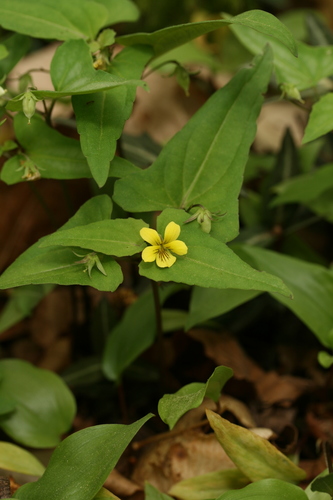
Viola reichenbachiana grows 5–15 cm (2.0–5.9 in) tall and spreads 10–50 cm (3.9–19.7 in) wide. It produces simple leaves arranged alternately along stems, with broad, heart-shaped leaf blades that have rounded, tooth-like edges. Leaves are either hairless or have very fine texture, and their tips may be pointed or hooked. Upper leaves are typically smaller and darker than lower leaves. Each leaf usually has 4 or 5 secondary veins branching off the central midrib on either side.
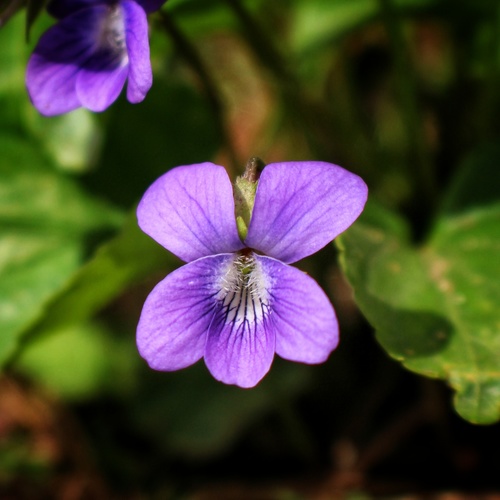
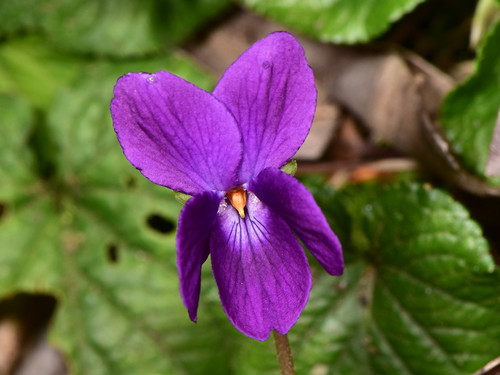
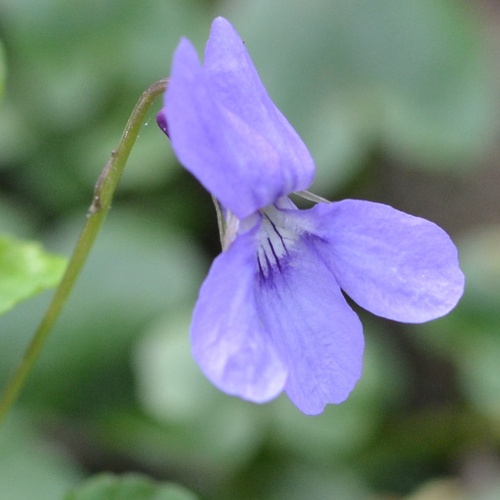
The flowers of Viola reichenbachiana are bisexual, meaning they carry both male and female reproductive structures. They have 3 to 5 narrow, non-overlapping petals in a characteristic dull purple, and measure 1.5 to 2 cm across. The flowers also typically have 5 small pointed sepals, 5 stamens, and 1 carpel. Their separated petals give them a star-like appearance, and they have distinctive deep violet-blue spurs. Pollination can happen through insect pollination, self-pollination, or cross-pollination.
Seeds of this species have relatively thick cotyledons to nourish the developing embryo, and the mature fruits that hold the seeds usually have 3 lobes. The plant grows rhizomatously, spreading via above-ground runners called stolons, and its roots have abundant root hairs to aid nutrient and water absorption.
Viola reichenbachiana is distributed across central Europe, extending through to parts of Asia near the Himalayan Mountains; it also occurs in England, Scotland, Wales, North Africa, China, India, and Pakistan. Its native habitats are hardwood forests and other broadleaved wooded areas. In cultivation, it grows best under full or partial sunlight with moderate watering, and can survive minimum temperatures as low as -20 degrees Celsius. It grows well in acidic to neutral, fertile, damp but well-drained soil. Plants usually take around 3 years to reach maturity, and are primarily grown for the ornamental value of their distinct flowers. Flowers bloom between late February and May, and fruits develop from May to August.
This species is preyed on by slugs, snails, red spider mites, gall midges, and aphids, and serves as a food source for fritillary butterfly larvae. Common diseases affecting it include anthracnose (which causes browning of petals and leaves), powdery mildew, stem rot, leaf rust that forms on the undersides of leaves, and smut pustules on leaf stalks that release spores.