About Viola pedunculata Torr. & A.Gray
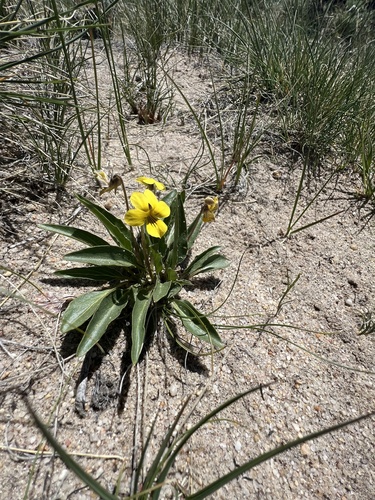
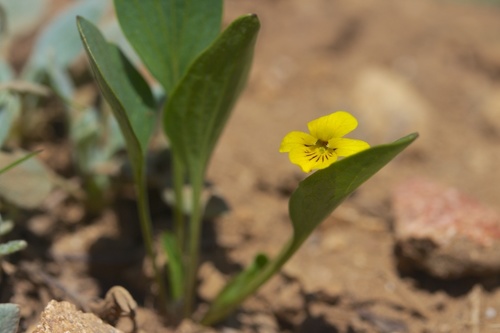
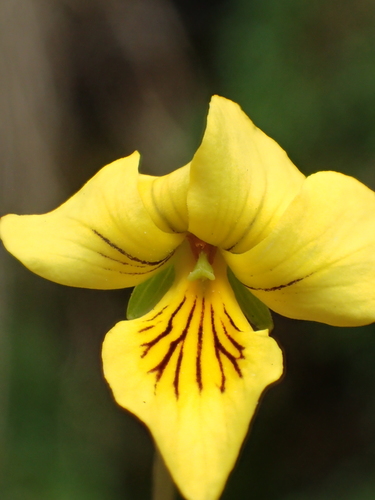
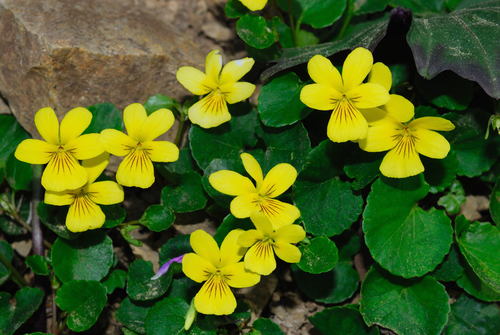
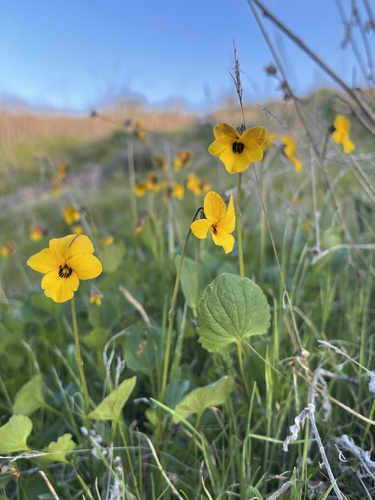
Viola pedunculata Torr. & A.Gray is a perennial plant that grows from a spongy rhizome. It is typically low-growing, and can reach a maximum height of 6 inches (15 cm). Its leaves are 1–5.5 centimetres (0.39–2.17 in) long, shaped cordate (heart-shaped) to deltate-ovate (oblong-triangular), with scalloped or toothed edges, and can be either glabrous or hairy. The plant loses its leaves in summer. Fragrant flowers bloom in March and April; their color ranges from a rich saturated yellow to yellow-orange, and the lower petals have brown-purple nectar guides. The flowers are hermaphrodite, and are pollinated by both native and introduced insects. When air-dried, each individual seed weighs approximately 4 milligrams (0.00014 oz). There are two recognized subspecies: Viola pedunculata ssp. pedunculata and Viola pedunculata ssp. tenuifolia. This species is cultivated as an ornamental plant by specialty plant nurseries. It is planted as a drought-tolerant seasonal groundcover, a flowering accent plant in native plant and wildlife gardens, and grown as a potted plant. It can be propagated by seed, or by nursery or garden division. The plant prefers rich soil, and requires no irrigation during its summer dormant period. When cultivated in colder climates outside its native range, where it is not hardy, it is most successful when propagated in a cold frame.