About Viola odorata L.
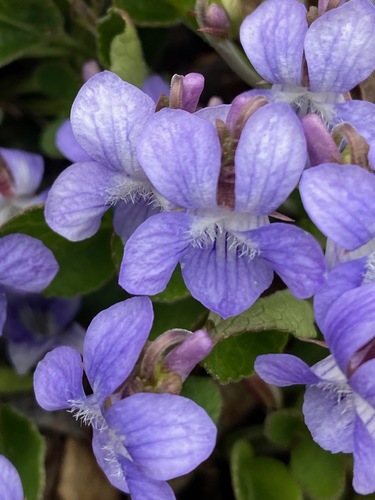
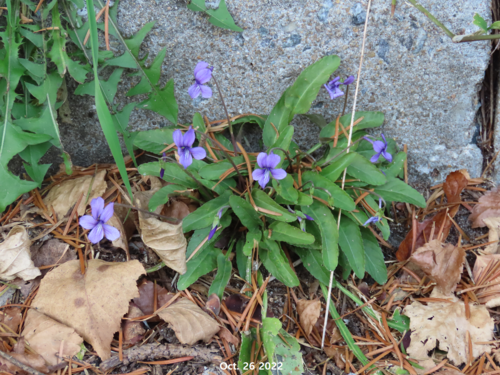
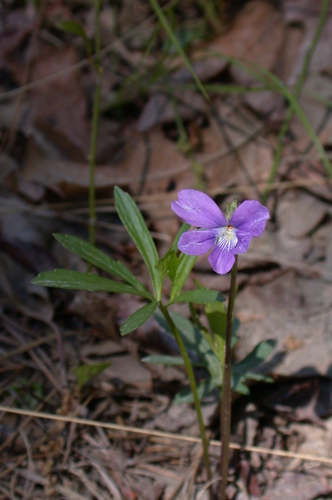
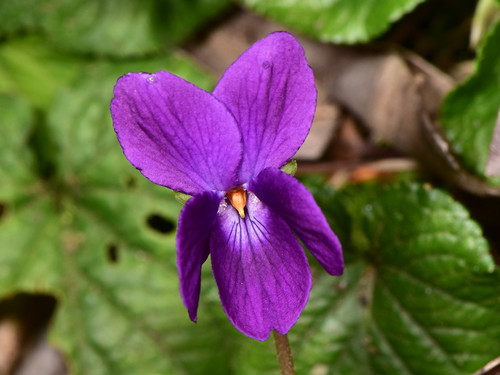
Viola odorata L. spreads via stolons, which are above-ground shoots. This perennial plant grows to 15 centimetres (6 in) tall. All its leaves and stems form a basal rosette. Leaf stalks have downward-pointing hairs. The leaves are kidney-shaped, growing up to 6 cm (2+1⁄2 in) long. Its flowers are typically either dark violet or white, and they are scented. The flower style is hooked, and does not end in a rounded appendage. When flowering, the plant stands 10–15 cm (4–6 in) tall, with a spread of 20–61 cm (8–24 in). Viola odorata is native to Europe south of Scandinavia, northwest Africa (Morocco, Algeria, and Tunisia), Macaronesia, the Caucasus, Western Asia, and Kazakhstan. It has been introduced to the Americas, Scandinavia, southern and eastern Asia, Australia, and New Zealand. It grows at forest edges or in forest clearings, and is also a common uninvited plant in shaded lawns and other garden areas. Its leaves and flowers are edible. True violet flower extract is produced for culinary use, especially in European countries. The French are well known for making violet syrup, most often produced from an extract of this species. In the United States, this French violet syrup is used to make violet scones and marshmallows. A number of cultivars have been bred for garden cultivation; V. odorata 'Wellsiana' has received the Royal Horticultural Society's Award of Garden Merit. The sweet scent of Viola odorata flowers has been popular, especially in the late Victorian period, leading to its use in creating many cosmetic fragrances and perfumes. There is some uncertainty about whether true violet flower extract is still used commercially in modern perfumes. It was still in use in the early 20th century, but by the late 1950s and early 1960s when Steffen Arctander wrote about it, production had almost disappeared. Violet leaf absolute, however, is still widely used in modern perfumery. Violet flowers have a one-of-a-kind scent; only a small number of other flowers have an even remotely similar odor. References to violets and their desirable fragrance date back to classical authors such as Pliny and Horace, when the flower was called "Ion". This name is the origin of ionones, the distinctive chemical compounds that give the flower its scent. In 1923, W. A. Poucher noted that the flowers were widely cultivated for their fragrance in both Europe and the East; flowers and leaves were collected separately and extracted to produce fragrance material. Flowers were also collected for use in confectionery galenical syrup and in medicine manufacturing. This plant contains a cannabinoid peptide called vodo-C1, which acts in vitro as a selective CB2 receptor agonist with no activity against CB1 receptors.