About Viola lanceolata L.
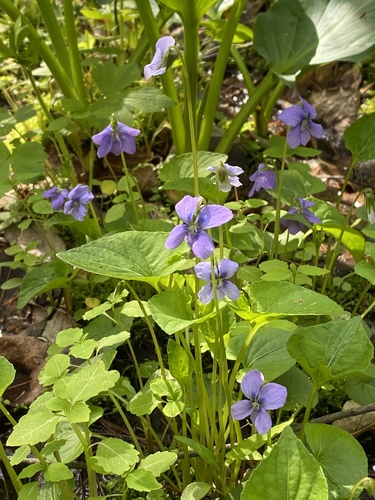
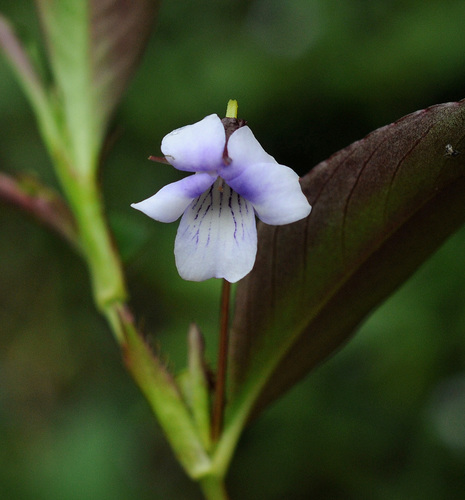
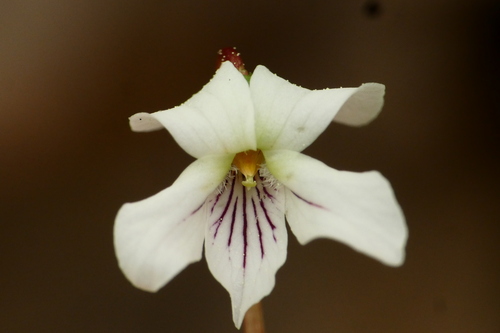
Viola lanceolata L. is a perennial forb or herb that grows 10–15 cm (4–6 in) tall. It has narrow, lance-shaped leaves with generally smooth surfaces; these leaves are sometimes wider in summer than in spring. It produces a smooth, slender stem. Flowers grow at the top of the stalk, and each flower holds five white petals. The bottom three petals usually have purple veins. This plant spreads via stolons, which are root-like structures that grow along the ground surface.
Viola lanceolata is native to North America, where it occurs across many United States states and in Canada. Its native status is native to the lower 48 United States, native to Canada, and native to Saint Pierre and Miquelon.
It can be found growing in bogs, swamps, wet meadows, and along shorelines in sandy soil. It blooms between May and June. Viola lanceolata frequently hybridizes with the northern white violet (Viola macloskeyi) to produce the primrose-leaved violet (Viola primulifolia). Viola primulifolia grows in similar habitats to its parent species, and has leaves with a shape intermediate between the lance-shaped leaves of Viola lanceolata and the typical heart-shaped leaves of northern white violet.