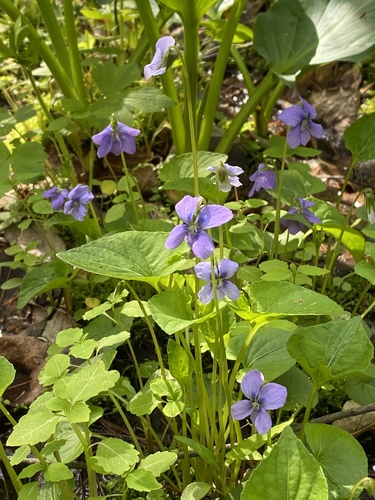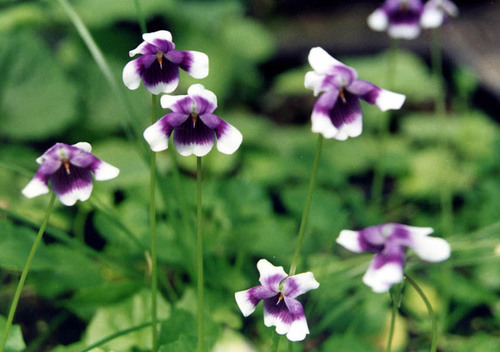
About Viola banksii K.R.Thiele & Prober
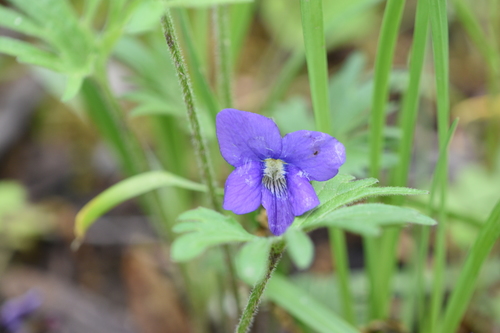
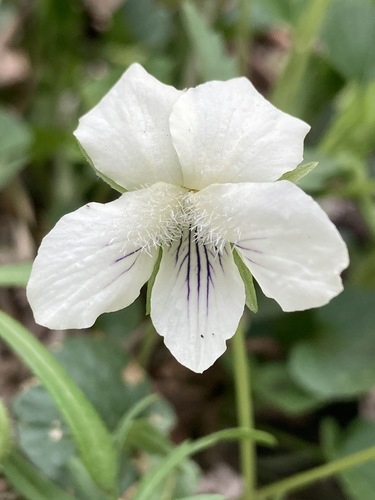
Viola banksii, commonly called native violet, is sold and grown in garden nurseries across Australia, and is widely cultivated and enjoyed in Australian gardens, particularly in the eastern part of the country. For many years this species was misidentified as Viola hederacea. A revision of the Viola hederacea species complex was carried out by Kevin Thiele in 2004, and the name Viola banksii was formally published by Kevin Thiele and Suzanne Prober in 2003. Though the native violet was first collected by Banks and Solander, the original type specimen was either lost or never formally deposited, and a later collection by Jacques Labillardière in Tasmania was used instead. Thiele found that the original type specimen of V. hederacea collected by Labillardière was not the hardier, more visually striking plant that had later been collected, cultivated, and widely sold. Thiele gave this second form, which is native to Australia’s east coast ranging from near Brisbane to Batemans Bay, the name Viola banksii. This species can be identified by its distinctive purple and white flowers. Fully developed leaves are almost circular in shape, have a deep, narrow v-shaped notch (sinus) at the base, and are typically a bright, fresh green. While Viola banksii is cultivated widely, it carries some risk of becoming naturalized outside its native range in certain areas; one established naturalized population has already been recorded at Mount Donna Buang near Melbourne. Viola banksii is very easy to grow, and adapts well to many different soil types, as long as it receives enough moisture and at least half shade or more in a garden setting. It can grow quite vigorously in heavier, moisture-retaining soils, spreading out to form a dense low natural groundcover.