About Viminaria juncea (Schrad.) Hoffmanns.
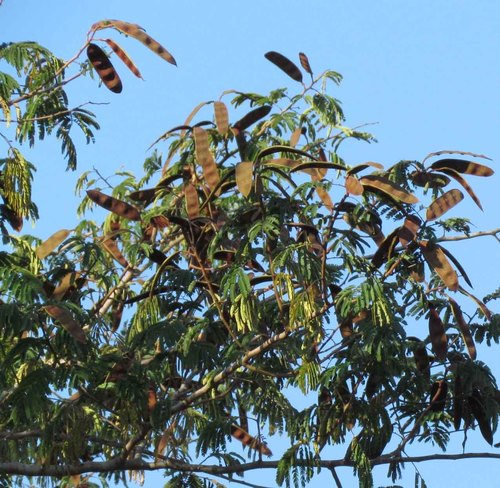
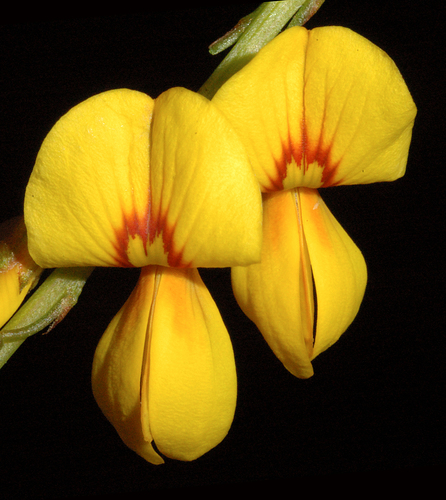
Viminaria juncea, commonly known as native broom, is an erect or weeping shrub that reaches 1.5 to 6 metres (4.9 to 19.7 feet) in height and 1 to 2.5 metres (3.3 to 8.2 feet) in width. It has a smooth trunk with ascending main branches, while its smaller branchlets often droop. Its leaves are long and thin, composed primarily of petioles, and measure 3 to 25 centimetres (1.2 to 9.8 inches) in length. Flowering takes place from September to January. Flowers grow in racemes that reach around 25 centimetres (10 inches) in length. Each flower is 0.8 centimetres (0.31 inches) in diameter, yellow with an orange corolla, and has a typical pea shape. After flowering, the plant produces small pods that each hold a single seed. This species prefers the swampy coastal habitat of southern Australia. Its distribution extends from near Geraldton south to Esperance in Western Australia, and along the eastern coast in Queensland, New South Wales, Victoria, and South Australia. In cultivation, native broom grows quickly in garden settings, but tends to lose vigour after reaching 5 to 10 years of age. It grows best in acidic to neutral soil with plenty of moisture, and can tolerate temperatures as low as −4 °C. Seed-grown plants of this species are sturdier than plants propagated from cuttings.