About Vimba vimba (Linnaeus, 1758)
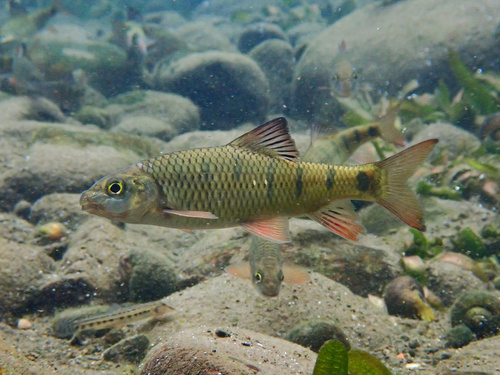
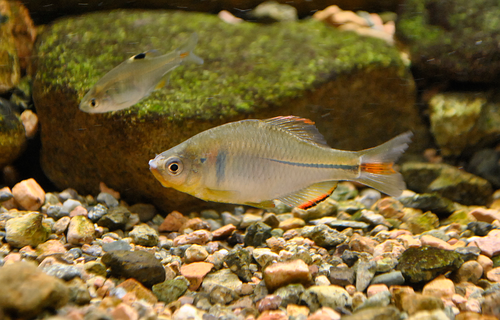
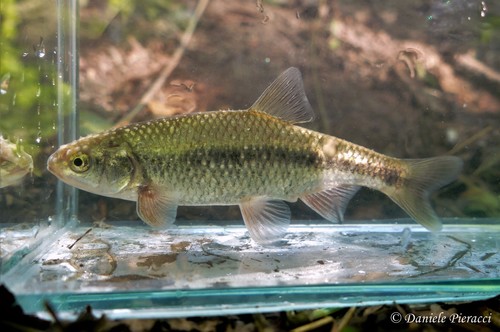
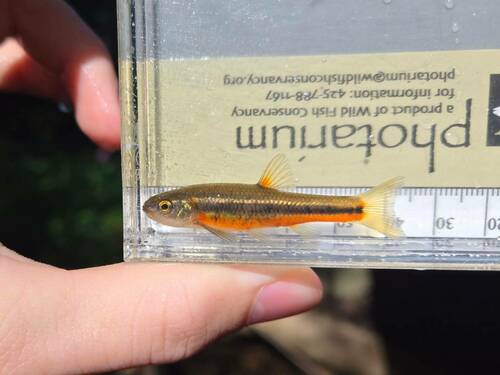
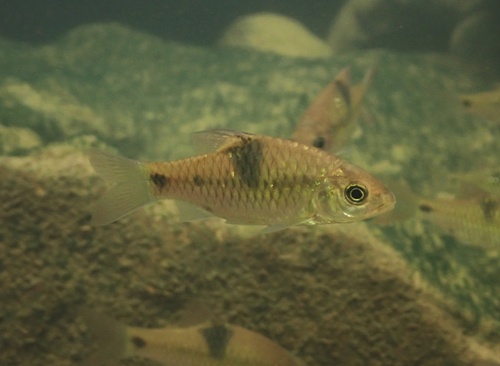
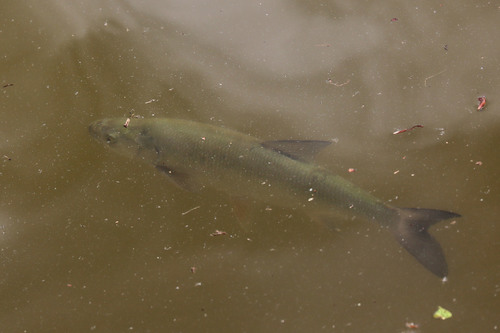
Vimba vimba (Linnaeus, 1758) was once classified as a bream because it shares the trait of having a long anal fin, but it is now placed in a separate genus. Its body is not as deep as that of a true bream. It also resembles the asp, but differs in mouth characteristics: Vimba vimba has a small mouth that sits behind the snout, while the asp has a large mouth with a protruding lower jaw. This species reaches a length of around 25 to 45 centimetres (9.8 to 17.7 in), and can weigh up to 2 kilograms (4.4 lb). It has small scales, with approximately 60 scales along the lateral line. The dorsal surface of Vimba vimba is deep bluish-green, and its flanks are silvery. Its eyes are yellow, and the bases of its pectoral and pelvic fins are reddish-yellow. Colouring becomes more vivid during the breeding season; in breeding males, the operculum, fin bases and belly may turn orange. Vimba vimba is distributed across Europe and Western Asia, in the drainage basins of the North Sea, Baltic Sea, Black Sea, Sea of Marmara, Aegean Sea and Caspian Sea. In the North Sea drainage, it is native to rivers between the Elbe and Ems, and has been introduced into the Rhine. It is not present in Denmark, northern Sweden or northern Finland within the Baltic Sea basin. In the Black Sea region, it has been extirpated from Crimea, and does not occur in the coastal area between the Melet River in Ordu Province, Turkey and southern Georgia. It is also found in Anatolia, in rivers that drain into the Aegean Sea and the Turkish portion of the Mediterranean. It has additionally been introduced into the lower Volga. This species inhabits brackish estuary waters, the lower and middle reaches of rivers, and some large subalpine lakes. A part of the Vimba vimba population is non-migratory and stays resident in rivers year-round.