About Vigna vexillata (L.) A.Rich.
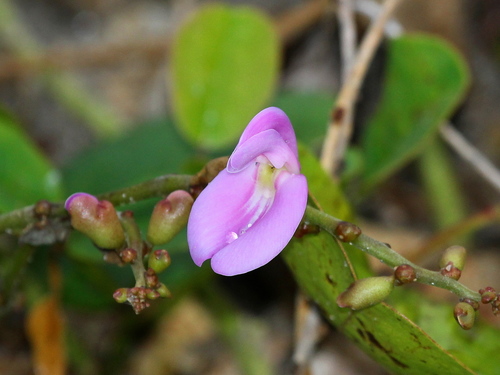
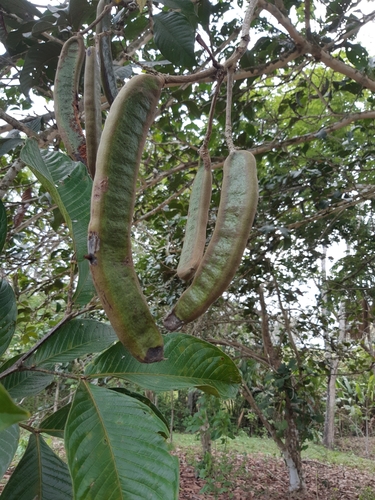
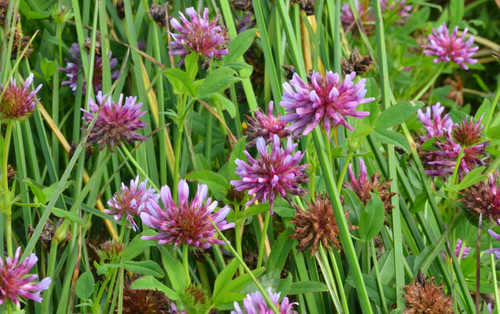
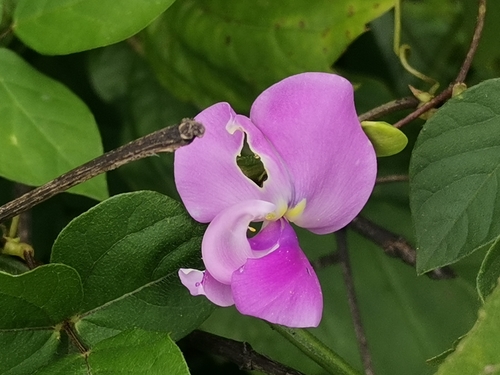
Vigna vexillata (L.) A.Rich. is a vigorous twining plant with fusiform tuberous roots. Its stems are typically covered in brownish silky hairs, also called trichomes, and they tend to scramble over the ground while twining into surrounding vegetation. This species produces compound leaves with three oval leaflets that are pointed at the tip; the terminal leaflet measures 7.5–15 cm (3.0–5.9 in) long. All leaflets are dark green and bear appressed trichomes on both surfaces. Sweetly scented flowers are pink, purplish, or yellow, reaching 2.5 cm (0.98 in) long. They grow on two- to four-flowered peduncles 7.5–30 cm (3.0–11.8 in) long, with the flower keel extended into an uncurved beak. The fruit is a recurved, linear pod 7.5–9 cm (3.0–3.5 in) long, which is covered in silky hairs. Vigna vexillata has strong seedling vigor and robust growth during the wet season, and it effectively suppresses weeds. Its seeds shatter naturally, and it does not provide good standover feed for the dry season. It is susceptible to both frost and fire. Despite being hairy, the plant is quite palatable. Vigna vexillata grows well in a wide range of conditions, most commonly found in grasslands and disturbed areas, where it can occur as a weed. In India, it flourishes at altitudes between 1,200–1,500 m (3,900–4,900 ft) in the Himalayan foothills and the hills of eastern and north-eastern India. In northern Australia, it grows in regions with monsoons that bring 1,250–1,500 mm (49–59 in) of annual rainfall and a long dry season, where it occurs on acidic soils rich in aluminum. Vigna vexillata is a very important food crop in several areas, for example Namibia, where it is commonly harvested from the wild for local use. Its use has spread beyond its native range, and it is now sometimes cultivated for its edible tubers. It is also grown as a green manure and ground cover crop, especially in poor soils. The starchy root can be eaten raw or cooked; the tubers have soft, easily peeled skin and creamy flesh, and they are particularly rich in protein when boiled or roasted. Young leaves, young pods, and seeds are also cooked and consumed as a vegetable.