About Vigna marina (Burm.) Merr.
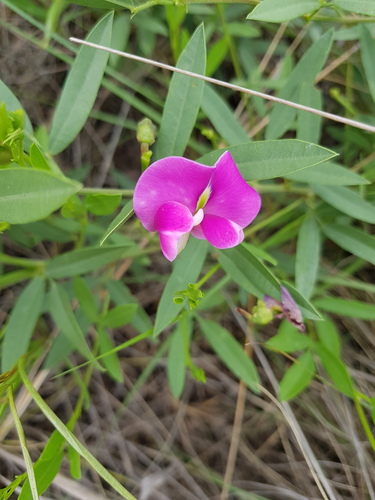
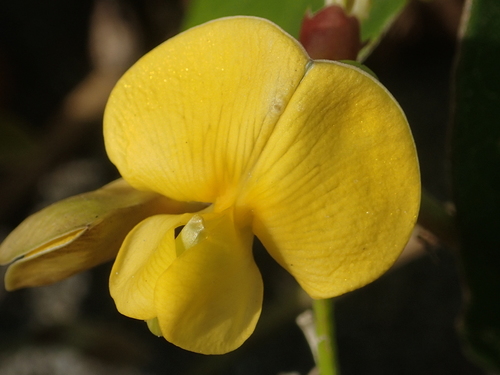
Vigna marina (Burm.) Merr. is a prostrate, creeping, perennial vine, also commonly called beach pea, nanea, and notched cowpea. It is a legume species belonging to the family Fabaceae. This species is salt-tolerant, and grows on tropical beaches around the world. Its confirmed locations include Hawaii, various Pacific islands, Puerto Rico and other Caribbean islands, the coast of Bahia Brazil, the Atlantic and Indian coasts of Africa, Madagascar, the Seychelles, India, Sri Lanka, Indo-China, the Chinese island of Hainan, Malesia, and the Australian coasts of Queensland and the Northern Territory. Vigna marina typically grows at the vegetation line on sandy beaches, frontal dunes, and beach ridges near the seashore. Rarely, it can be found on inland sea cliffs and dry slopes growing among shrubs, up to approximately 395 feet above sea level. Early Hawaiians used this plant to treat and help heal wounds including boils, running sores, or ulcers that were locally called hēhē. They ground the plant's leaves, stalks, stems, and midribs (called kua), then applied the softened ground material directly to the affected area. Like many other pea species, Vigna marina can fix nitrogen from the air surrounding its roots. This process is carried out by microorganisms that live on the root nodules of the plant. The resulting nitrogen is used by the plant itself, and also increases the nitrogen content of the surrounding sand, which helps other nearby plants grow. Vigna marina also helps prevent coastal erosion.