About Vidua paradisaea (Linnaeus, 1758)
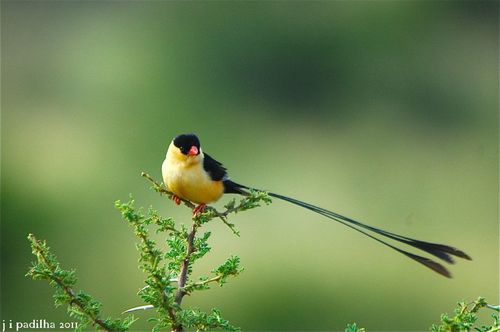
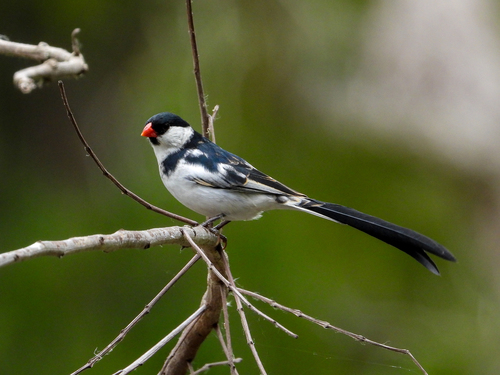
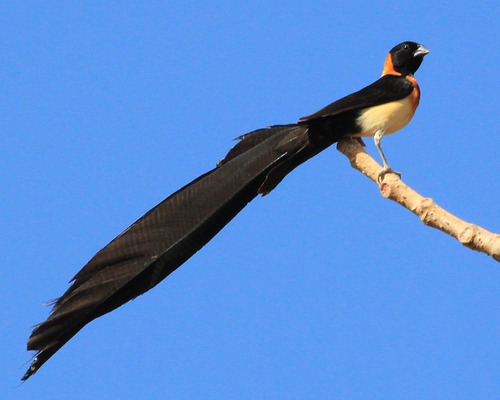
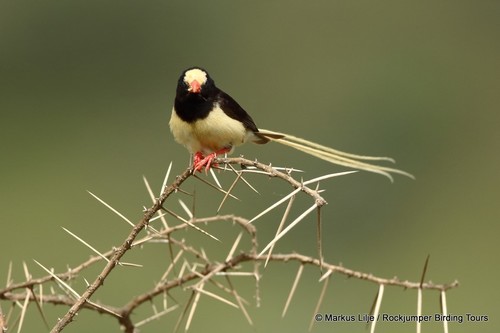
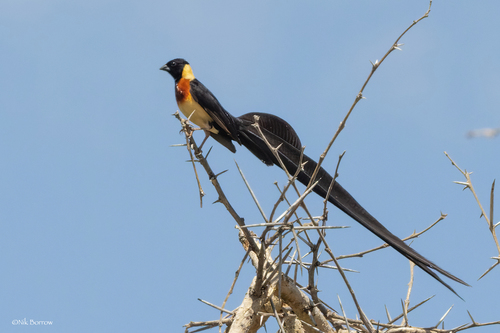
The long-tailed paradise whydah, with the scientific name Vidua paradisaea (Linnaeus, 1758), has distinct physical traits that vary by sex and life stage. Breeding males have black heads and backs, a rust-colored breast, a bright buffy-yellow nape, and a white abdomen. They also have broad, elongated black tail feathers that can reach 36 cm or more in length. On average, this species measures about 13 cm in total length and weighs around 21 grams. When in non-breeding plumage, males are difficult to distinguish from females and from individuals of other Viduidae species; Viduidae species differ from one another in size, non-breeding plumage coloration, and mating songs. Females typically have a grey bill and greyish-brown plumage with blackish streaks, and their undertail feathers are mostly white. Non-breeding males have mostly browner plumage with black stripes on the crown, black markings on the face, a deeper brown chest, and a cream-colored abdomen. This species is found in grassland, savanna, and open woodland, and it occupies bushed grassland areas around cultivated land. Most of the time, long-tailed paradise whydahs stay away from surface water. Long-tailed paradise whydahs are brood parasites, meaning they lay their eggs in the nests of other songbirds. They roost together in flocks during both the breeding and non-breeding seasons. Males develop the ability to mimic the songs of their host species, and this species has been recorded mimicking the songs of the Melba Finch. Studies show that female long-tailed paradise whydahs respond more strongly to songs mimicked by males of their own species than to those of closely related species. Females use this song mimicry to discriminate between potential mates, and prefer males that were raised by the same host species. Hybridization can occur between this species and other closely related paradise whydahs. Hybridization happens when females do not select mates based on song mimicry, and instead choose males based on other traits such as plumage and flight displays—either when these traits are more important to females than song, when appropriate conspecific males with the correct host song are not available, or when males of other parasitic species engage in unsolicited copulation with females of this species. Long-tailed paradise whydahs are granivorous, and feed on small seeds that ripen and fall to the ground. They use a foraging method called the double scratch: they use both feet almost simultaneously to scratch the ground and uncover seeds in dust, then hop backwards to pick up the seed. They also use their tongue to process seeds: they dehusk grass seeds with their bill by rolling each seed one at a time back and forth with their tongue against the ridge of the palate.