About Vicugna pacos (Linnaeus, 1758)
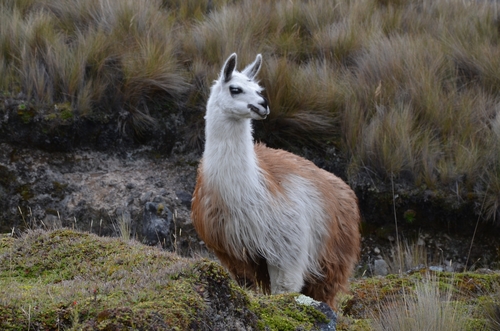
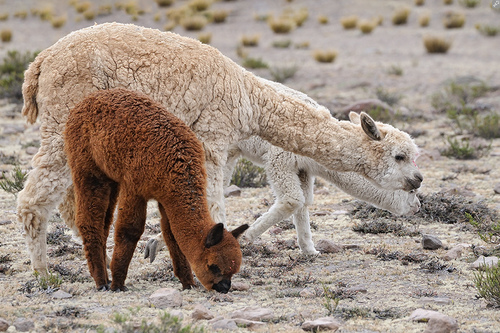
The alpaca (scientific name Vicugna pacos, previously classified as Lama pacos) is a domesticated South American camelid. Historically, alpacas were kept in grazing herds at high elevations in the Andes of southern Peru, western Bolivia, Ecuador, and northern Chile. In more recent times, alpacas are raised on farms and ranches across the world, with thousands of new animals born and raised each year, and they are particularly popular in North America, Europe, and Australia. There are two existing modern breeds of alpaca, distinguished by their endemic region and fiber (wool) type: the Suri alpaca and the Huacaya alpaca. Both breeds produce highly valued fiber: Suri alpaca fiber grows in straight locks, while Huacaya fiber has a crimped, wavy texture and grows in bundles. Like sheep's wool, alpaca fiber is used to make knitted and woven products. Alpacas are visually and genetically similar to their relative the llama, and are often confused with them, but alpacas are visibly shorter and are primarily bred for their wool. By contrast, llamas have long been valued as livestock guardians (a replacement for dogs) and as pack animals (beasts of burden), due to their skilled mountain-climbing abilities. All four South American camelids are closely related and can successfully crossbreed with one another. It is believed that both alpacas and llamas were domesticated and selectively bred from their wild ancestors between 5,000 and 6,000 years ago: alpacas are descended from the smaller, fine-haired vicuña, while llamas descend from the larger, stronger guanaco. Alpacas communicate through body language, and spit to display dominance when they are distressed, fearful, or agitated. Male alpacas are more aggressive than females; in some cases, alpha males will immobilize the head and neck of weaker or challenging males to demonstrate their strength and dominance. In the textile industry, the term "alpaca" primarily refers to the hair of Peruvian alpacas. More broadly, it is also used for a style of fabric originally made from alpaca hair that may now be made from other fibers such as mohair, Icelandic sheep wool, or high-quality wool from other sheep breeds. In commercial trade, clear distinctions are drawn between alpaca fiber and different styles of mohair and luster. In their natural range, alpacas can be found across most of South America, and they typically live in temperate conditions at high mountain elevations. They are easy to care for because they do not require a specific type of environment. In their natural habitat, alpacas live near other animals including flamingos, condors, spectacled bears, mountain lions, coyotes, llamas, and sheep. Female alpacas are induced ovulators, which means ovulation is triggered by the act of mating and the presence of semen. Females usually conceive after a single breeding, though they occasionally experience fertility issues. Artificial insemination is technically difficult, expensive, and uncommon, but it is possible to perform. Embryo transfer, by contrast, is more widely used. A male alpaca is usually ready to mate for the first time between two and three years of age. It is not recommended to breed a young female until she is fully mature and has reached two-thirds of her mature adult weight. Overbreeding young females before they are mature is thought to be a common cause of uterine infections. Since age of maturation varies widely between individual alpacas, novice breeders are generally advised to wait until females are 18 months old or older before starting breeding. Alpacas can breed at any point throughout the year, but breeding is more difficult in the winter, so most breeding takes place in autumn or late spring. The most common mating method is pen mating, where both the female and chosen male are moved into a pen together. Another method is paddock mating, where one male is allowed to roam loose in a paddock with multiple females. The average alpaca gestation period is 11.5 months, and pregnancies almost always produce a single offspring, called a cria. Twins are rare, occurring in roughly one out of every 1,000 births. Crias generally weigh between 15 and 19 pounds at birth, and are able to stand within 30 to 90 minutes after being born. Two weeks after giving birth, a female is usually receptive to breeding again. Human-mediated weaning of crias typically happens when they reach six months old and 60 pounds in weight. Many breeders prefer to let the female decide when to wean her offspring, however, and weaning may happen earlier or later depending on the cria's size and emotional maturity. The average alpaca lifespan is between 15 and 20 years, and the longest-lived alpaca ever recorded reached 28 years of age. Unlike sheep and goats, which are often used to clear overgrown land because they will readily eat many toxic plant species, a large number of common plant families are highly poisonous to alpacas. These poisonous families and genera include: Amaryllidaceae (amaryllis), the dogbane-milkweed family Apocynaceae (including Asclepias, Hoya, Nerium, and Plumeria), the aroid family Araceae (including Anthurium, Colocasia, Monstera, Philodendron, and Zantedeschia), Asparagaceae (including Agave, Asparagus, and Dracaena), Asteraceae (including daisies and Senecio), Caryophyllaceae (including Dianthus), some Ericaceae (including azaleas and heather), Euphorbiaceae (including castor bean, Croton, and poinsettia), Fagaceae (beech and oak, including acorns), ferns (especially Pteridium), African rue, Iridaceae (including Crocus, Freesia, Gladiolus, and Iris), Melanthiaceae (corn-lilies), Polygonaceae (buckwheat, knotweed), ragweed, Ranunculaceae (buttercups), and the foliage of orange trees and other Citrus species, among others.