About Victaphanta compacta (J.C.Cox & Hedley, 1912)
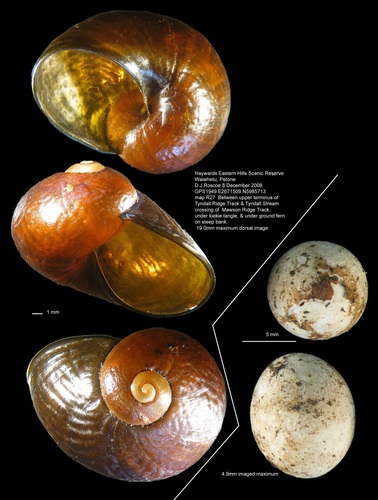
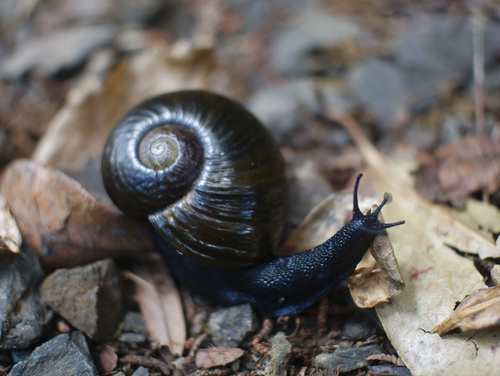
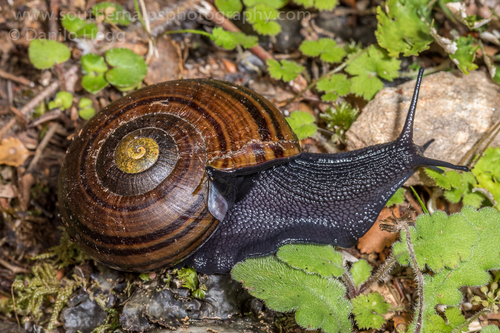
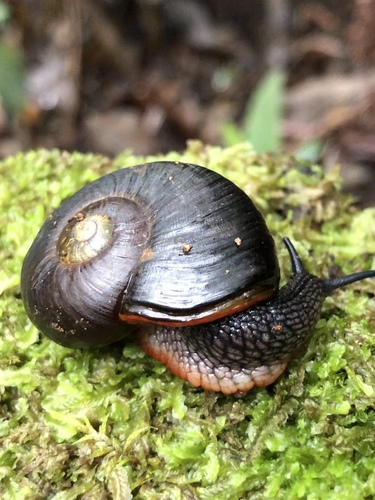
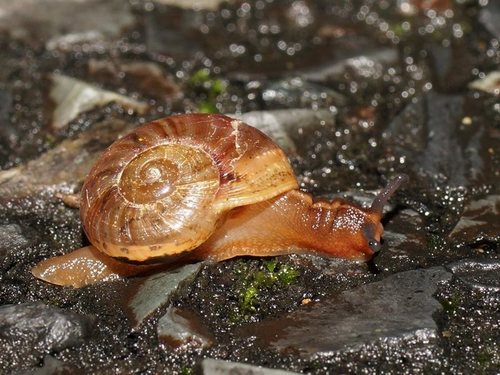
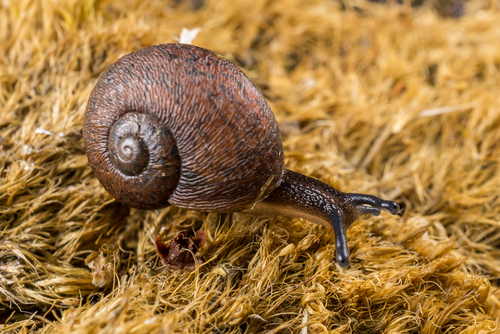
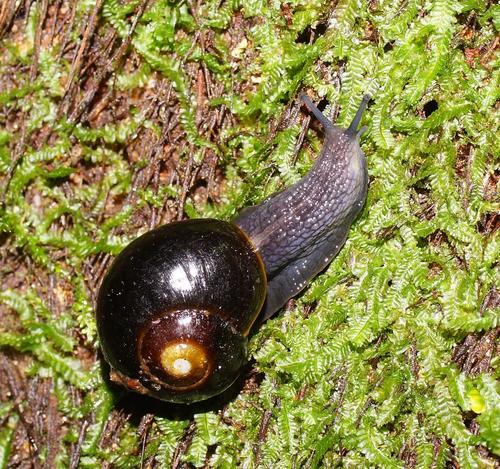
This species, commonly known as the Otway Black Snail, has the scientific name Victaphanta compacta (J.C.Cox & Hedley, 1912). The snail's body ranges in color from grey-blue to black. Its shell is spherical with four whorls, and varies from glossy dark brown to black, with variable yellow-brown tinges on the inner whorl. The shell reaches a maximum diameter of 28 mm, and is positioned toward the tail end of the body. It is thin, lightweight, moderately flexible, and composed mostly of conchin. The Otway Black Snail can be distinguished from other Victaphanta species by its specific geographic range, its globular shell shape, the lack of an orange frill around its foot, and the absence of orange mucus. It is partially nocturnal, and is a carnivorous species that feeds on other snails, slugs, earthworms, and soft-bodied insect larvae, and is not cannibalistic. Unlike herbivorous snails, it does not have a jaw. Instead, it has long, sharp, backward-pointing teeth arranged in V-shaped rows on the radula, which is located on the underside of the snail's foot; these teeth hold prey while it is consumed. This species is endemic to Australia, where it occurs in the Otway Ranges of Victoria.