About Viburnum trilobum Marshall
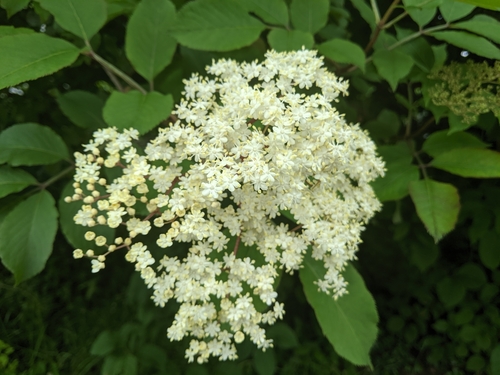
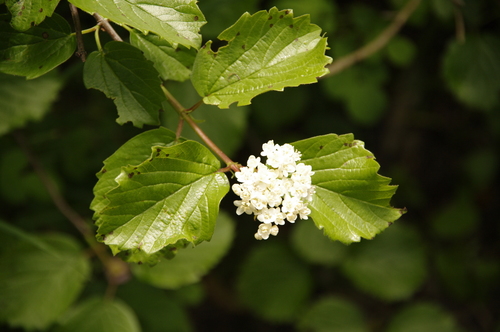
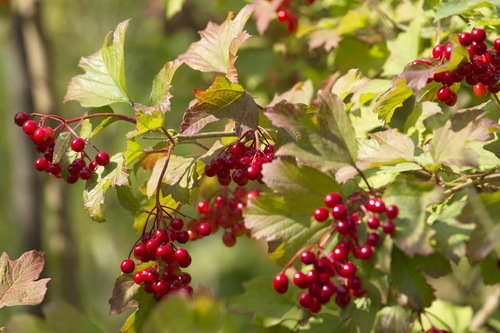
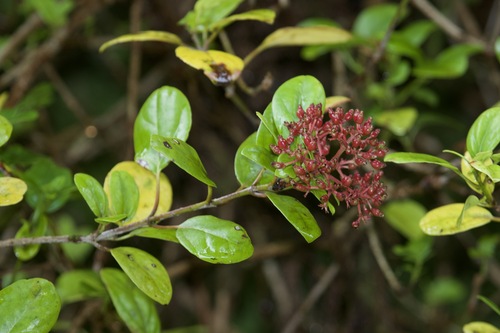
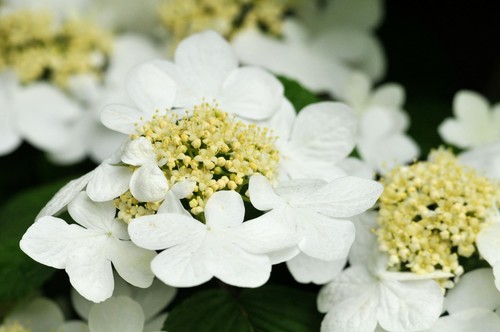
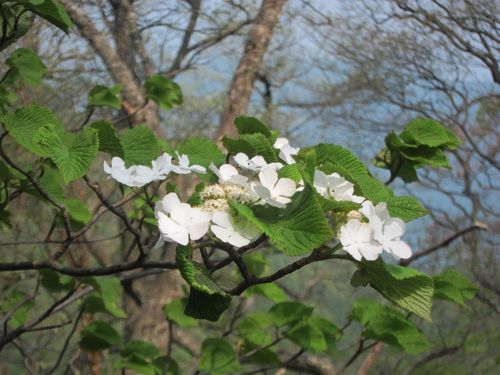
Viburnum trilobum Marshall is a deciduous shrub that reaches 4 meters (13 feet) in height. Its bark is gray, rough, and has a scaly texture. Its stems grow in an arching habit and are very dense, while its twigs are reddish-brown in color. The leaves are arranged oppositely, are three-lobed, and measure 6–12 cm (2+1⁄4–4+3⁄4 in) long by 5–10 cm (2–4 in) broad, with a rounded base and serrated margins. These leaves are superficially similar to many maple leaves, and can be most easily distinguished by their somewhat wrinkled surface with impressed leaf venation. This species has green leaf buds, with valvate bud scales. Its flowers are white, and grow in corymbs up to 13 cm (5 in) in diameter at the tips of stems. Each corymb has a ring of outer sterile flowers 2–2.5 cm (3⁄4–1 in) diameter with conspicuous petals, surrounding a center of small 5 mm (0.20 in) fertile flowers; the flowers are pollinated by insects. The fruit is an oblong red drupe 15 mm (0.59 in) long and 12 mm (0.47 in) broad, which contains a single flat, white seed. Plants of this species begin producing fruit at approximately five years of age; when animals including birds eat the fruits, they deposit the seeds in new locations via their droppings. This species is often called highbush cranberry, but it is not a true cranberry. The common name comes from its red fruits, which look superficially like cranberries, have a similar flavor, and ripen at the same time of year. After the large seeds are removed, the sour, vitamin C-rich fruits can be eaten raw, or cooked into a sauce to serve with meat or game. Viburnum trilobum is used interchangeably with V. opulus under the common name Cramp Bark. As the common name suggests, the bark of this species is used to treat uterine cramps, dysmenorrhea, PMS, cramps of other smooth muscles including the intestines, and some symptoms of miscarriage. Its antispasmodic effects are often attributed to the presence of valerenic acid.