About Viburnum lentago L.
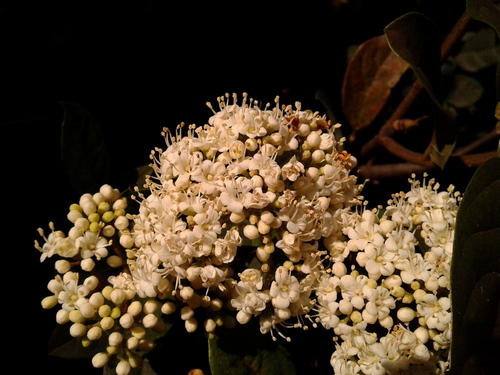
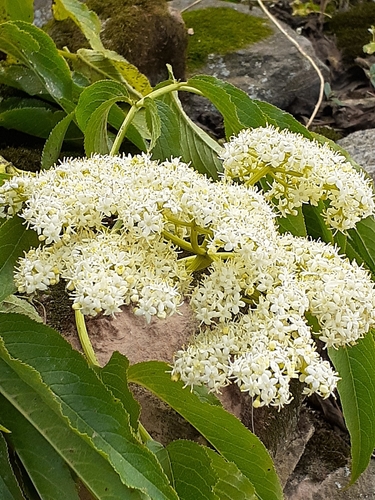
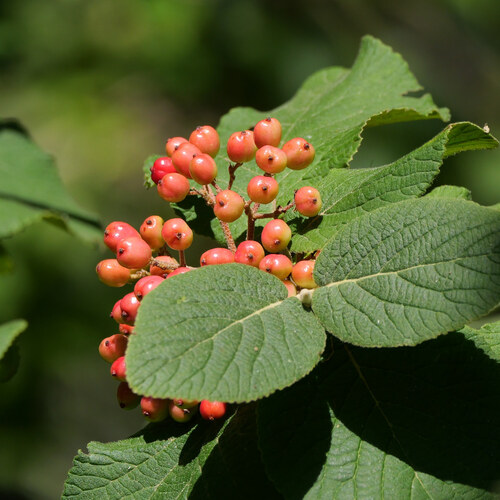
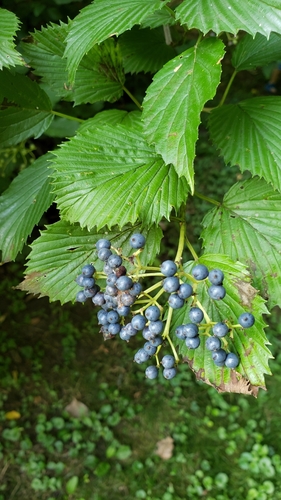
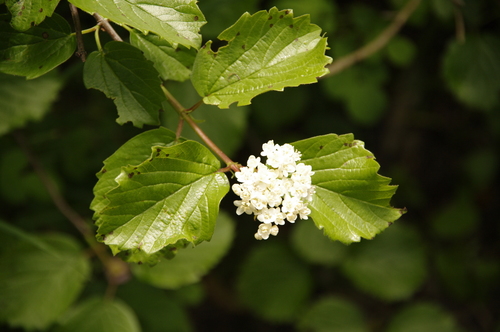
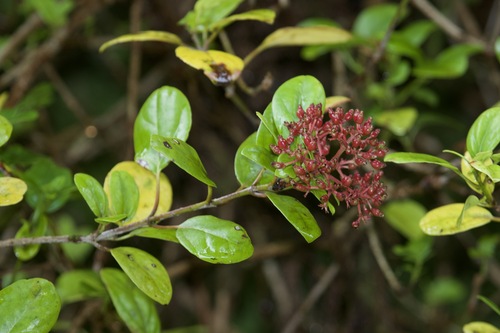
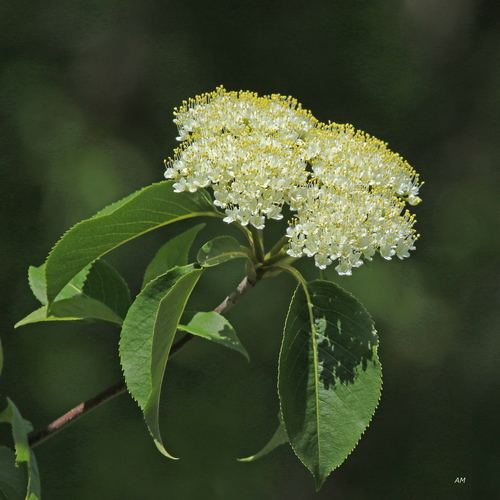
Viburnum lentago L., commonly called nannyberry or sweet viburnum, is a large shrub or small tree. It grows up to 9 m (30 ft) tall, with a trunk that reaches up to 25 cm (10 in) in diameter, a round-topped crown, and pendulous, flexible branches. Its bark ranges from reddish- to grayish-brown, and is broken into small scales. Young twigs are pale green and covered in rusty down; mature twigs become dark reddish brown, sometimes glaucous, smooth, tough, and flexible, and give off an offensive odor when crushed or bruised. Winter buds are light red, covered in pale scurfy down, and protected by a pair of opposing scales. Flower-bearing buds measure 2 cm (3⁄4 in) long, are obovate and long pointed; other terminal buds are acute, 8.5 to 12.7 mm (1⁄3 to 1⁄2 in) long, while lateral buds are much smaller. Bud scales enlarge as the shoot grows and often become leaf-like. Like all viburnums, its leaves grow in opposite pairs on twigs. The leaves are oval, 5–10 cm (2–4 in) long and 2–5 cm (3⁄4–2 in) broad, with a wedge-shaped, rounded, or subcordate base, an acuminate apex, finely serrated margins, and a winged petiole. Newly emerged leaves are involute, bronze green, shining, and hairy downy; when fully grown, leaves are bright green and shining on the upper surface, and pale green with tiny black dots on the undersurface. In autumn, leaves turn deep red, or a mix of red and orange. Its flowers are small, 5–6 mm (0.20–0.24 in) in diameter, with five whitish petals, and arranged in large round terminal cymes 5–12 cm (2–4+3⁄4 in) in diameter; flowering occurs in late spring. The calyx is tubular, evenly five-toothed, and persistent; the cream-white corolla is evenly five-lobed, imbricate in bud, and 6 mm (one-quarter of an inch) across, with acute, slightly erose lobes. Five stamens insert at the base of the corolla, alternate with the corolla lobes, and extend beyond the corolla; the filaments are slender, and the anthers are bright yellow, oblong, introrse, versatile, two-celled, with cells opening longitudinally. The pistil has a one-celled inferior ovary, a thick, short, light green style, and a broad stigma; there is one ovule per cell. The fruit is a small round blue-black drupe, 8–16 mm (0.31–0.63 in) long, that grows on a reddish stem; it has thick skin, and is sweet and rather juicy. The drupe stone is oblong oval and flattened. The roots of Viburnum lentago are fibrous. Its wood has an unpleasant odor, is dark orange brown, heavy, hard, close-grained, and has a specific gravity of 0.7303. Nannyberry is native to the northeastern and midwestern United States, and southern Canada from New Brunswick west to southeastern Saskatchewan. Isolated populations grow in the Dakotas, Wyoming, Colorado, and the Appalachian Mountains as far south as Kentucky and Virginia. It grows in wet soil along forest borders, and is often found in fence corners and along roadsides. In winter, mammals, game birds, and songbirds eat its fruit. As the alternative name sweet viburnum suggests, the fruit is widely palatable, unlike the fruit of many other viburnum species. Native Americans used the bark and leaves to prepare herbal medicines. It is valued for its compact growth habit, lustrous foliage that is rarely damaged by insects, abundant beautiful flowers, attractive edible fruit, and brilliant autumn color. It adapts easily to cultivation, and is one of the best small eastern North American trees for decorating parks and gardens in regions with extreme winter cold. It is easily grown from seed; like seeds of other American viburnum species, its seeds do not germinate until the second year after planting. It has been hybridized with Viburnum prunifolium in gardens to produce the hybrid Viburnum × jackii.