About Viburnum lantanoides Michx.
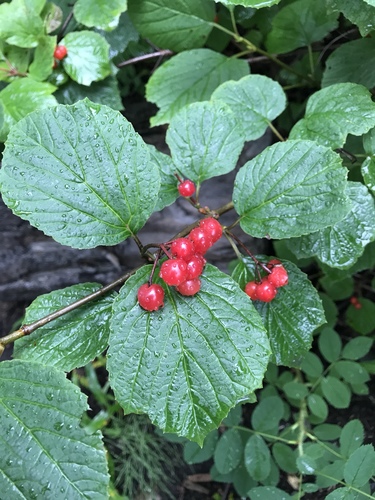
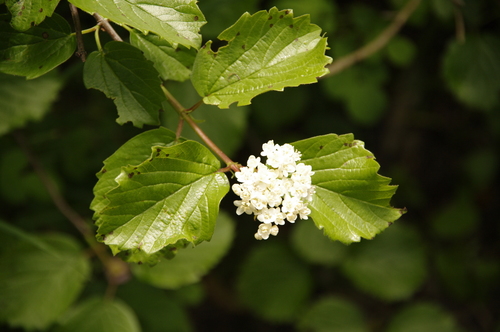
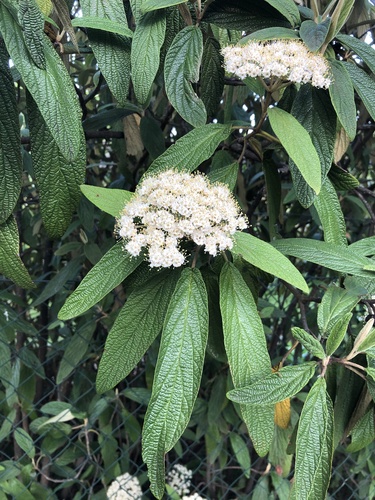
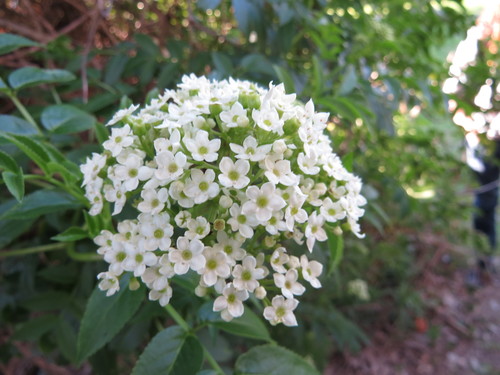
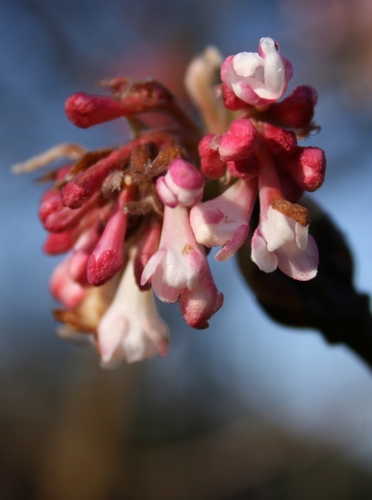
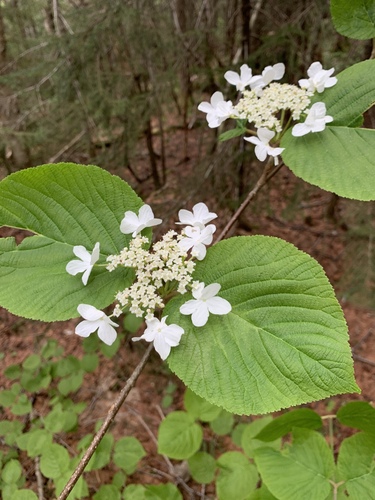
Viburnum lantanoides Michx., commonly called hobble-bush, witch-hobble, alder-leaved viburnum, American wayfaring tree, and moosewood, is a perennial shrub in the family Adoxaceae. It was formerly classified in the Caprifoliaceae family. This shrub grows 2–4 meters (6.6–13.1 ft) tall, and has pendulous branches that root wherever they touch the ground. These rooted branches create obstacles that easily trip, or hobble, walkers, which is how it got its common name. Between May and June, the shrub produces large clusters of white to pink flowers. Flowers along the outer edge of these clusters are much larger, measuring 3–5 cm across, while the entire flower cluster is typically 10 cm across. It bears large, heart-shaped, serrated leaves that are 10–20 cm long. Its bark is gray-brown, warty in texture, and its fruit is a red drupe that turns black when fully ripe. The large, showy outer flowers of the cluster are sterile, while the smaller inner flowers have both male and female reproductive parts. The flowers produce nectar that feeds the Celastrina ladon, or Spring Azure, butterfly. Mammals and birds eat the shrub's fruit, twigs, and leaves. Viburnum lantanoides grows in the eastern United States and Canada, ranging from Georgia to the Canadian Maritimes. It inhabits rich, moist acidic forests, stream banks, and swamps. Its fruits can be eaten raw, or processed into jelly.