About Viburnum lantana L.
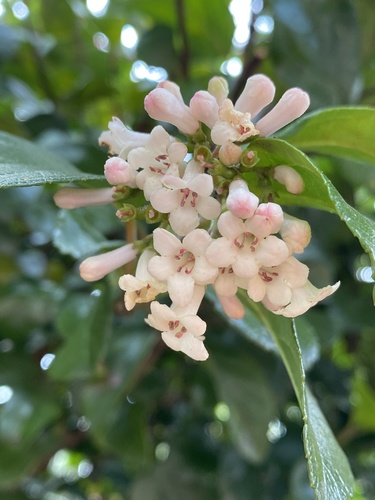
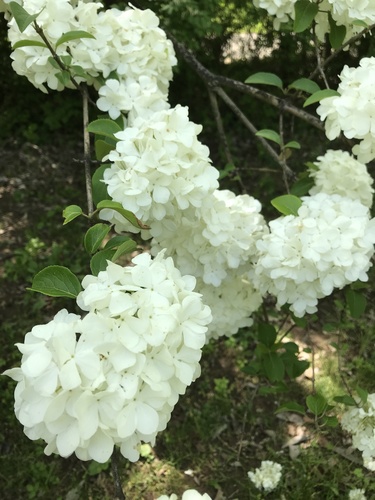
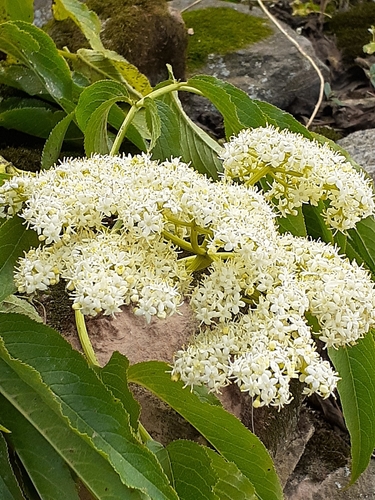
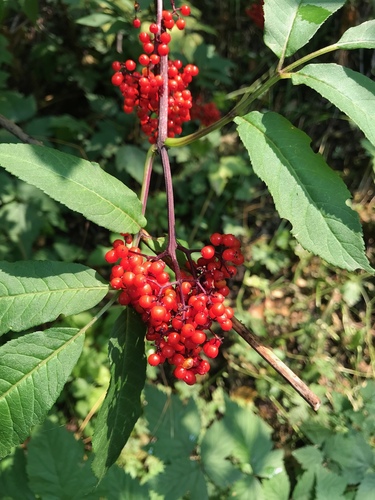
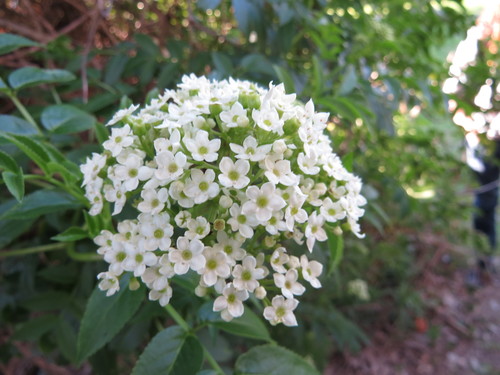
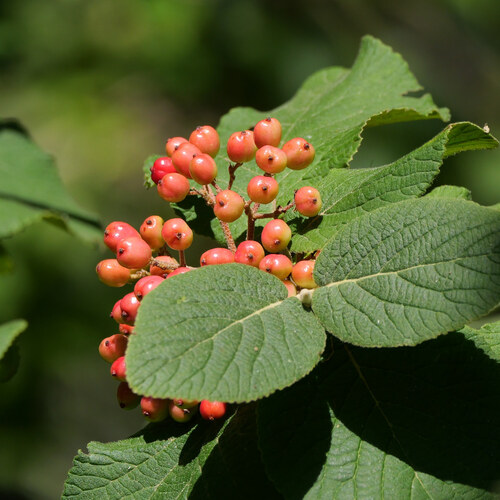
Viburnum lantana L. is a deciduous shrub or small tree that reaches 4–5 m (13–16 ft) in height. Its leaves are arranged oppositely, are simple in shape, ranging from oval to lanceolate, and measure 6–13 cm (2.4–5.1 in) long by 4–9 cm (1.6–3.5 in) broad, with finely serrated margins. The leaf undersides are densely covered in fine downy hairs, while the upper leaf surfaces have far less hair. The plant produces hermaphrodite flowers, which are small at around 5 mm (0.20 in) in size, creamy-white in color, and borne in dense cymes 4–10 cm (1.6–3.9 in) wide at the tops of stems. These flowers open in early summer and are pollinated by insects. The fruit is an oblong drupe 8 mm (0.31 in) long; it starts green, turns red, and finally becomes black when fully mature, and holds a single seed. Birds disperse the seeds after eating the fruit and depositing the seeds in new locations via their droppings. An older common name for this plant is hoarwithy: "hoar" means grey-haired, referring to the hairs under the leaves, while "withy" refers to the plant's pliant stem. It is commonly cultivated as an ornamental plant, grown for its attractive flowers and berries, and grows best on alkaline soils. A number of cultivars have been selected, including 'Aureum', which has yellow leaves in spring. The fruit has low to zero toxicity, but consuming unripe fruit or eating it in large quantities may cause vomiting or diarrhea.