About Viburnum cassinoides L.
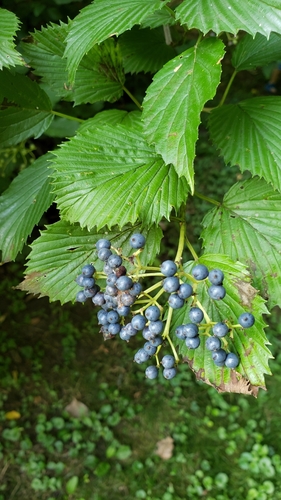
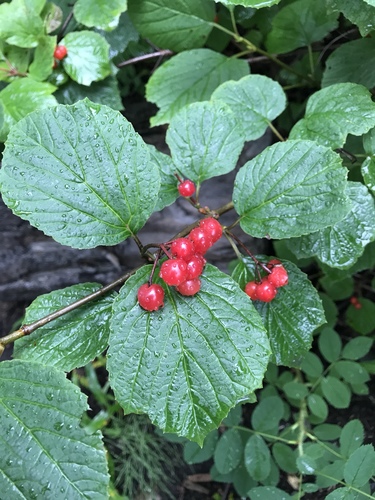
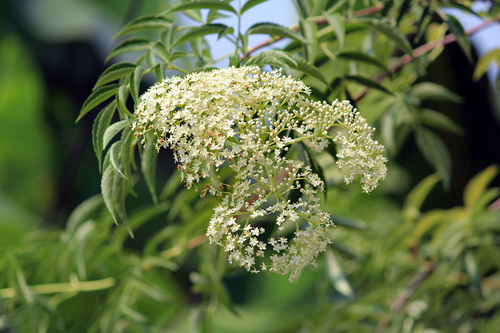
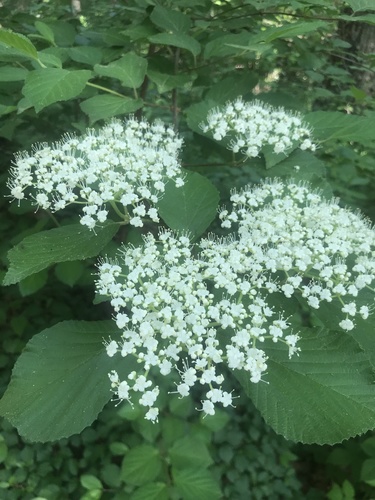
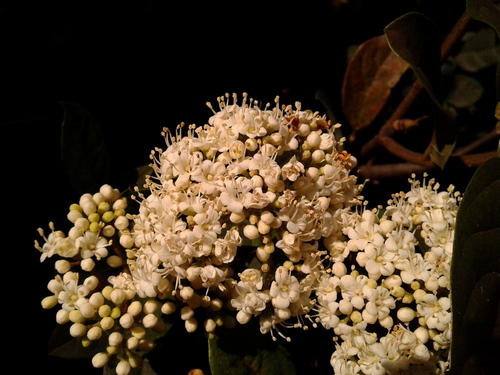
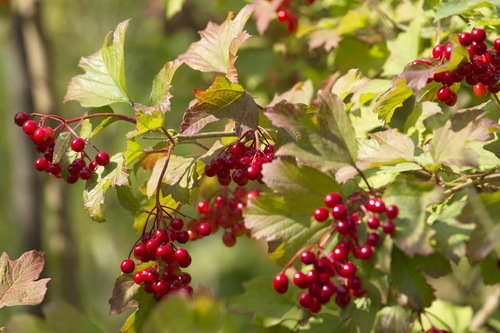
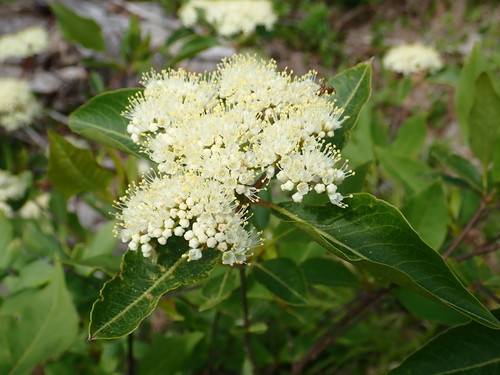
Viburnum cassinoides L. most often grows as a dense, multi-stemmed shrub with a rounded crown, typically reaching heights of 5–6 feet (1.5–1.8 meters). It produces simple, opposite leaves that range from ovate to broadly lanceolate, measuring approximately 2–4 inches (2.5–10 centimeters) long with lightly toothed margins. Its lateral leaf buds are brown, distinctly narrow (formally classified as lanceoloid), while its apical flower buds have an inflated base. Both types of buds are covered by 2 scales, and sit above V-shaped leaf scars; each leaf scar contains 3 vascular bundle scars. The flowers of Viburnum cassinoides grow in a dense cluster called a dichasial cyme, made up of many groups of three: one terminal axis and two lateral axes, which can themselves act as terminal axes and produce their own additional lateral axes. Each axis ends in a bisexual flower that bears 5 white petals, one single pistil, and 5 stamens topped with yellow anthers. The stamens are positioned directly over the flower’s sepals, which are partially fused at their base. After flowering, this species (also commonly called northern wild raisin) develops fleshy, spherical fruits that are botanically classified as drupes, not berries. The fruits change color gradually as they ripen, shifting from green to pink to dark blue, and the ripe flesh is edible when eaten raw or cooked. Viburnum cassinoides has been recorded under its synonym Viburnum nudum var. cassinoides in Connecticut, Massachusetts, Maine, New Hampshire, Rhode Island, and Vermont. Observations from iNaturalist document this species in Ontario, Québec, New Brunswick, Nova Scotia, Prince Edward Island, and Newfoundland and Labrador (only on Newfoundland Island), as well as northern Michigan, northeastern Ohio, New York State, and along the Appalachian Mountains south to northeastern Alabama and northern Georgia. As noted above, the ripe fruits of Viburnum cassinoides are edible raw or cooked, and are most commonly added to various dishes, especially desserts. Many Native American tribes, including the Abenaki and Algonquins, have used these fruits. While an individual fruit has only a small amount of flesh, with a stony pit making up most of its volume, the available flesh is described as sweet and well-flavoured. The plant’s leaves can also be used as a pleasant tea substitute. To prepare the leaves for use, they are steamed over boiling water, rolled between the fingers, left to stand overnight, and then dried in an oven before use.