About Viburnum acerifolium L.
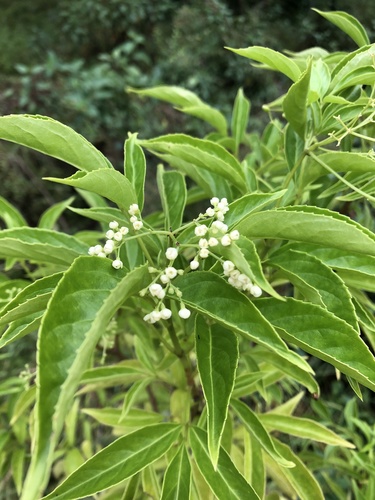
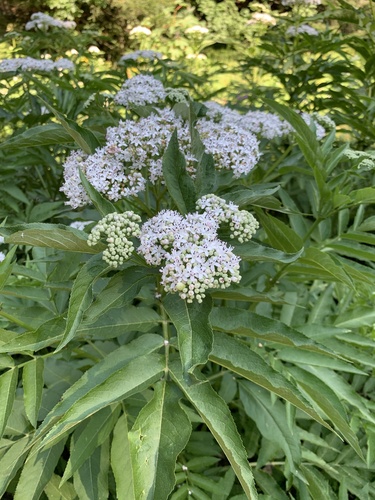
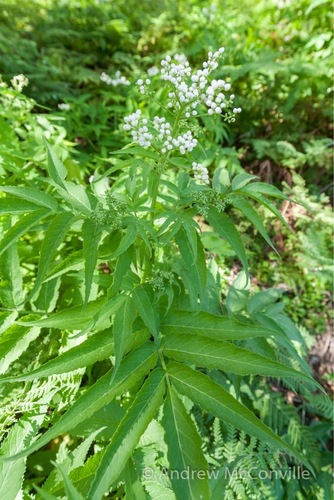
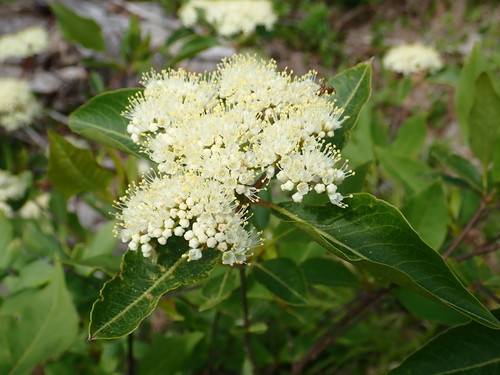
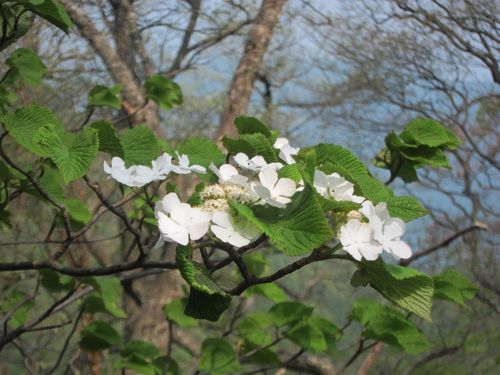
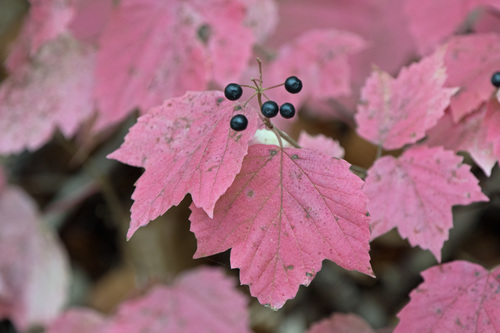
Viburnum acerifolium L., commonly called mapleleaf viburnum, is a shrub that reaches 1 to 2 metres (3+1⁄2–6+1⁄2 ft) in height. Its leaves grow in opposite pairs, are 5 to 10 centimetres (2–4 in) long and wide, have three to five lobes with serrated edges, and have a fuzzy texture. This species displays a wide range of autumn leaf colors, including pale yellow, bright yellow, orange, pink, rose, and red-purple, which vary based on light exposure and weather conditions. Its flowers are white with five small petals, and grow in terminal cymes that are 4 to 8 cm (1+1⁄2–3 in) in diameter. It produces a small red to purple-black drupe fruit that is 4 to 8 millimetres (1⁄8–3⁄8 in) long. This shrub often grows from root suckers and can form a large colony over time. Viburnum acerifolium is native to eastern North America, ranging from southwestern Quebec and Ontario in the north, south to northern Florida and eastern Texas. It occurs naturally in the U.S. states of Connecticut, Maine, Massachusetts, New Hampshire, Rhode Island, New York, Vermont, Illinois, Wisconsin, and Arkansas. It is adapted to USDA hardiness zones 4 through 8. It grows in and around upland forests, and thrives in full shade and dry soils. It grows most commonly in acidic soils with a pH between 5.0 and 6.5, but can tolerate soils with a pH as high as 7.5. Its native habitats include thickets, mixed woods, bluffs, and ravines. Landscape architects and designers have regularly recommended it for shady, dry locations for several decades, but it is only sold at a small number of large diverse nurseries, or specialty and native plant nurseries, and is not generally well known in the nursery trade or to most homeowners. The flowers of this species produce nectar and pollen, which are collected and carried by bee species from the Andrenidae and Halictidae families, as well as flies from the Empididae and Syrphidae families. The flowers also attract beetles, wasps, and various butterflies including skippers. The fruit attracts both butterflies and birds. Viburnum acerifolium acts as a larval host plant for the Celastrina ladon butterfly. The berries are eaten by a variety of mammals including skunks, rabbits, deer, eastern chipmunks, white-footed mice, and deer mice. This species also attracts various aphids, the viburnum leaf beetle, and the wood-boring larvae of Oberea deficiens and Oberea tripunctata. Both the scientific and common names of this species reference the superficial similarity of its leaves to the leaves of some maples (Acer). The plant is occasionally mistaken for young maples, but is easily distinguished by its flowers and fruit: viburnum produces small purple berries, while maples produce dry, winged seeds. Mapleleaf viburnum was used as a medicinal plant in the ethnobotany of Native American groups. The Cherokee made compound infusions from the plant, which were used as an anticonvulsant, febrifuge, and as a treatment for sore tongue and smallpox. The Chippewa prepared infusions and decotions from the bark to use as an emetic and to treat stomach cramps. The Iroquois used infusions made from multiple parts of the plant to treat excessive menstrual flow and urethral stricture. The Menominee used infusions made from the plant's inner bark to treat cramps and colic. The black berries of this species, which ripen from late summer to autumn, can be cooked into jam.