About Verbena bonariensis L.
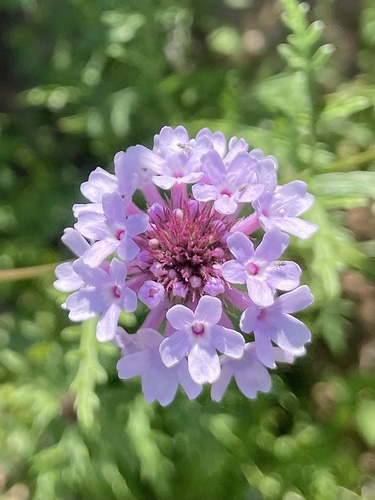
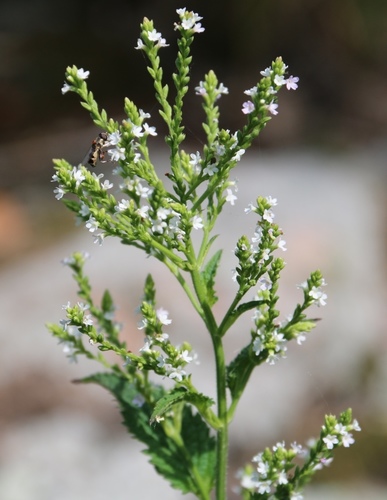
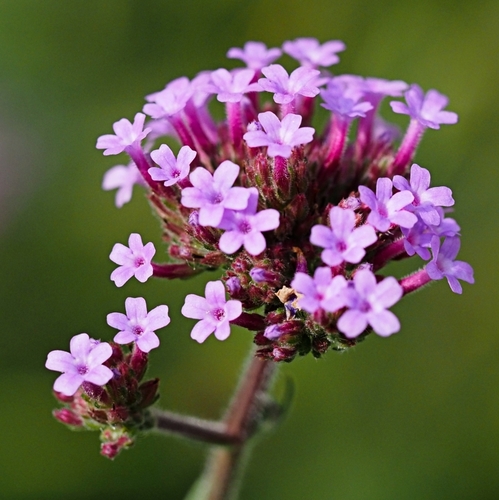
Verbena bonariensis L. is a tall, slender-stemmed perennial. It reaches up to 6 ft (180 cm) in height and spreads to 3 ft (90 cm) in width, developing a woody base when mature. It produces fragrant lavender to rose-purple flowers arranged in tight clusters on terminal and axillary stems, blooming from mid-summer until fall frost. Its stems are square with very long internodes. Its leaves range from ovate to ovate-lanceolate, have toothed margins, and grow up to 4 in (10 cm) long. V. bonariensis is cultivated as an ornamental plant for traditional gardens, drought-tolerant gardens, pollinator-host gardens, and parks. It is a hardy perennial in USDA Zones 7 through 11; in regions where it cannot survive winter, it can be grown as an annual, and will bloom in its first year when grown from seed. Its long internodes create a sparse open appearance that lets it intermingle and coexist well with other plants. The mid- to late summer flowers are very attractive to butterflies, and provide nectar for native bees and many beneficial garden insects. This species grows best in well-drained soil, prefers full sun to partial shade, and requires regular moisture. While it rarely suffers from insect pest attacks, it may be susceptible to powdery mildew. V. bonariensis is most commonly grown from seed, which germinates easily without pre-treatment, but it can also be propagated from herbaceous stem cuttings. It has been awarded the Royal Horticultural Society's Award of Garden Merit.