About Veratrum nigrum L.
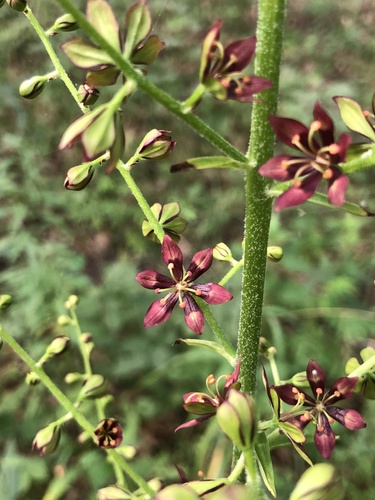
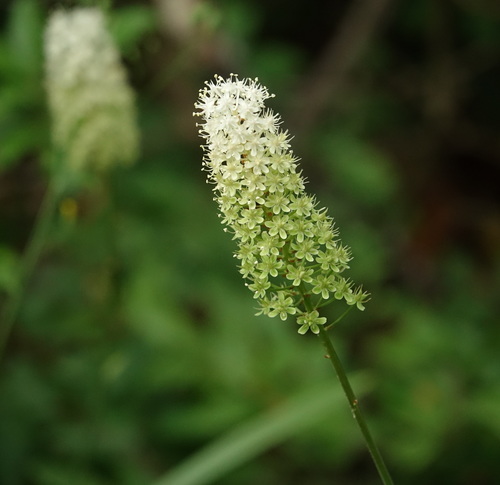
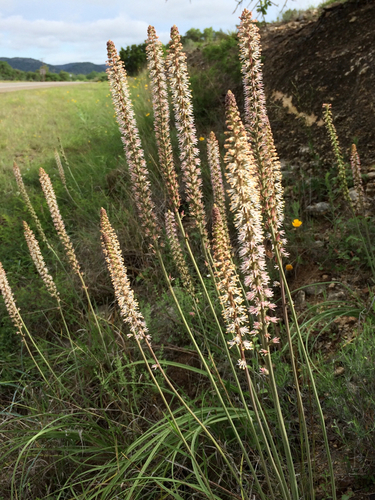
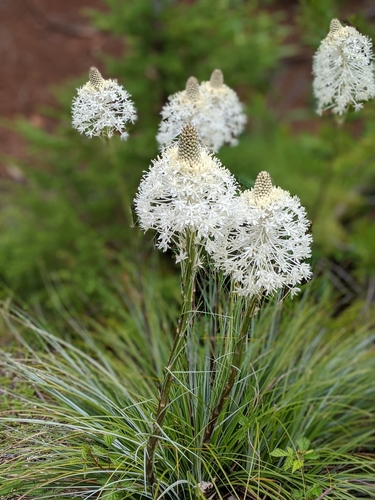
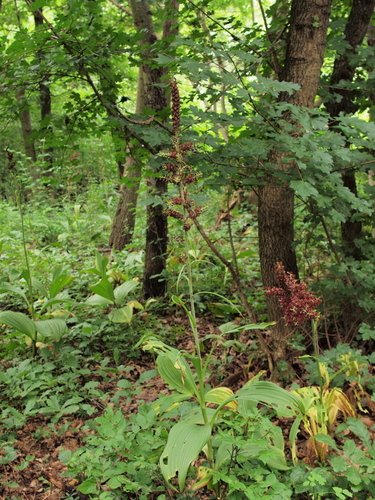
Veratrum nigrum L. is a plant with a robust black rhizome. Simple angiosperm leaves arranged in whorls emerge from its base. Each whorl is decussate, rotated by half the angle between the leaves of the whorl below it, and there are only two or three whorls around the base. Each leaf is sessile, attaching directly to the plant, and measures roughly 12 inches or 300 mm in length. Leaves are broad, glabrous (smooth), lanceolate-shaped, and have entire smooth edges. Veins branch immediately from the base and run parallel through the leaf, giving the leaf a pleated appearance. Long, green, coarse, woody spike racemes branch off in decussate patterns from the main stem, with short pedicels that each support a single flower. The flowers are purple-black, which gives the species its name. Veratrum nigrum blooms for several weeks in early summer, and goes dormant during intense summer heat. It tends to grow in colonies, reaches an overall height of around 4 feet (1.2 m), and its racemes spread to roughly 24 inches (610 mm) wide. Its seed heads are crimson in color. Seed-grown plants typically emerge through the soil and sprout leaves in early spring. Veratrum nigrum is native to Eurasia, ranging from France to Korea and including Germany, Poland, Russia, China, and Mongolia. It grows in hardiness zones 4 through 7. It grows best in shade or partial shade on wet or moist ground, and can grow in any nutrient-rich soil, though one source notes it prefers calcium-rich soil, and another source notes that planting beds must be fairly deep. All parts of this plant are highly toxic, with the highest toxin concentrations found in its rhizome. Toxicity varies widely depending on preparation method (extract, water extract, etc.) and application method. As little as 1.8 grams (0.063 oz) per 1 kilogram (2.2 lb) of body weight can cause death from cardiac arrhythmia, and deaths have even occurred at doses as low as 0.6 grams (0.021 oz). Veratrum nigrum contains over 200 steroid-derived alkaloids, including isorubijervine, jervine, pseudojervine, rubijervine, tienmuliumine, tienmuliluminine, and verazine. The plant irritates mucous membranes. If ingested, irritation of the stomach and intestinal mucous membranes causes nausea and vomiting. If it enters the nose, this mucosal irritation causes sneezing and coughing. Ingestion can also cause bradycardia (slow heart rate), hyperactivity, and hypotension (low blood pressure). In high concentrations, topical contact can cause skin irritation, excessive eye tearing, and redness. Classic symptoms of Veratrum nigrum poisoning include blurred vision, confusion, headache, lightheadedness, nausea, stomach pain, excessive sweating, and vomiting. In severe cases, heart arrhythmia, muscle cramps, extreme muscle twitching, paresthesia (the pins-and-needles sensation across the body), seizures, weakness, and unconsciousness occur, and death can follow. Toxic symptoms usually resolve within 24 to 48 hours, and treatment is generally focused on managing symptoms. Because severe vomiting typically occurs, decontamination measures such as stomach pumping or activated charcoal are usually not used unless ingestion happened within one hour. Atropine is typically given to counteract slow heart rate, while sympathomimetic drugs and fluids are administered to raise blood pressure. The plant is also a known teratogen, but there is no data confirming whether it can cause birth defects in humans. Veratrum nigrum has been grown as an ornamental plant in European gardens since at least 1773, and was in common use by 1828; Charles Darwin grew it in his garden in the 1840s. It is still widely cultivated in gardens across Europe and Asia for its striking black flowers. It is also used to add height to garden plantings, and to create a dark backdrop for brighter colored plants and flowers. Its large seed pods withstand winter conditions well, and do not tend to drop in high wind, so it can also be used as a striking winter ornamental for its seed pods. However, it is difficult to source and very expensive in the United States. This plant has received the Royal Horticultural Society's Award of Garden Merit. It can be propagated by seed or by division, but plants generally take seven years to reach maturity and flower. Snails and slugs feed on its rhizomes and leaves, so gardeners must take steps to control these pests. When taken internally in small doses, the dry root of Veratrum nigrum can lower blood pressure and slow heart rate, possibly by stimulating the vagus nerve. It has been used to treat hypertension and cardiac failure, as well as pre-eclampsia during pregnancy. It has been found to act as an antibiotic and insecticide. Cyclopamine, also called 11-deoxojervine, is an alkaloid isolated from the plant that interferes with the hedgehog signaling pathway (Hh). Cyclopamine is currently under investigation as a potential treatment for several cancers such as basal cell carcinoma and medulloblastoma, and for skin disorders such as psoriasis, conditions that are caused by excessive Hh activity. Dried rhizomes of Veratrum nigrum have been used in traditional Chinese herbalism. All false hellebore species are collectively called "li lu" (藜蘆) in China. Li lu is used internally as an emetic, and applied topically to kill parasites such as those that cause tinea and scabies, and to relieve itching. It was most widely used to treat vascular disease. Some herbalists refuse to prescribe li lu internally, because it is extremely difficult to prepare a safe and effective dose. In Asia, a 1 to 5 percent solution of plant extract mixed with water is used in many rural areas to kill fleas, their larvae, and their eggs in toilets.