About Venturia inaequalis (Cooke) G.Winter
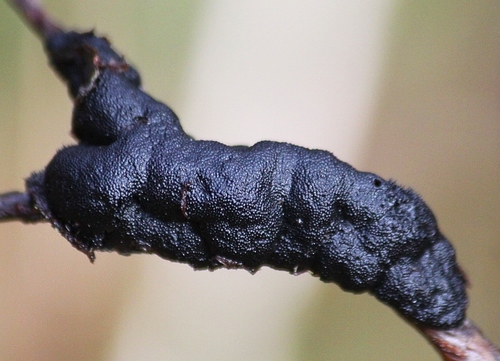
Morphology: The fruiting bodies of Venturia inaequalis, called ascocarps, take the form of pseudothecia. These pseudothecia grow solitarily and are embedded within host plant tissue. Each pseudothecium has small dark hairs around its opening, and contains both pseudoparaphyses and asci. The asci each hold eight haploid ascospores. The haploid chromosome number of V. inaequalis is seven.
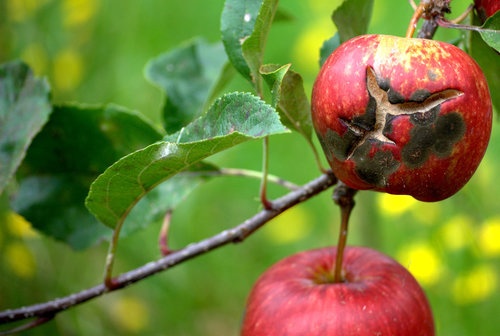
Life cycle: The infection cycle of Venturia inaequalis starts in spring, when appropriate temperatures and moisture trigger the release of its ascospores. These spores enter the air, land on the surface of a susceptible tree, germinate, and form a germ tube that can directly penetrate the plant’s waxy cuticle. Fungal mycelium develops between the plant’s cuticle and underlying epidermal tissue, and produces asexual conidia. These conidia germinate on new areas of the host tree, generating another generation of conidial spores. This cycle of secondary infections continues through the summer, until leaves and fruit fall from the tree as winter begins. V. inaequalis overwinters primarily as immature perithecia, where sexual reproduction occurs to produce a new generation of ascospores that will be released the next spring. Scab lesions on woody host tissues can also overwinter in place, but do not undergo sexual reproduction; these overwintered lesions can still produce non-infective conidial spores in spring.