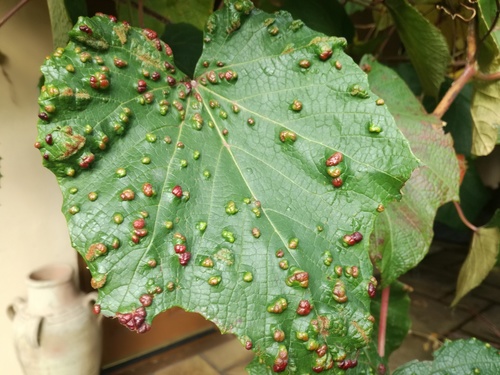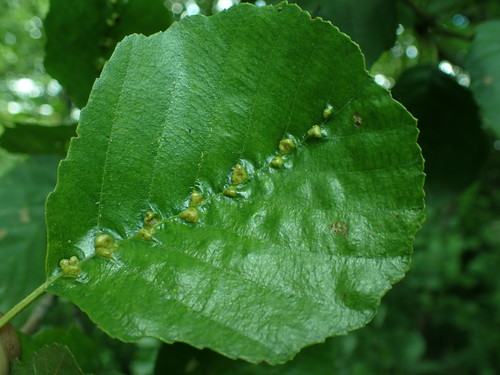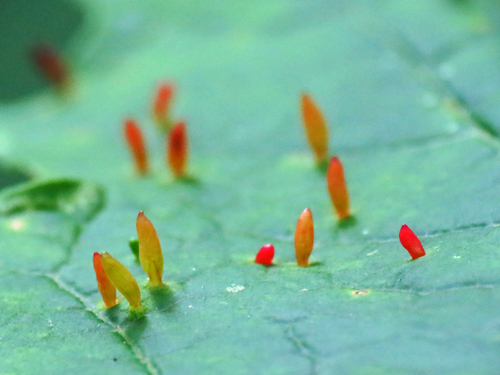
About Vasates aceriscrumena (Riley & Vasey, 1870)
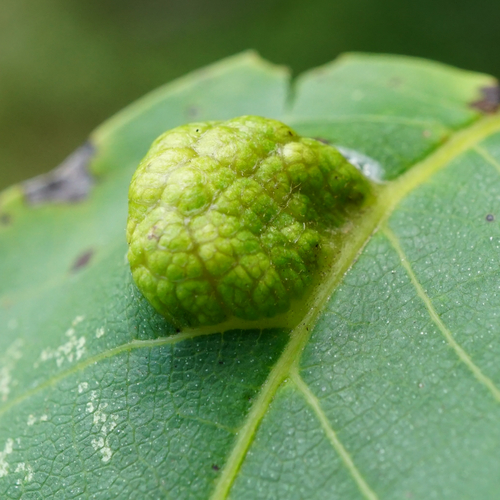
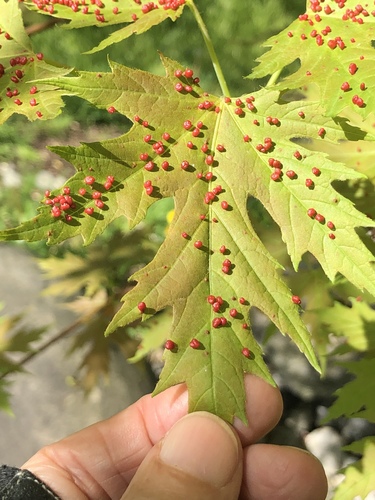
This mite species, Vasates aceriscrumena, is commonly called the maple spindle gall mite. The mites themselves are microscopic, but their presence can be detected by the galls they create on host plants. Unlike galls made by its close relative the maple bladder-gall mite, the galls produced by the maple spindle gall mite are elongate rather than rounded. Though some people consider these galls unsightly, they do not cause major damage to infected maple trees, and they do not often distort the tree's leaves. This species is distributed primarily across the eastern United States. These mites live on maple trees, where they parasitize the leaves. For their overwintering period, maple spindle-gall mites live as free-living mites under loosened bark and around wounds on host trees. In early spring, they feed on leaf buds and trigger the formation of galls. The resulting blisters expand into hollow structures as the host leaves grow. Asexual reproduction takes place inside the galls, and mature mites emerge between late June and mid-July. After the galls dry out, adult mites move to find sites where they can spend the coming winter.