About Varanus griseus (Daudin, 1803)
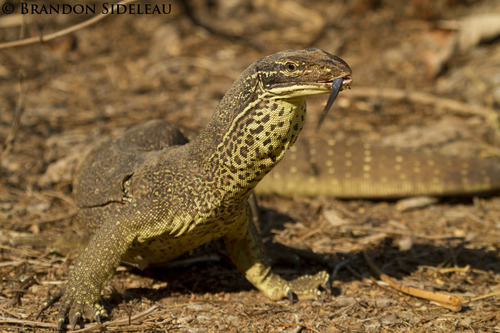
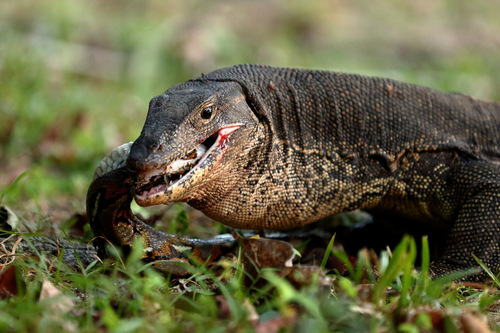
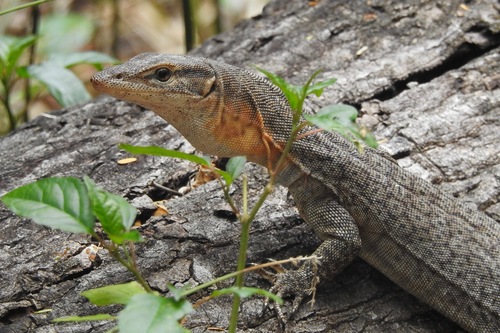
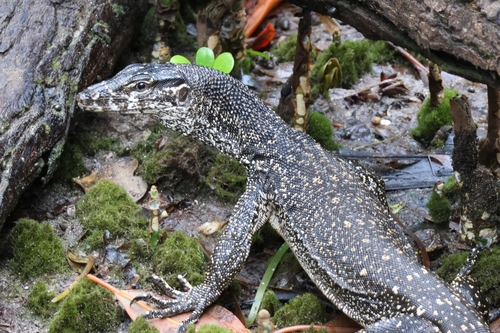
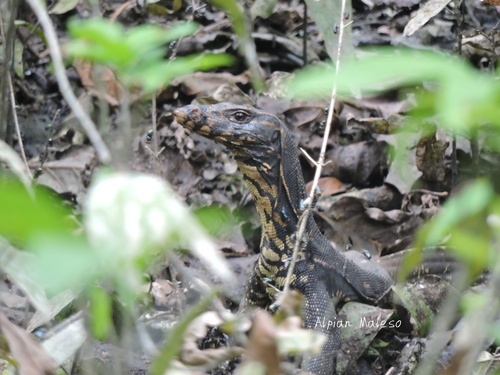
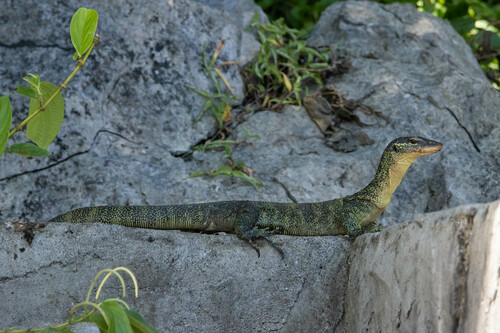
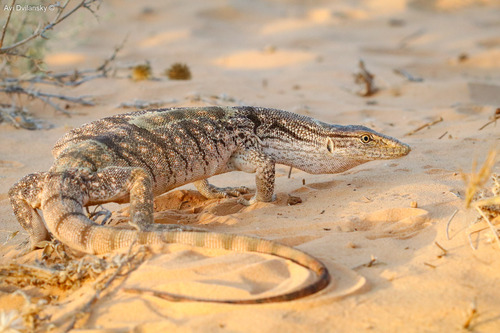
Desert monitors (Varanus griseus) typically show a range of body coloration from light brown and yellow to grey. They average about 1 meter in total body length, and can reach up to almost 2 meters. Many individuals have horizontal bands on the back or tail, plus yellow spots across the back. Juvenile desert monitors are usually a bright, vivid orange with distinctive bands on the back, and these bands may fade or disappear as the lizards mature. Their nostrils are slits positioned further back on the snout, closer to the eyes than to the tip of the snout. An individual's overall body size is affected by the available food supply, time of year, environmental climate, and reproductive state. Males are generally larger and more robust than females, and this difference allows easy distinction between the sexes. Like all lizards, desert monitors go through regular molting, where they shed their outer skin layer to allow for body growth. For adult lizards, each molting process can take several months, and molting happens around three times per year. Their skin is adapted to the desert environment they inhabit. They are excellent swimmers and divers, and have been observed entering water occasionally to hunt for food. The desert monitor has a wide distribution across many countries and regions: it can be found in Jordan, Turkey, Morocco, Algeria, Tunisia, Libya, Egypt, Israel, Syria, Lebanon, Iraq, Oman, Turkmenistan, Kazakhstan, Uzbekistan, Tajikistan, Kyrgyzstan, Western Sahara, Mauritania, Palestine, Mali, Niger, Chad, Sudan, Afghanistan, Iran (including the Kavir desert), Pakistan, and northwest India. Its type locality is Dardsha, on the coast of the Caspian Sea. Desert monitor clutches contain 10 to 20 eggs. After laying eggs, females stay near the nesting area. Reproduction normally occurs between May and July. Copulation takes place in May and June, and egg-laying generally occurs from the end of June through early July. Eggs are incubated at temperatures between 29 and 31 °C, and hatch after an average of 120 days. Newly hatched baby desert monitors are around 25 cm in total length. Because juvenile desert monitors are never found before the end of March, researchers hypothesize that young desert monitors may hibernate inside their nest before emerging.