About Valerianella umbilicata (Sull.) Alph.Wood
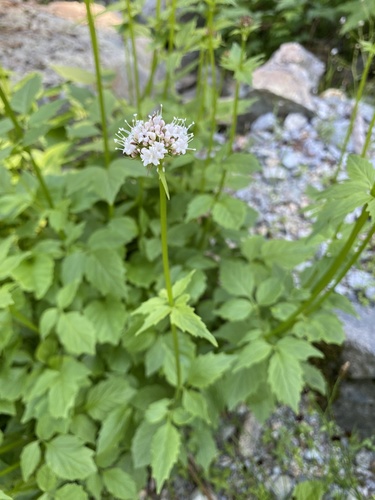
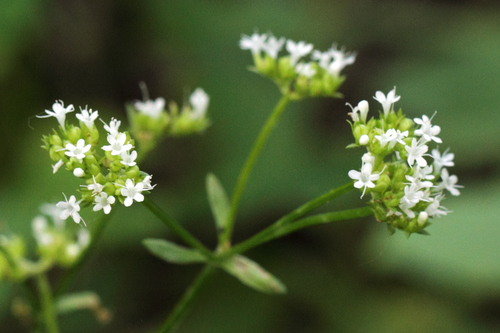
Navel cornsalad, scientifically known as Valerianella umbilicata (Sull.) Alph.Wood, is a herbaceous succulent annual plant. Its leaves are dichotomously branched, attached along the stem rather than at the base. The leaves are spatulate, or spoon-shaped, and attach directly to the stem without a petiole. Plants grow between 3 and 6 decimeters tall. The petals are white, pink, or red, and measure 2 to 5 millimeters long. Its pollen-bearing stamens project strongly outward. This species is rare, and occurs in fields, roadsides, and waste places. Valerianella umbilicata is native to Canada and the contiguous lower 48 United States. Documented specimens place its known distribution from the central Piedmont to the southern Mountains, and it is considered absent from the northern mountains and the Piedmont foothills. It is a rare species that inhabits damp, open environments, and thrives in disturbed areas including damp meadows, bottomland openings, roadsides, marshes, and fields. The species is negatively impacted by human disturbances such as development, deforestation, and land use changes. There is very little comprehensive habitat information available for this species. There are no recorded uses of this cornsalad species by wildlife, and it has no known medicinal uses, though it can be consumed as a vegetable.