About Valerianella locusta (L.) Laterr.
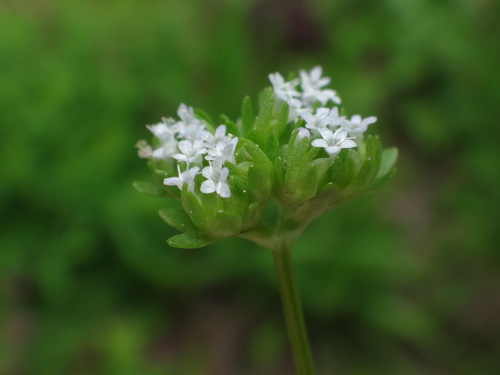
Cornsalad (Valerianella locusta (L.) Laterr.) grows in a low rosette, with spatulate leaves that can reach up to 15.2 cm in length. It is a hardy plant that can grow in USDA hardiness zone 5. In mild climates, it is grown as a winter leafy green. When grown in warm conditions, it tends to bolt, producing much-branched stems that bear clusters of flowers called cymes. Each flower has a bluish-white corolla made of five fused petals, measuring 1.5 to 2 mm long and wide, plus three stamens. A whorl of bracts sits at the base of the corolla. After fertilization, flowers produce achenes that have two sterile chambers and one fertile chamber. Cornsalad grows wild across parts of Europe, northern Africa, and western Asia. In Europe and Asia, it is a common weed found in cultivated land and waste spaces. In North America, it has escaped cultivation and become naturalized along both the eastern and western seaboards. As a cultivated crop, it is a specialty of the region around Nantes, France, which is the primary producer of mâche (cornsalad) in Europe.