About Valeriana occidentalis A.Heller
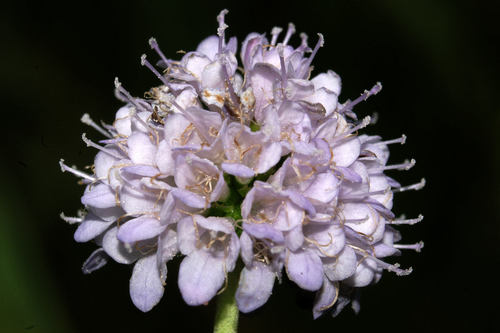
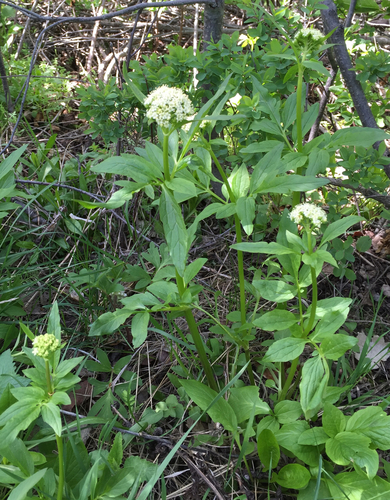
Valeriana occidentalis A.Heller, commonly known as western valerian, is a species of flowering plant in the honeysuckle family. It is native to western North America. In the United States it occurs across the northwestern quadrant of the western states, reaching as far south as Arizona and as far east as Colorado and South Dakota. It grows in moist, forested mountain habitat. This species is an erect herb that reaches 30 to 75 centimeters in height. It produces leaves arranged in whorls or opposite pairs at intervals along its stem. Its leaves are generally divided into lobes or are compound, with each leaf made up of a small number of oval-shaped leaflets. The inflorescence is a dense cyme holding many funnel-shaped white flowers. Each flower is 3 to 4 millimeters long and has three long, protruding stamens. The fruit is a ribbed achene about half a centimeter long, which may be tipped with the featherlike remains of the flower's sepals. Confirmed distribution includes the U.S. states of Arizona, California, Colorado, Idaho, Montana, Nevada, Oregon, South Dakota, Utah, Washington, and Wyoming, as well as British Columbia, Canada. A distribution map for this species can be found on the USDA Plants Site.