About Vachellia reficiens (Wawra) Kyal. & Boatwr.
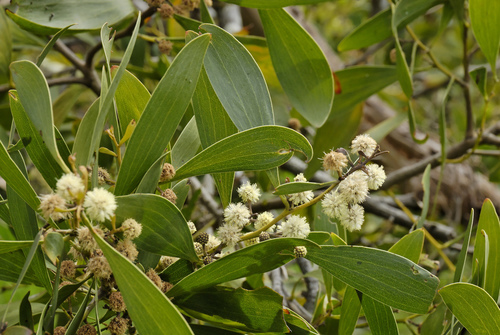
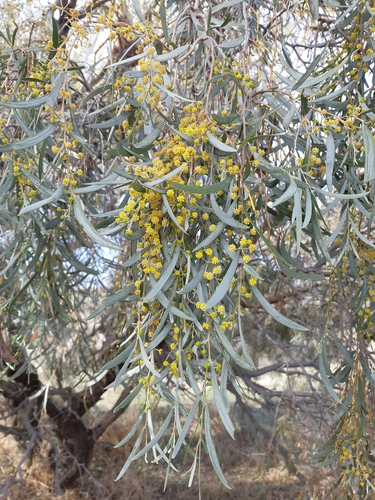
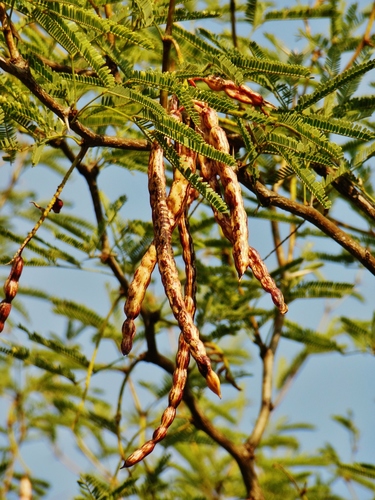
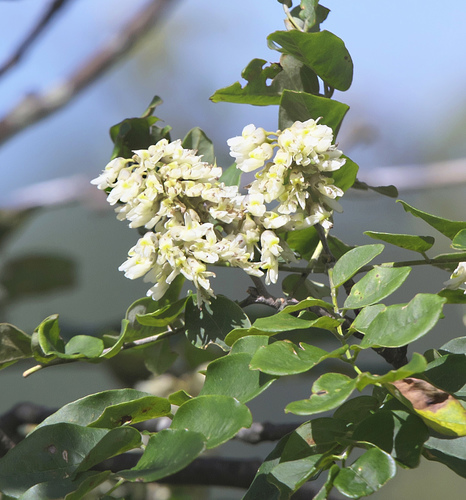
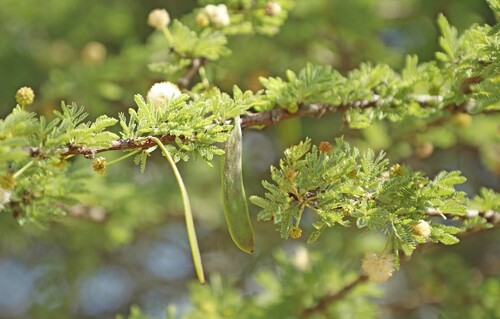
Vachellia reficiens (Wawra) Kyal. & Boatwr. can reach up to 5 metres (16 ft) in height. Its bark is reddish-brown or greyish-black, with a rough, fissured texture. Young growing branches often have a purple-red appearance, which gives the species its common names. A key characteristic of this plant is that it grows two types of thorns: long straight thorns, and shorter curved or hook-like thorns; generally, these two types do not appear together in the same pair. Like most African acacia species, Vachellia reficiens has bipinnately compound leaves, with 1 to 4 pairs of pinnae, and each pinna has 5 to 13 pairs of leaflets. Its flowers are white to cream-colored, and most commonly bloom during the summer months of December and January, though flowering can occur nearly year-round depending on the geographical location. The fruit is a flat red-brown pod. Vachellia reficiens is native to drier regions of Africa, and is found in Angola, Ethiopia, Kenya, Namibia, Somalia, Sudan, and Uganda. This plant prefers rocky soils, and does not grow in areas with high rainfall; it occurs in semidesert and arid shrubland habitats. It is an abundant dominant species of arid shrubland throughout Kenya, and makes up to 30% of the total woody canopy in the South Turkana Ecosystem in Turkana District. In some savannas and woodlands, Vachellia reficiens acts as a woody encroachment species that crowds out native herbaceous plants. The leaves of this tree are browsed by game animals and small livestock, including Greater Kudu and goats. In parts of Namibia and Kenya, Vachellia reficiens subsp. reficiens is classified as an encroaching species, because it can outcompete grass species on agricultural rangeland, especially on disturbed soil. The species is very opportunistic and hardy, and can spread to take over large areas of native vegetation. The nomadic Ngisonyoka people of Kenya's Turkana District use Vachellia reficiens wood to construct temporary houses. In Namibia's Kaokoveld region, the tree's branches are used for fencing, the bark is used to curdle milk, and the thorns can be used to pierce ears. The seeds can be baked in hot ash, crushed, ground, and mixed with tobacco for use as snuff. The Giriama people use the wood for firewood and charcoal, and use straight stems for construction poles.