About Uvanilla buschii (R.A.Philippi, 1844)
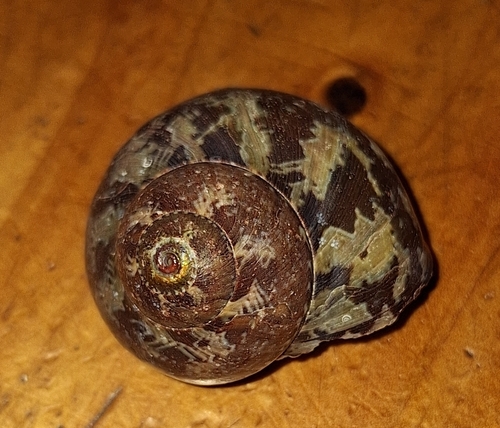
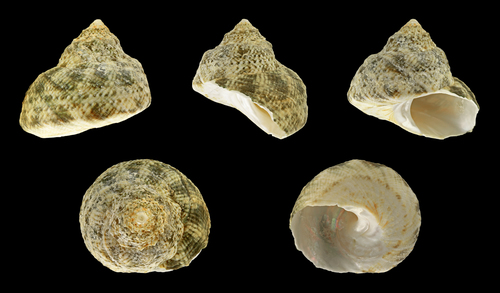
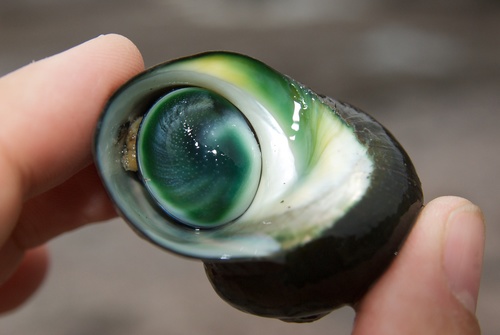
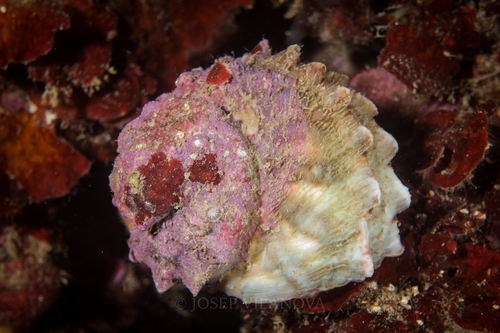
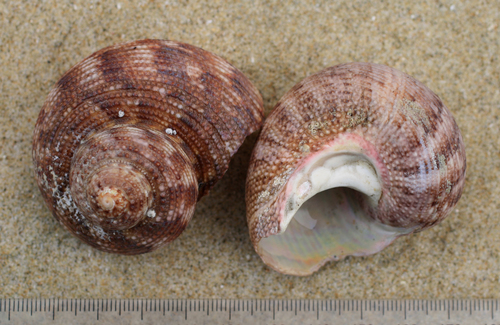
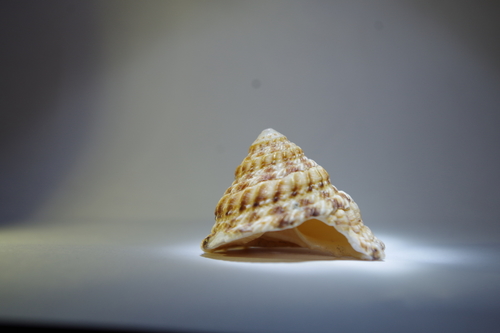
The shell of Uvanilla buschii reaches a size between 17 mm and 60 mm. It is solid, imperforate, and has a conical shape. The shell's color pattern is olivaceous brown, with faint irregular spots of brown, green, or white on its upper portion. There are seven whorls, which are longitudinally ribbed below the sutures and above the periphery. Two spiral rows of tubercles wrap around the middle of the flattened upper surface; sometimes the entire upper surface is covered in fine, irregular folds. The periphery is sharply keeled, and carries many short, compressed, triangular radiating spines. The flat base of the shell is covered with dense radiating lamellose striations, and has a strong rib that runs around the middle between the periphery and the center. The aperture is oblique, transversely oval, pearly white on the inside, and deeply channelled at the periphery. The columellar region is white, has two prominent ribs, and is deeply excavated where the umbilicus would typically be. The parietal callus does not extend very far. The operculum is oblong with a submarginal nucleus. Its outer surface is white, with a strong curved central rib, and the ends of this rib are joined by an A-shaped ridge. This species is found in the Pacific Ocean, ranging from Mexico to Peru.