About Utricularia macrorhiza Leconte
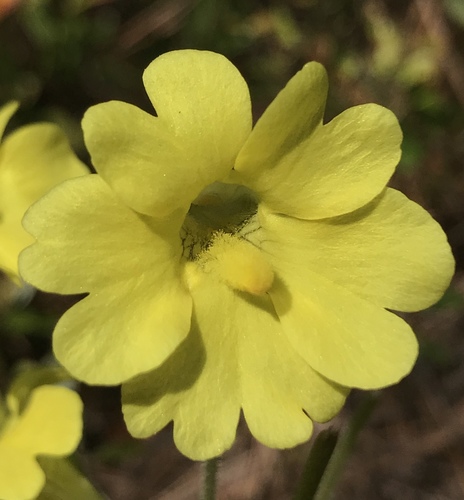
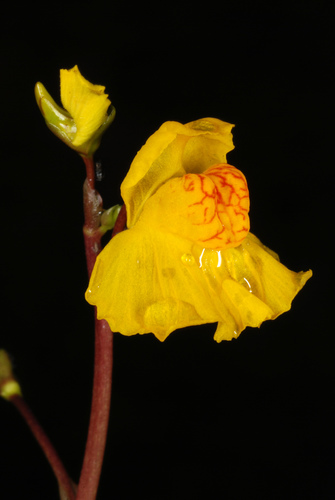
Utricularia macrorhiza Leconte (common bladderwort) is a floating carnivorous plant. Between June, July, and August, it produces six to twenty large, bilaterally symmetrical yellow flowers held on an erect stem. It can be distinguished from other similar bladderwort species by its flowers, which are larger than the flowers of any other bladderwort. The species gets its common name from the bladder-like trapping structures it produces, which it uses to capture and consume prey. When small organisms brush against the hairs on a bladder's pore, they trigger the pore to open inward. A rush of water into the bladder pulls the prey inside with it, and the pore closes immediately behind the prey. The prey is then digested by enzymes inside the bladder. The entire trapping process, from opening to closing the pore, takes only 0.002 seconds. If a large prey item becomes stuck in the pore, enzymes digest it gradually until it is small enough for the pore to close again. In North America, Utricularia macrorhiza is distributed across the whole of the United States and Canada. Within this range, it grows mostly in ponds and lakes, and also occurs in slow-moving streams and rivers. It shares the northern half of its range with Utricularia minor, a similar related species commonly called lesser bladderwort.