About Utricularia bisquamata Schrank
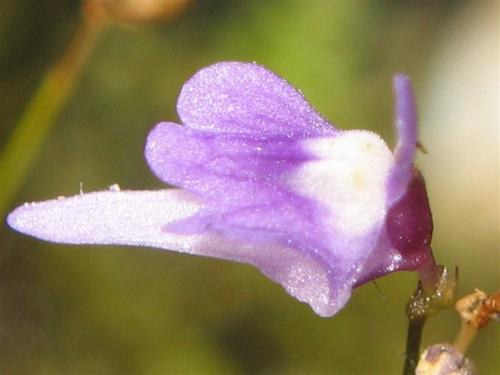
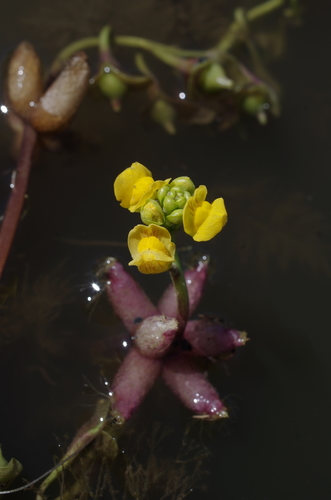
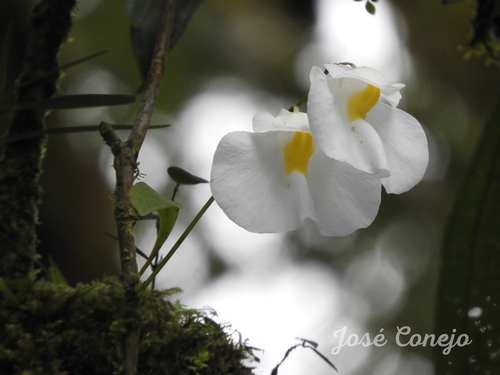
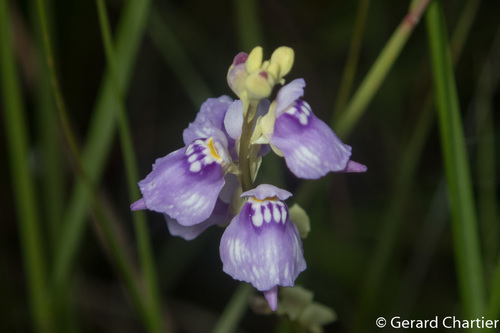
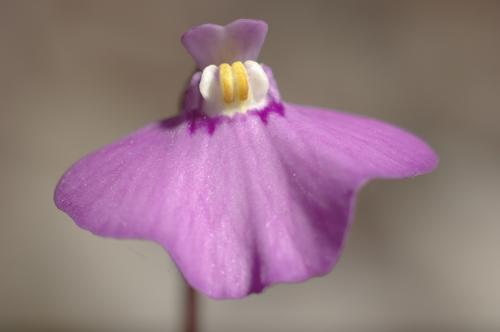
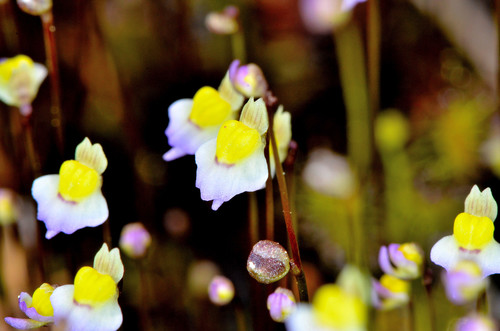
Utricularia bisquamata is a small annual herb that grows to a height of about 12 cm (4.7 in). It forms a rosette of narrow leaves, and produces wiry stems that hold racemes of two-lipped flowers. Flower color ranges from white and pale violet to, occasionally, yellow. The small upper lip of the flower has two or three lobes. The lower lip has two short lobes along its sides and a central lobe, with a variable-sized patch of yellow at its base. Translucent trapping structures develop on the roots of this carnivorous plant. Utricularia bisquamata is native to southern Africa, where it occurs in Angola, Namibia, South Africa, Eswatini, Lesotho, and Madagascar. It is a member of the fynbos community. Its typical habitat is acidic, boggy soil in sandstone areas, where it grows among mosses in wet locations. This species is sometimes grown in cultivation, and it germinates easily from seed. The cultivated cultivar 'Betty's Bay' produces larger, more colorful flowers than the wild form.