About Uta stansburiana Baird & Girard, 1852
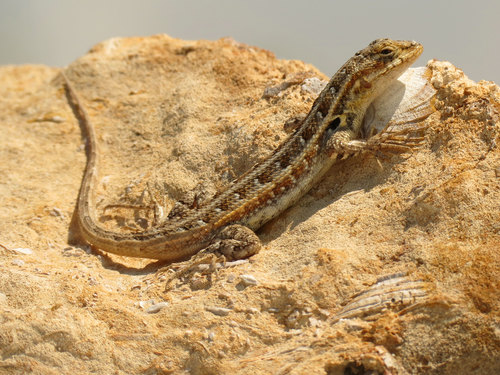
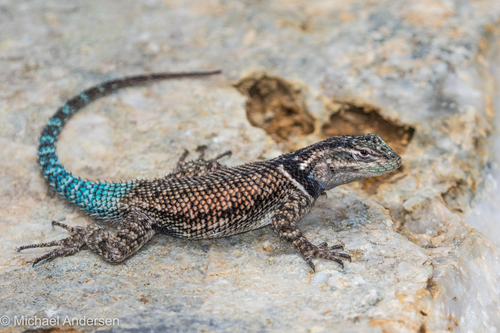
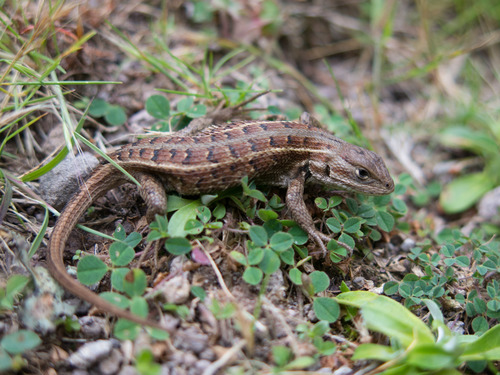
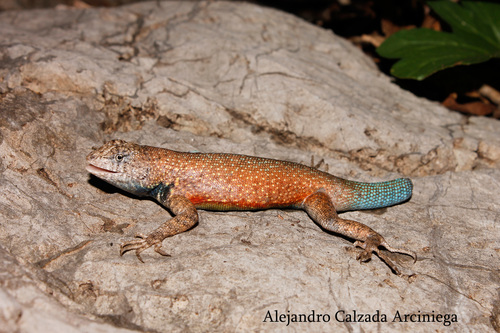
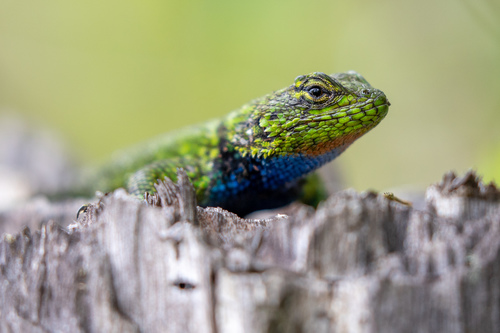
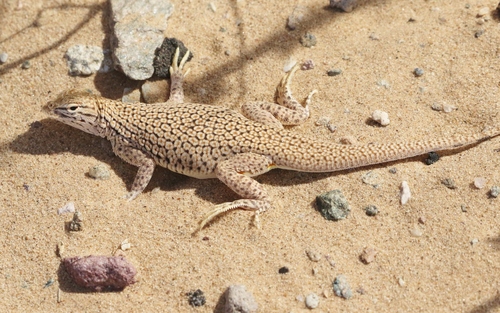
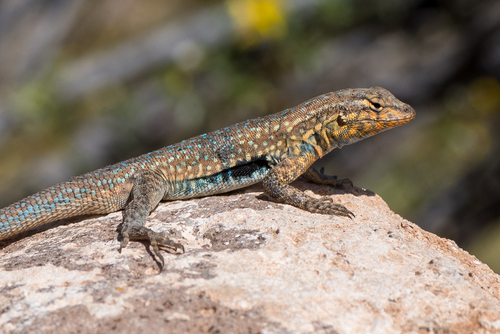
The common side-blotched lizard (scientific name Uta stansburiana Baird & Girard, 1852) is a small species of iguanid lizard. Males reach up to 60 mm (2.4 inches) in snout-to-vent length, while females are typically slightly smaller. Pigmentation levels vary by sex and population. Some males have blue flecks across their backs and tails, with yellow or orange sides, while other males are unpatterned. Females may have stripes along their backs or sides, or be relatively drab. Both sexes have a prominent blotch on the side of their body, just behind their front limbs. Coloration is especially important for this species, as it is closely tied to the mating behavior of both males and females. The three different throat morphologies found in side-blotched lizards also affect sprinting speed. Across all three morphs, sprinting speed is positively correlated with blue hue, the brightness of a yellow throat, and the saturation level of an orange throat. While throat coloration traits are positively linked to sprinting speed and lizard mass, they do not affect the lizard's snout-vent length or hind limb length. Researchers from Utah State University have proposed that this connection between physical capability and coloration plays a role in sexual competition among male side-blotched lizards. The sprint speed of male lizards late in the reproductive season depends on their body temperature, and maximum sprinting speed is achieved when body temperature falls between 35 and 38 degrees Celsius.
For reproduction, female side-blotched lizards lay clutches with an average of 5.1 eggs, and a maximum of 9 eggs per single clutch. Smaller clutch sizes, which are often seen in yellow-throated females, have a higher rate of eggs bursting when laid or egg binding. This suggests there is an upper physiological limit to how much a female can invest in each individual egg she produces. The presence of a tail impacts reproduction for female side-blotched lizards: tailless females have lower overall survivorship, because losing this defensive structure increases their risk of predation. Despite the increased death risk for tailless females, tail loss does not create an energetic handicap that negatively impacts their potential growth and reproduction. For adult males, losing a tail reduces the ability to successfully copulate when mating in spring, which indicates that tails increase the likelihood of males attracting sexual partners during the reproductive season.
Beyond the effect of physiological traits on female reproduction, female age, inhabited environment, and timing within the reproductive season also affect female fecundity. A study by Utah State University researchers confirmed that older females lay more eggs than yearling females, and that annual variations in female fecundity come from variations in clutch frequency, not variations in average clutch size. As the side-blotched lizard reproductive season progresses, females tend to produce fewer but larger eggs. Researchers hypothesize this pattern comes from the tradeoff between egg size and clutch size. Later in the reproductive season, females are selected to increase egg size to produce larger, more competitively strong hatchlings, because food is generally more scarce and juvenile population density is high at this time. Another hypothesis holds that selection favors smaller clutches late in the reproductive season because females invest their remaining reproductive energy into their last clutches. Because of this, females prioritize ensuring that their remaining energy is well spent, and that their hatchlings have a good chance of survival. With a smaller clutch size, when a female allocates her energy to her last clutch, each hatchling receives more maternal investment, assuming the mother's energy is divided equally among the hatchlings of the smaller clutch. Utah State University researchers also confirmed that clutch frequency is positively correlated with rainfall density. Their results show a causative link between winter rainfall and clutch frequency for female side-blotched lizards. The researchers noted that air temperature plays an important role in the timing and laying of the first spring clutch, and increased winter rainfall leads females to lay clutches earlier.