About Urticina felina (Linnaeus, 1761)
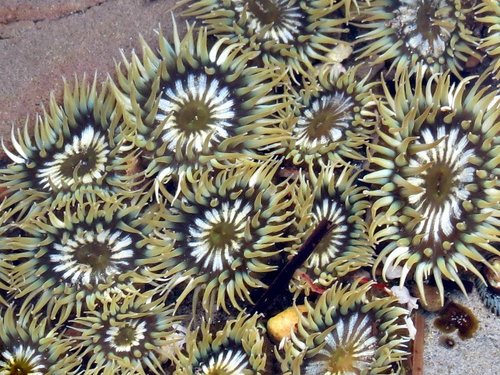
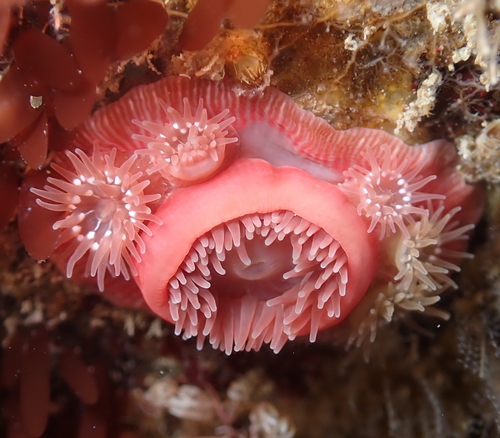
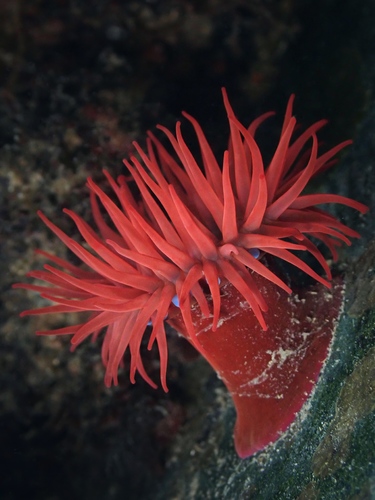
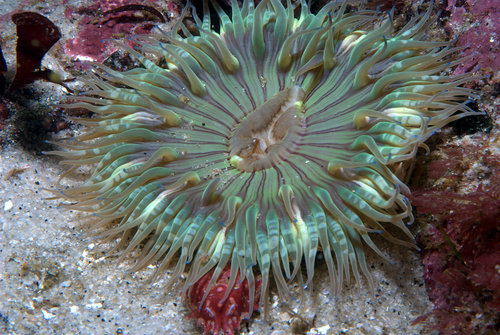
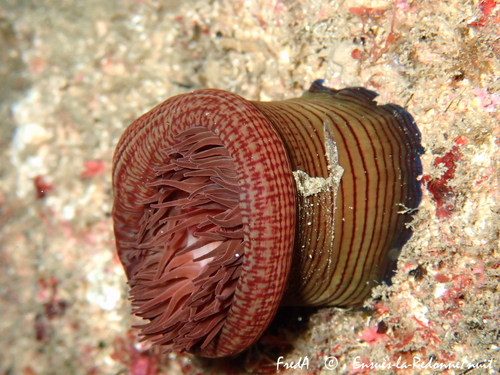
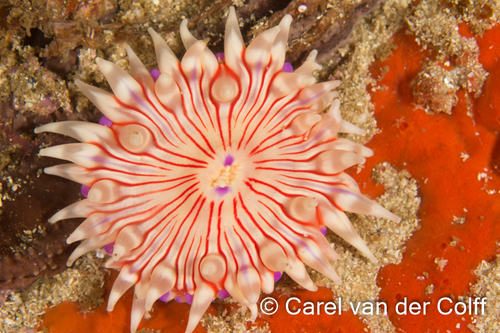
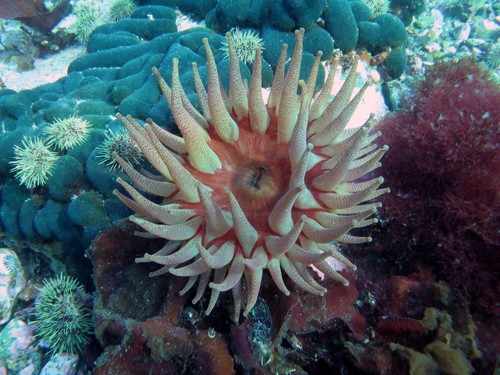
This species, scientifically named Urticina felina (Linnaeus, 1761), has a basal disc that can reach 120 mm across, and firmly adheres to rock substrates. Specimens living in deep sea waters are typically larger than those found in inshore areas. Its body column is usually shorter than its diameter, and its entire surface is covered in small wart-like structures called verrucae. A raised rim called a parapet forms at the top of the column, where the verrucae are typically arranged in rows. Bits of gravel and other debris usually adhere to the verrucae, so a contracted individual looks like a rounded hummock of gravel. The oral disc is not wider than the parapet, and bears up to 160 short tentacles arranged in multiples of ten. Urticina felina has very variable coloration. Some individuals have a red column with green blotches, grey verrucae, and greyish-banded tentacles; others have a red column and disc with grey verrucae and white tentacles. The tentacles are often banded, and many individuals have thin red lines on the disc that are visible between the tentacles. This species, commonly called the dahlia anemone, is distributed in the Arctic Ocean, the Baltic Sea, the North Sea, and the northern Atlantic Ocean, ranging as far south as the Bay of Biscay and the Gulf of Maine. Dahlia anemones inhabit rocks and boulders from the lower shore down to depths of 100 metres. They can be found in rock pools, crevices, and gullies, among the holdfasts of Laminaria species, in caves, and are sometimes found partly buried in gravel.