About Uropsalis lyra (Bonaparte, 1850)
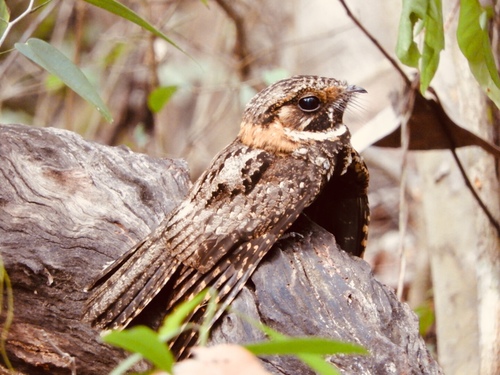
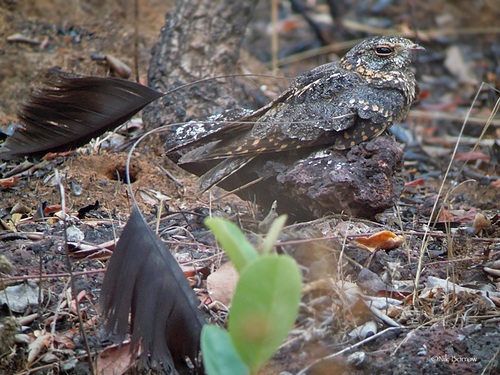
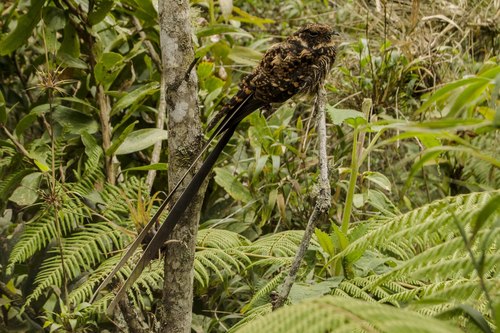
Uropsalis lyra, commonly called the lyre-tailed nightjar, is named for the extremely long outer tail feathers of the male, which are more than twice the length of the male's body. The female has a much shorter, less graduated tail. For adults of the nominate subspecies, body length (excluding the long tail streamers) ranges from 23.5 to 28 cm (9.3 to 11 in). The full tail length of mature males exceeds 60 cm (24 in). Males weigh approximately 70 g (2.5 oz) and females weigh approximately 77 g (2.7 oz).
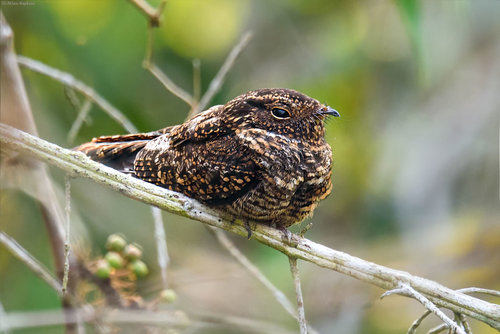
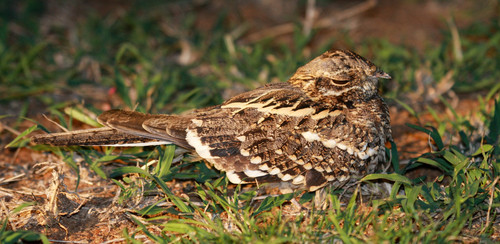
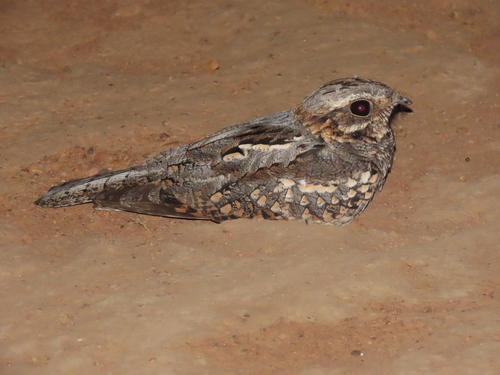
The male's upperparts are primarily brown. Its crown and nape are spotted with grayish white, buff, tawny, and cinnamon, and its back also has tawny and cinnamon spots. Males have a broad tawny collar around the nape that extends across the throat. Their tail is brown: the long outer streamers have broad grayish white tips, while the other tail feathers are barred and mottled with tawny and buff. The wings are also overall brown with buff, tawny, and cinnamon spots and mottling. The chin and throat are tawny or buff with brown bars and spots. The breast and upper belly are brown with dense tawny bars and spots, while the lower belly and flanks are buff with brown bars.
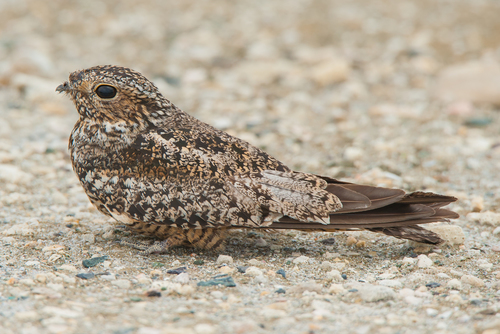
Compared to the male, the female has a grayish rather than brown crown, and its primary wing feathers have more prominent rufous markings. Three subspecies are recognized. U. l. peruana is somewhat larger than the nominate subspecies, and has an overall more reddish color cast. U. l. argentina is the largest of the three subspecies; compared to the nominate, its breast markings are whiter, and its male tail streamers are tipped with gray rather than white.
The nominate subspecies occurs in the Andes of western Venezuela, western Colombia, and Ecuador, and may also be found in northern Peru. U. l. peruana occurs on the east slope of the Andes of Peru, and extends into central Bolivia. U. l. argentina occurs in the Andes of northern Argentina, and may also be found in southern Bolivia. Across the species, elevation mostly ranges from 1,100 to 2,100 m (3,600 to 6,900 ft), though individuals have been found as low as 800 m (2,600 ft) and as high as 3,500 m (11,500 ft). The species inhabits humid montane forest, especially forest edges and clearings. It favors cliffs and ravines located near running water.