About Urophora cardui (Linnaeus, 1758)
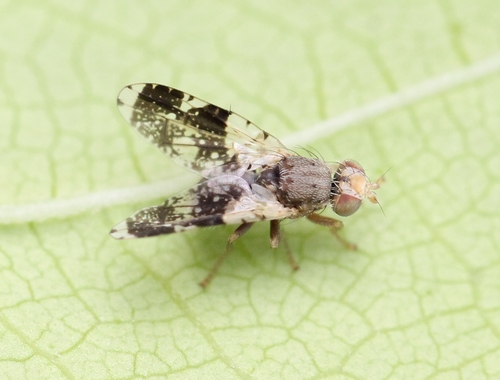
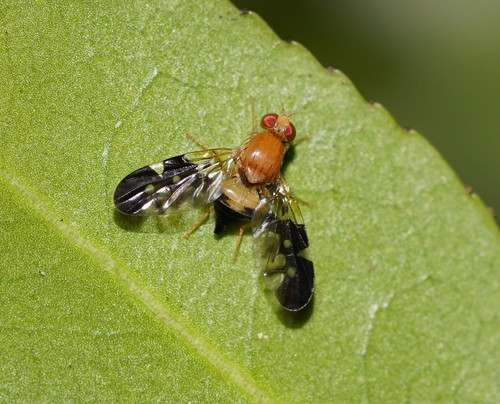
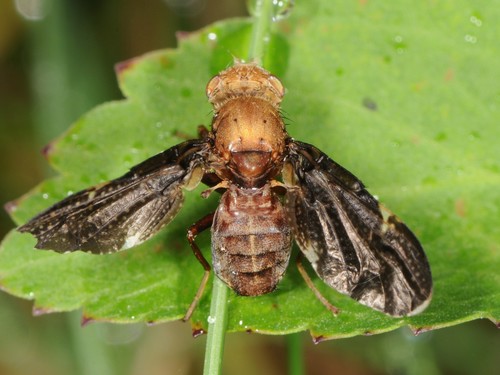
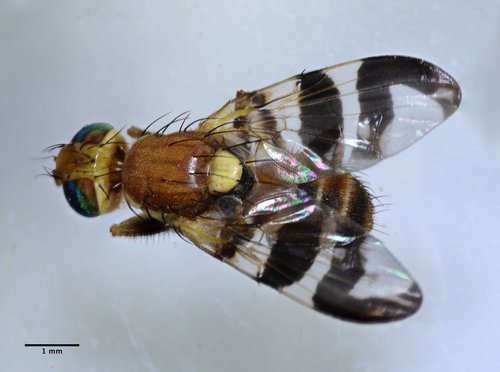
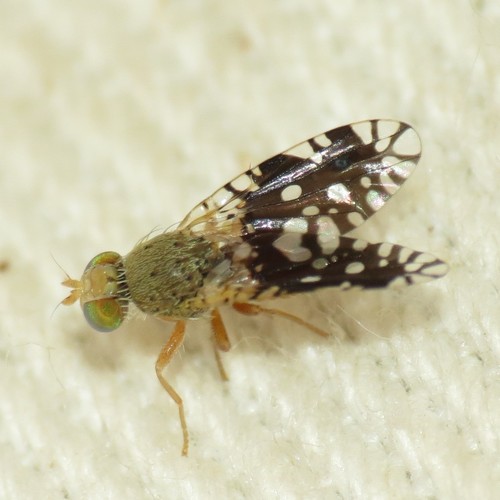
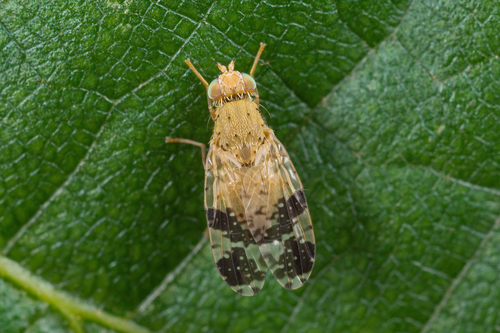
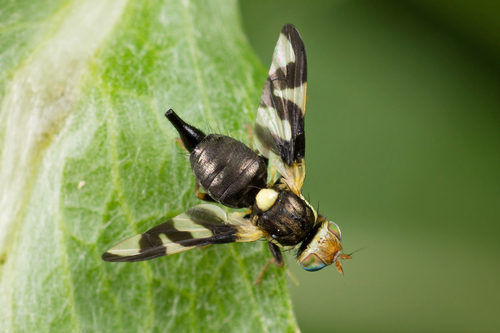
Urophora cardui, commonly known as the Canada thistle gall fly, is a species of fruit fly. Despite its common name, it is native to Central Europe, ranging from the United Kingdom east to near the Crimea, and from Sweden south to the Mediterranean Sea. This gall fly was later introduced from Europe to North America, with the goal of controlling populations of its host plant, Canada or creeping thistle (Cirsium arvense), which is an invasive introduced weed in North America. During the host plant's growing season, adult female Canada thistle gall flies lay between 1 and 30 eggs on the stems of their host. When the eggs hatch, larvae burrow into the plant stem and trigger the formation of a swollen growth called a gall. By the time they prepare for overwintering, larvae reach 98% of their full adult body weight, and remain in the gall over winter during their third larval instar. They pupate in early spring, with the pupal stage lasting 24 to 35 days; pupae are reddish brown. After pupation is complete, the adult fly chews an exit tunnel through the gall and escapes.