About Urolestes melanoleucus (Jardine, 1831)
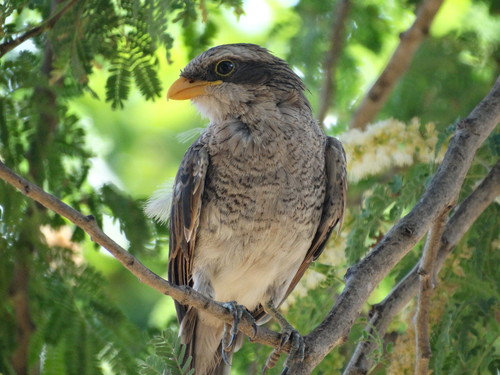
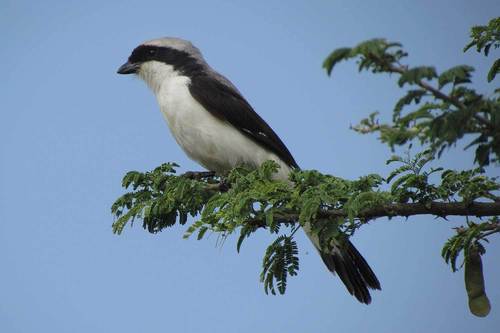
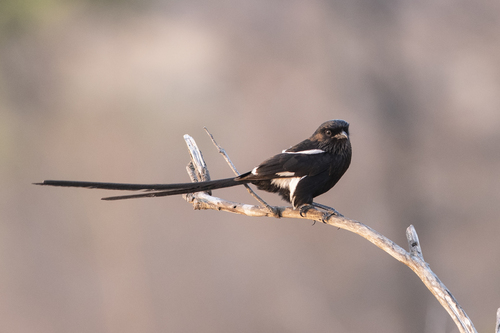
The magpie shrike, whose scientific name is Urolestes melanoleucus, is also commonly called the African long-tailed shrike. It is a bird species in the family Laniidae, and is the only species classified in the genus Urolestes. This species is native to the grasslands of eastern and southeastern Africa, and its natural habitats include dry savannah, moist savannah, and subtropical or tropical dry shrubland. It has a very wide range, is common across portions of its range, and the International Union for Conservation of Nature has assessed its conservation status as least concern. The magpie shrike can be found in Angola, Botswana, Eswatini, Kenya, Mozambique, Namibia, South Africa, Tanzania, Zambia, and Zimbabwe. It inhabits open savannah with scattered acacia trees, close-grazed turf, and bare ground, found in parts of southern and central Africa where precipitation mainly falls between November and April. It avoids arid areas, but often favors semi-arid areas. It also occurs in woodland, particularly riparian areas; in South Africa's Kruger National Park, it is found in river valleys with thorny mopane trees. The magpie shrike is a gregarious species, and typically occurs in noisy groups of around a dozen birds. These groups occupy a home range of several tens of hectares. The species may associate with other birds, including the white-headed buffalo weaver, Dinemellia dinemelli. These birds nest cooperatively during the rainy season. Their breeding territory is about three hectares, which they defend from other groups. Breeding season displays include bowing, tail flicking, wing raising, and whistling. The female sometimes calls from the nest while the male brings her food, and the pair may also perform vocal duets. This bird perches in an elevated position to scan the ground below for potential prey. Most prey is captured on the ground, though flying insects are sometimes caught mid-flight. Its diet consists of arthropods, insects, lizards, small mammals, and fruit.