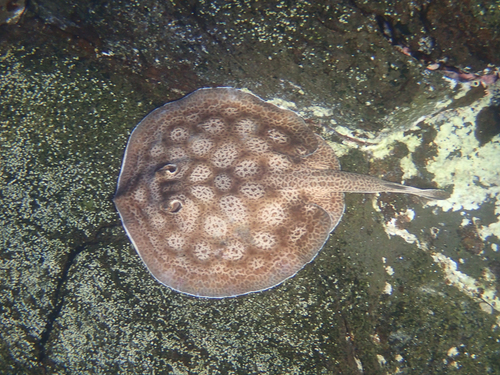
About Urobatis pardalis Del Moral-Flores, Angula, López & Bussing, 2015
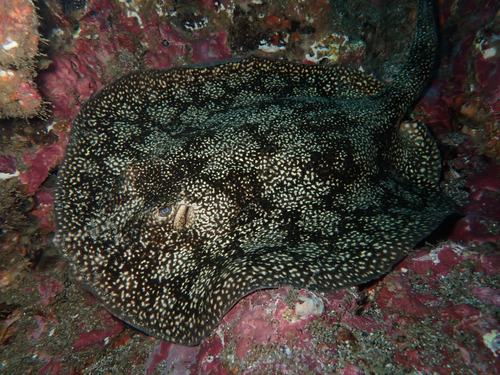
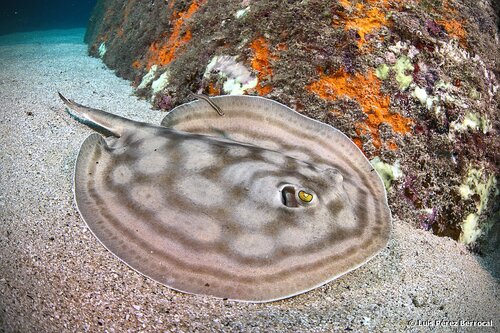
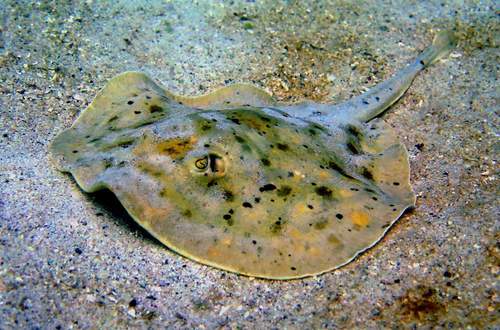
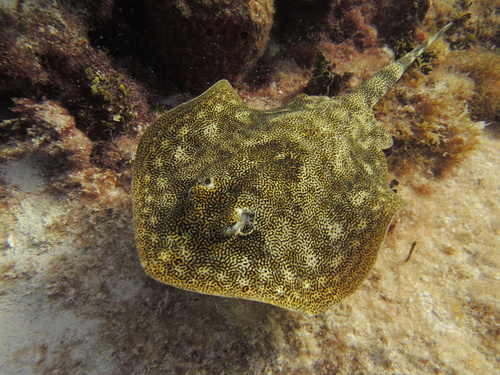
The leopard round stingray, Urobatis pardalis, has a circular body disc with a tubercle-free dorsal surface. The base color of its dorsal side is grayish or tan, with dusky patches that typically form a honeycomb pattern, along with small, size-variable dark spots. This species has a thick tail that is shorter than its body disc, and the tail is equipped with a venomous spine. Adult individuals have an average total length of around 38 cm (15.0 in) or 25 cm (9.8 in). The maximum recorded size for this species reaches 30 cm (11.8 in) in disc width, 46 cm (18.1 in) in total length, and around 800 g (1.8 lb) in weight. Newborn leopard round stingrays are approximately 12 cm (4.7 in) in total length. Individuals reach sexual maturity at around 18 cm (7.1 in) in width and 28 cm (11.0 in) in total length. This species is endemic to the Tropical Eastern Pacific, ranging from Costa Rica to Colombia. It inhabits reefs, seagrass meadows, and sandy areas on continental shelves, found from the intertidal zone down to a depth of around 20 m (65.6 ft). This is an abundant benthopelagic ray, thought to be nocturnal, and is typically found stationary on reefs during the day. It is ovoviviparous, and takes 2 to 3 years to reach sexual maturity, growing at an average rate of about 2.8 cm (1.1 in) in width and 4.8 cm (1.9 in) in total length per year. Its diet includes shrimp, small crabs, small fish, and worms, and the species has a lifespan of 8 to 12 years.