About Urera baccifera (L.) Gaudich.
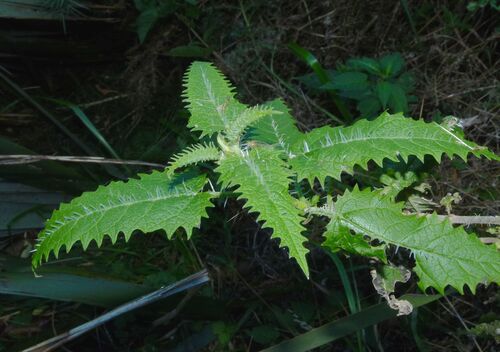
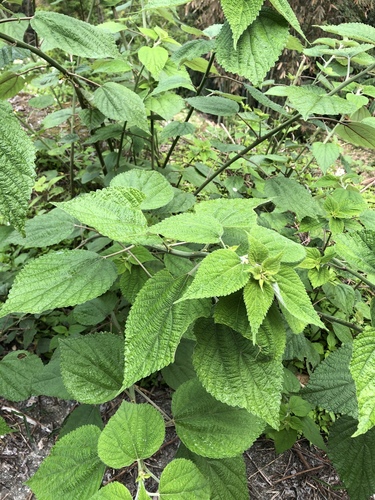
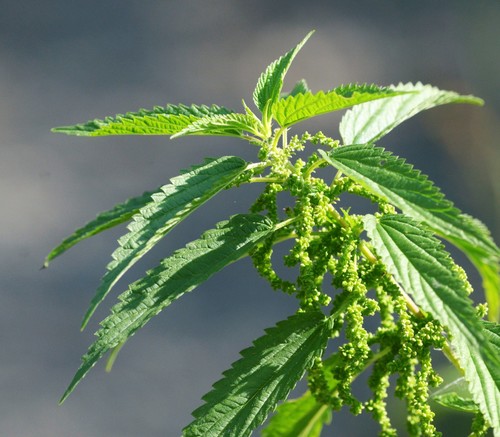
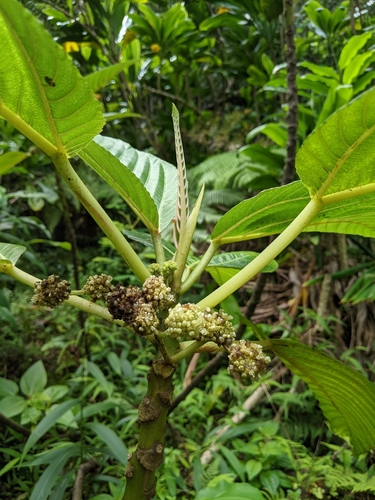
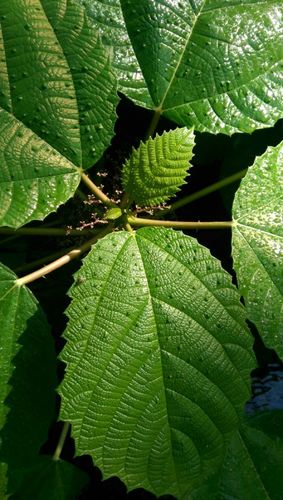
Urera baccifera is a species of flowering plant in the nettle family, which has many common names including scratchbush, ortiga brava, pringamoza, mala mujer, chichicaste, nigua, guaritoto, ishanga, manman guêpes, and urtiga bronca. It is native to the Americas, ranging from Mexico through Central America into South America, and also grows in the Caribbean. This species grows as a shrub or a small tree, and can reach up to five meters in height. Its thin, toothed leaves grow up to 25 centimeters long and 12.5 centimeters wide, with leaf blades attached to long petioles. The entire plant is covered in spines and stinging hairs. Its inflorescence is a pink or purple cluster of flowers, and the species is dioecious, meaning individual plants bear either male or female reproductive parts. Its fruit is spongy and juicy, and is green or pinkish. The plant's seeds are dispersed by fruit-eating birds and capuchin monkeys. Urera baccifera grows in moist tropical forests. It has low shade tolerance, so it dies back when the forest overstory closes. It can be found in forests that have been recently disturbed by fire. In some areas, this plant is one of the first species to produce fruit after hurricane damage, and becomes an important food source for birds. Its fruits also provide food for many ant species. Ants additionally collect pearl bodies that form on the plant's leaves, stems, and stalks. Ant species that engage in this activity belong to genera including Camponotus, Pheidole, Crematogaster, and Pseudomyrmex. When ants are present on the plant, they remove lepidopteran larvae (such as Smyrna blomfildia, Urbanus esmeraldus, and Pleuroptya silicalis) that would otherwise feed on the plant. This forms a mutualistic relationship that benefits both the plant and the ants.