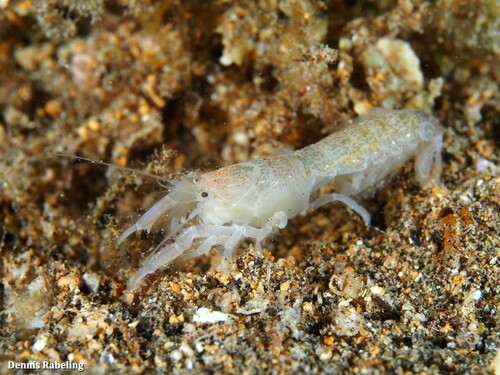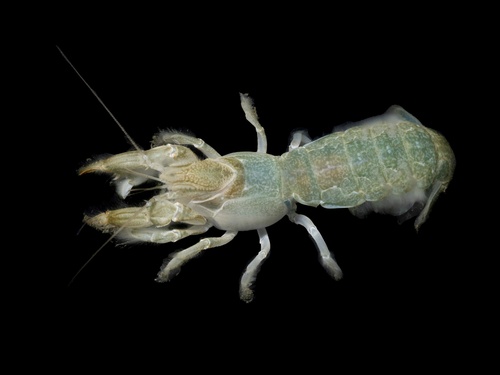
About Upogebia pugettensis (Dana, 1852)
Upogebia pugettensis, described by Dana in 1852, has an elongated, broad abdomen and a well-developed tail fin called uropods. Adult shrimp of this species reach up to 11 centimeters in length. Its hairy snout, known as a rostrum, bears three teeth. These shrimp feed on detritus, which they bring into their burrows using their pleopods. Upogebia pugettensis acts as a host for multiple parasite species: Pseudopythina rugifera, Phyllodurus abdominalis, and Orthione griffenis. This species is distributed along the Pacific coast of North America, from Valdez Narrows, Alaska, south to Morro Bay, California. South of Morro Bay, U. macginitieorum, a species very closely related and similar in appearance to U. pugettensis, occurs instead. Upogebia pugettensis inhabits Y-shaped or U-shaped burrows that measure 0.6 to 1 meter (2.0 to 3.3 feet) deep, located in intertidal mudflats, and individuals typically live in pairs. They can tolerate brackish water with salinity as low as 10% of full seawater salinity. The burrows built by U. pugettensis are known to disrupt commercial oyster beds. At the same time, these burrows are important habitats for many other species, including the arrow goby, hooded shrimp, Scleroplax granulata, pea crabs, and clams. A common predator of this benthic shrimp is the Pacific staghorn sculpin. Parasites are common on U. pugettensis, especially the red copepod, which lives on the external surface of the shrimp's body. Orthione griffenis is another common parasite of this species in Oregon's Yaquina Bay. This blood-feeding parasite can castrate female hosts, and has been recorded to reduce the body weight of infested shrimp by an average of 7.8%.