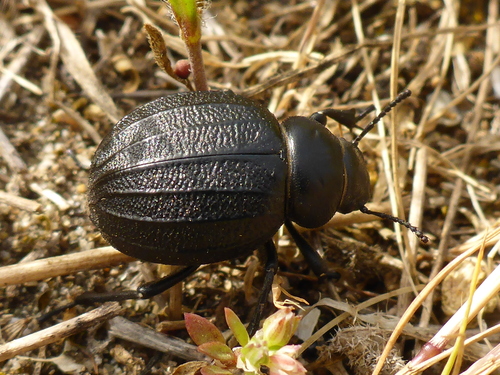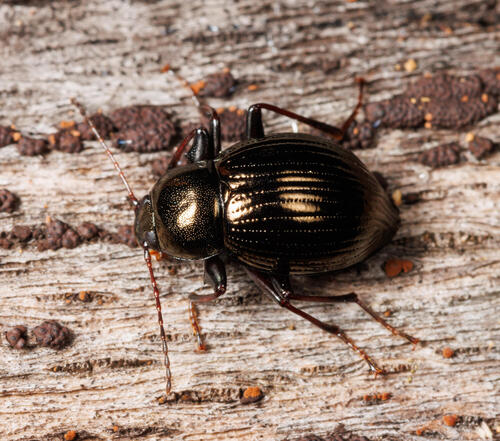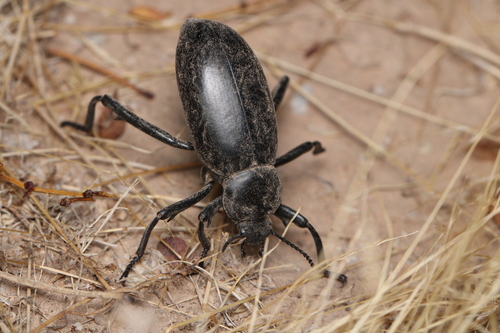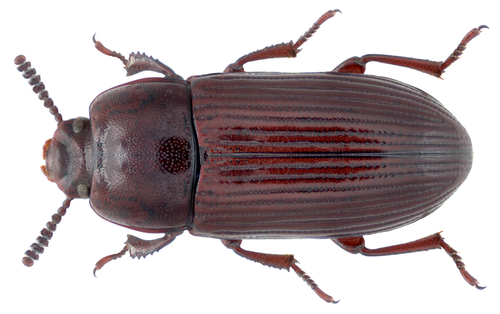
About Upis ceramboides (Linnaeus, 1758)
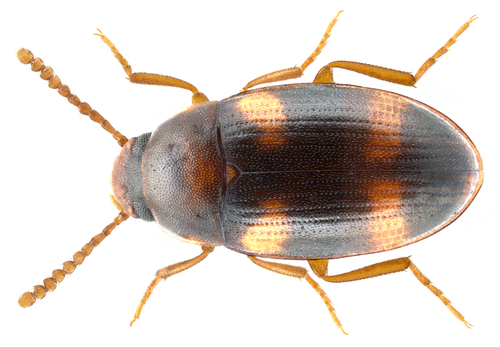
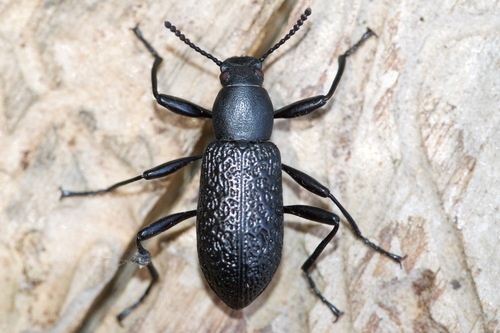
Upis ceramboides is a species of beetle, and one of many wood-dwelling insects that benefit from forest fires. It is most often found in low numbers under the bark of fire-damaged birches, though it can sometimes be found on other deciduous trees including willow and aspen. Its larvae thrive in inner bark rich with mycelia, as well as in sapwood. Larvae develop into pupae during summer months under the bark, and their total development takes two or three years. Adults reproduce the following spring after completing development. Over the years, Upis ceramboides has disappeared from southern Sweden, and is now only found locally along the Norrland coast (Västerbotten and Norrbotten), in addition to Canada and Alaska. The species' decline is most likely caused by a lack of fire-damaged forests and birch, along with modern forestry practices. Upis ceramboides is classified as vulnerable regarding its species survival. In Vindeln municipality, the species is locally called köksskörven, because it enters indoor spaces when firewood is burned in winter. The species' ability to survive at temperatures well below freezing is attributed to a non-protein antifreeze molecule called xylomannan, which consists of a polysaccharide and a fatty acid, along with the sugar alcohol threitol. Other well-known freeze-tolerant animals are the fly Polypedilum vanderplanki and the beetle Cucujus clavipes puniceus.