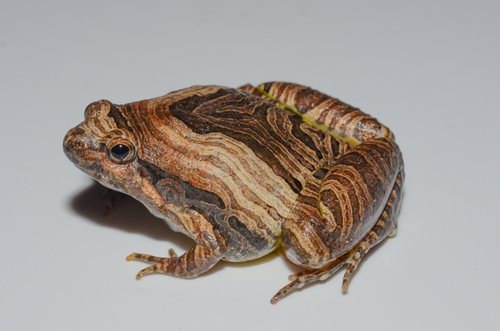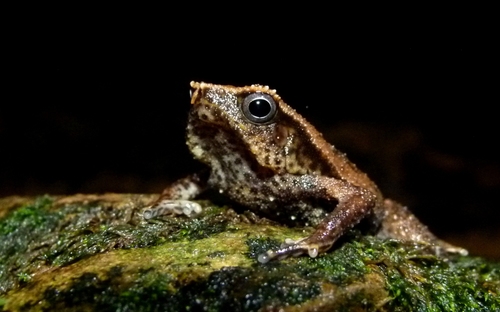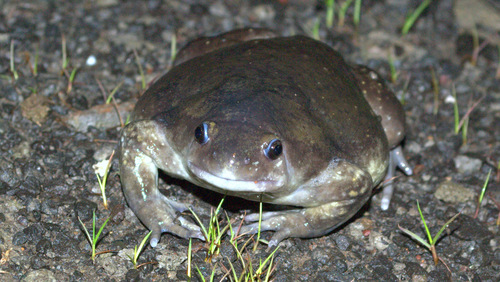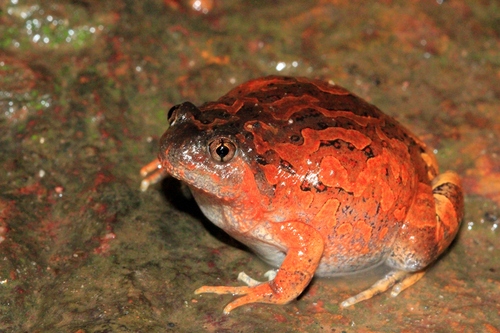
About Uperodon systoma (Schneider, 1799)
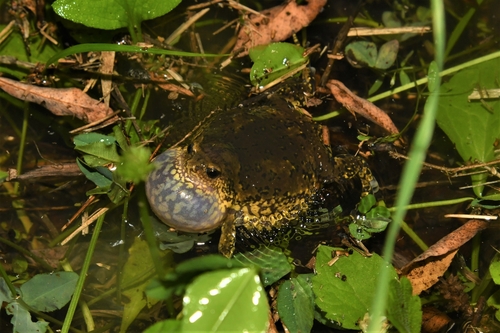
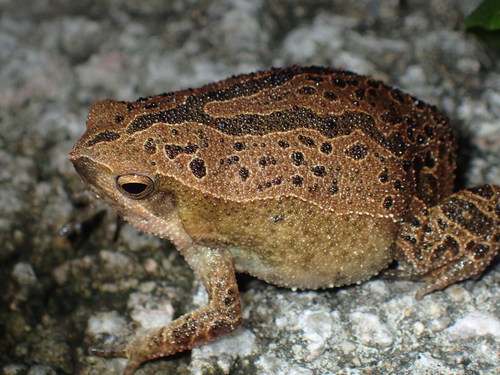
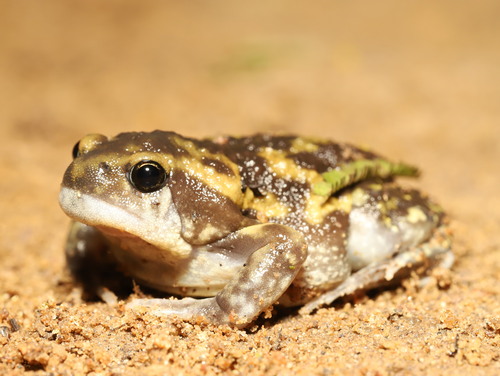
As its common names suggest, Uperodon systoma has a very stout build with a relatively small head. Individuals can grow up to 64 mm (2.5 in) in snout–vent length. This species lacks teeth, an unusual trait that is likely linked to its diet: after metamorphosis, it feeds mainly on termites and ants, with other insects making up a smaller portion of its diet. It has been suggested that teeth would not be very useful for capturing small prey that gather in clusters, so instead Uperodon systoma gathers prey using its tongue.
Uperodon systoma is a fossorial species that burrows into soil. It has been observed in a range of habitats, including dry forests, plains, gardens, and agricultural areas. Adults are only visible during the summer monsoons; they remain buried in soil for the rest of the year. Feeding activity is concentrated on rainy monsoon nights, when termites emerge to swarm. Breeding occurs during monsoon rains: males call from the banks of streams and the edges of paddy fields, and eggs are laid in water where they float.