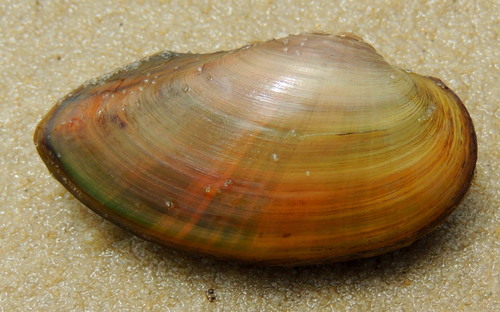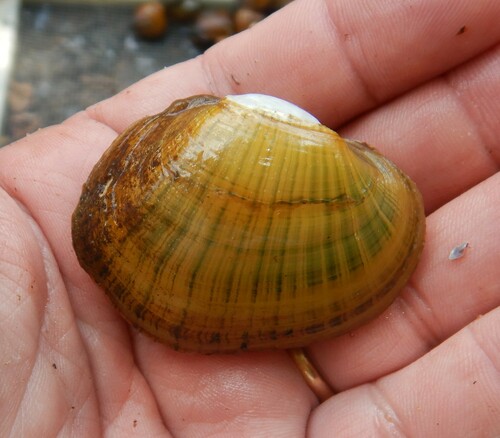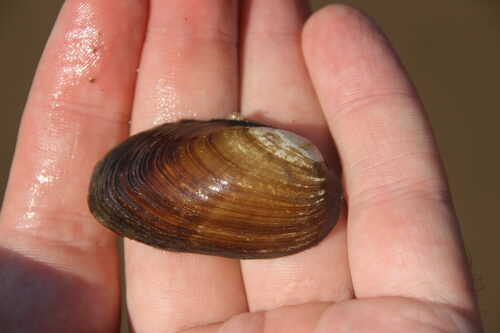
About Unio crassus Philipsson, 1788
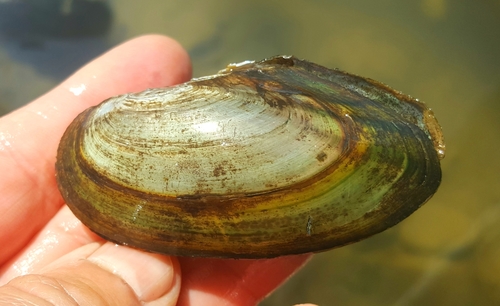
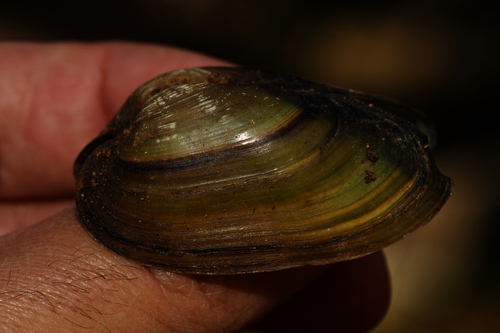
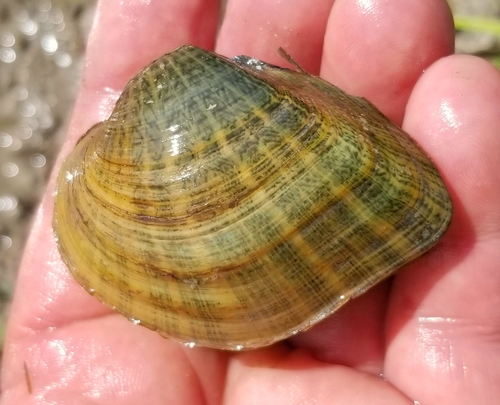
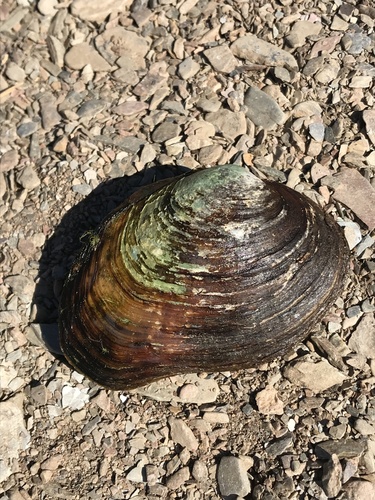
Unio crassus Philipsson, 1788 is a freshwater mussel recognized by its thick-walled shell. Adults are generally 3–7 cm long, though some individuals reach 9–11 cm. Shell size and shape can vary between populations or due to environmental factors. This species ranges across most of Europe, and is absent from Britain, Italy, and the Iberian Peninsula. Its distribution extends from France in the west to the Ural River basin in Russia and Kazakhstan in the east, and it historically occupied most major European river systems. It is considered extirpated from the Netherlands, where it was last recorded in 1967. Unio crassus inhabits large clear streams and rivers, and is more tolerant of silt than other threatened mussel species. Because it is sensitive to pollution, it is used as a bioindicator of water quality. It prefers slower-flowing waters along banks or near roots, boulders, or other submerged features. It is especially vulnerable to changes in water chemistry that impact local fish populations, such as changes in nitrate and phosphate concentrations. The lifespan of Unio crassus can reach up to 80 years, depending on water temperature, with an average lifespan of 20–30 years. It often forms colonies in large, clear, free-flowing streams and rivers. Individuals bury themselves in the stream bed, leaving only their siphons exposed to take in oxygen, food (algae and microorganisms), and expel waste. It can move several meters, and sometimes farther, to find suitable habitat conditions. Unio crassus is a tachytictic (short-term) breeder, meaning the full cycle from fertilization to juvenile development occurs within one season. In spring, males release sperm into the water, which females intake through their siphons. Females can produce multiple broods of eggs per year. Eggs develop for a few weeks before larvae are ready to be released. Like most Unionidae mussels, Unio crassus larvae have an obligate parasitic stage where they must attach to and feed on a host fish. In spring and summer, females release around 100,000 glochidia (larvae) into the water current. Females use a unique larval dispersal method: they crawl to the water’s edge, expose their excurrent aperture, and release a stream of water carrying glochidia. This spurting behavior is thought to lure host fish attracted to the water disturbance, allowing larvae to attach to the fish’s gills. Glochidia remain attached to the fish’s gills for 20–50 days while they metamorphose into juvenile mussels, after which they drop off and bury themselves in the stream bed, where they stay for 1–3 years. The most common confirmed host fish for Unio crassus are bullhead (Cottus gobio), minnow (Phoxinus phoxinus), chub (Leuciscus cephalus and Squalius cephalus), rudd (Scardinius erythrophthalmus), bleak (Alburnus alburnus), nase (Chondrostoma nasus), stickleback (Gasterosteus aculeatus), ide (Leuciscus idus) and perch (Perca fluviatilis). Larvae cannot complete metamorphosis on roach (Rutilus rutilus) and sterlet (Acipenser ruthenus). The most suitable host fish varies by locality and population; for example, in the Danube drainage, European chub (Squalius cephalus) is considered the most suitable host. Invasive species including round goby (Neogobius melanostomus) and rainbow trout (Oncorhynchus mykiss) also cannot support larval development to completion. Prehistoric people in Central Europe consumed freshwater mussels, including Unio crassus. Archaeological evidence from Neolithic shell collections in Hungary shows multiple mussel species were gathered from nearby rivers and eaten raw as an important supplementary food source, and Unio crassus appears to have been a preferred species, likely due to its relatively high meat content. Unio crassus shells used as tools have been found at archaeological sites dating to the 5th millennium BC. Between 4200 and 3800 BC, Unio crassus was one of several mussel species used to make ornamental buttons in central Europe. The wide distribution of these ornaments from Denmark to Romania indicates trade or cross-cultural exchange of related knowledge. The white color of the species’ nacre was highly desired. Freshwater mother-of-pearl from this species was used in ornaments through the Middle Ages. In 19th century Central Europe, Unio crassus was used as livestock fodder. Today, it is still used as poultry fodder in Romania, and consumed by humans in some areas. Beyond its larval parasitic stage, Unio crassus, the thick-shelled river mussel, also acts as a host for the endangered European bitterling (Rhodeus amarus). Bitterling eggs require development inside the gills of freshwater mussels, and mussels infested with bitterling eggs may have reduced growth rates.