About Ummidia algarve Decae, 2010
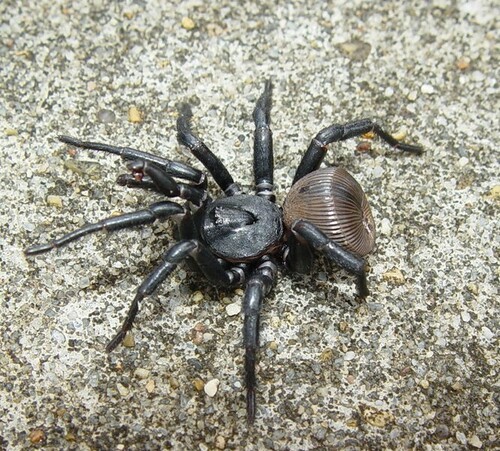
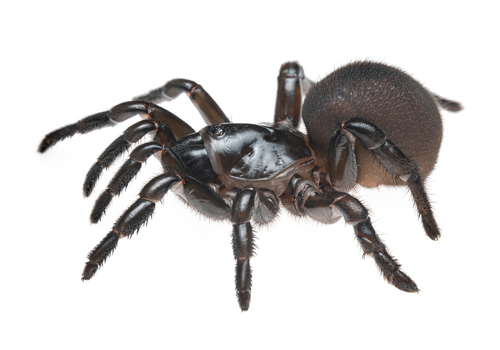
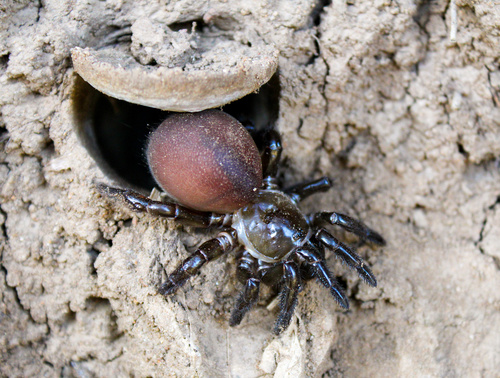
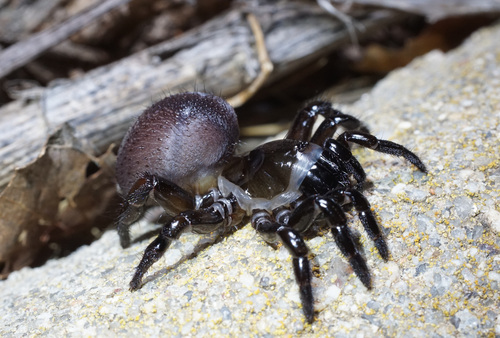
Ummidia algarve was first described by Decae in 2010. Females of this species have short, straight, mushroom-shaped spermathecae, and their abdominal cuticle has a warty texture. These warts correspond to the individual sockets that hold abdominal bristles. The female cephalothorax is smooth and shining, while the chelicerae are large, black on the dorsal side and orange-brown on the ventral side, with a serrated inner ridge on the fang. The female cephalic area is smoothly elevated. The ocelli are arranged in two compact rows near the anterior edge of the cephalothorax, clustered around a small ocular process. The anterior ocellar row is strongly procurved, and the posterior ocellar row is slightly recurved. The total body length of females is 14.5 mm. Males of Ummidia algarve have a relatively short, strong, smoothly curved embolus that bears a subapical fishhook tooth, and they have a low ocular quadrangle ratio. The male cephalothorax is black with red shades and has a granulated texture. Like females, males have a warty opisthosoma. Male chelicerae are black dorsally and orange-brown ventrally.