About Umbonium costatum (Kiener, 1838)
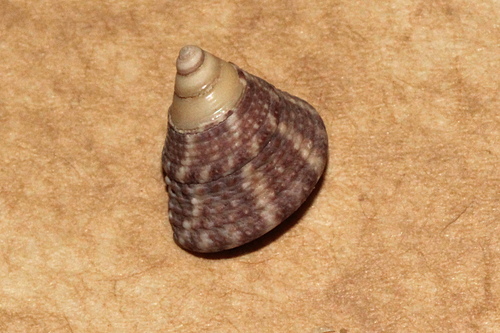
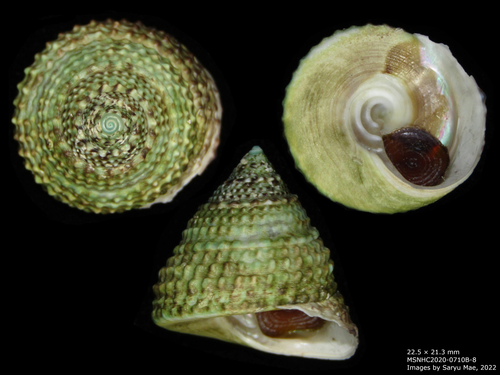
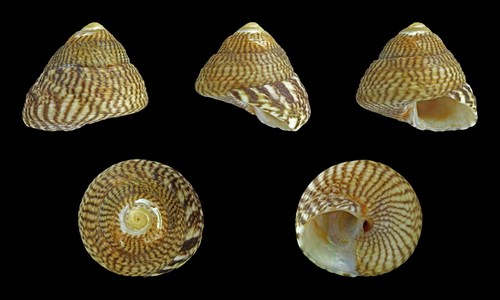
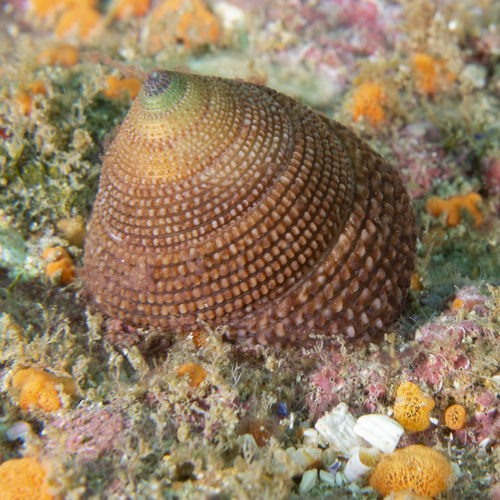
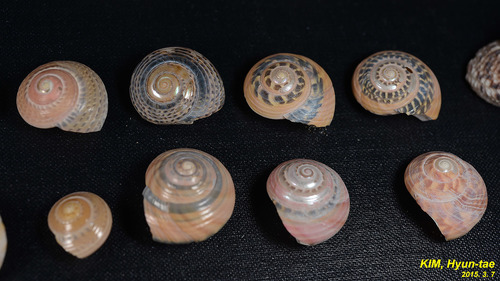
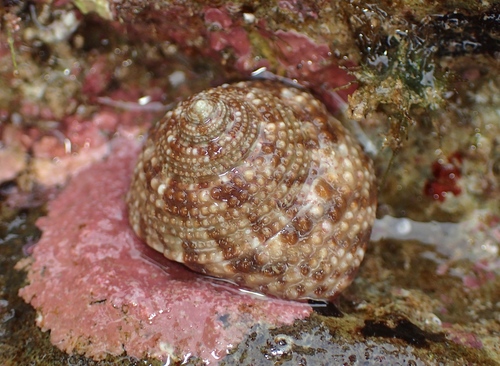
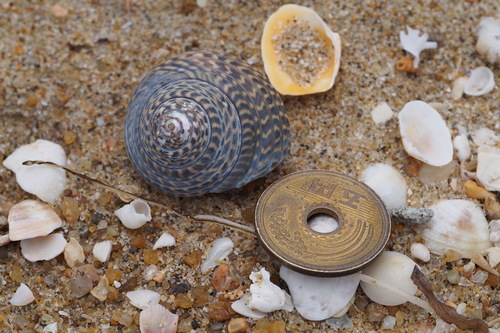
The shell of Umbonium costatum ranges in size from 12 mm to 25 mm. It is a heavy, solid shell with a depressed shape. Its spire is low-conoidal, and it has a rounded periphery. The shell’s base color is whitish or light yellow, and the entire surface is covered in closely packed tessellation made of blackish-olive or reddish-brown squarish spots. These tessellated color markings sometimes form subcontinuous oblique bands. The shell surface is shining and polished, with strong spiral grooves on the upper portion; there are generally 4 to 6 grooves on the body whorl. The sutures are narrowly impressed, with a rather wide margin below them that often has a slight tendency to be tuberculate. The base of the shell is smooth, with tessellation surrounding the irregularly convex, flesh-colored central callus. The shell has six whorls; the final whorl is slightly concave on the upper portion and convex on the lower portion. The subquadrate aperture is pearly on the inside. The circular callus is thickest in front of the aperture and behind the columellar lip. This species is found in the Sea of Japan and the East China Sea.