About Umbonia spinosa Fabricius
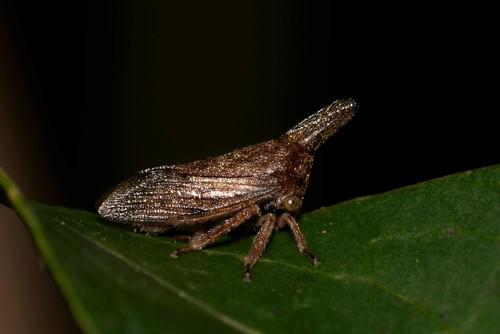
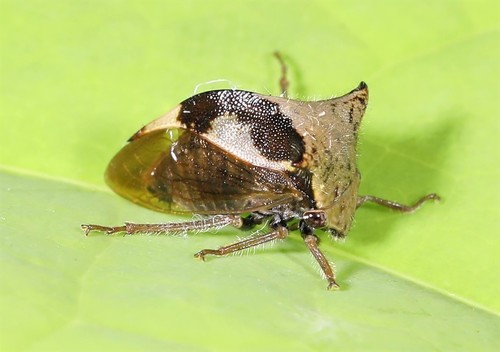
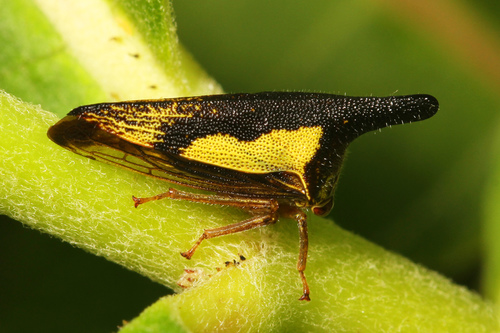
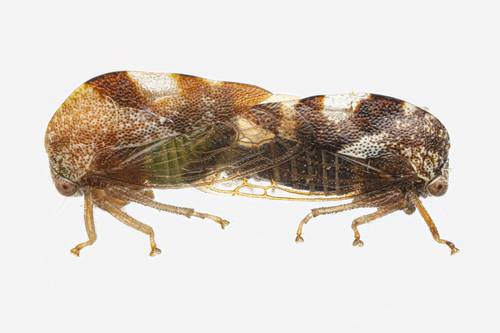
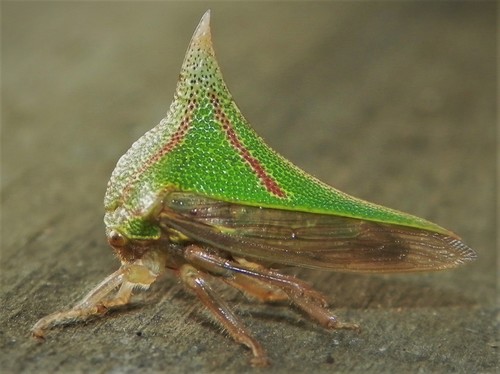
Umbonia spinosa Fabricius can be distinguished from other species in its genus by the features of its elongated pronotum, also called the dorsal horn. This dorsal horn sits between or just behind the insect's humerals, and the species has a short metopidium. The dorsal horn is straight, and the base of its plate is yellow, testaceous, or pale green, with red or yellow stripes (called vittae) along each side; in some cases, U. spinosa has black vittae instead. The dorsal horn gradually tapers to a point from its base to its tip, giving it a thorne-like appearance. Females of this species have a specialized nesting behavior for egg survival, where they dig the nest as part of the nesting cycle. Umbonia spinosa has been recorded in South America, Central America, Mexico, and southern Florida, and generally inhabits subtropical environments. In Central America, the insects congregate on the branches of Persian silk trees (Albizia julibrissin) for mating and overwintering, and they are also found on Inga edulis, the bean tree. Females lay their eggs in these trees by creating round holes in the branches. The trees also serve as a food source: U. spinosa uses its mouthparts to consume tree sap.