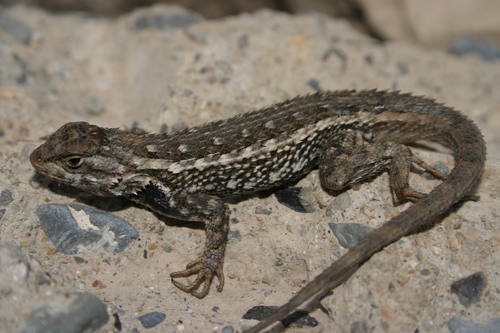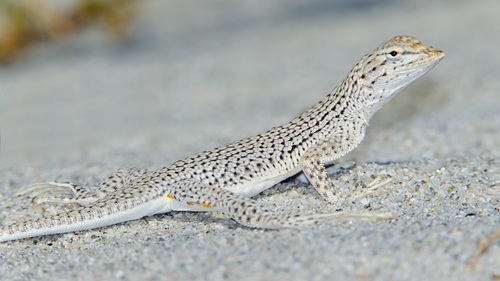
About Uma inornata Cope, 1895
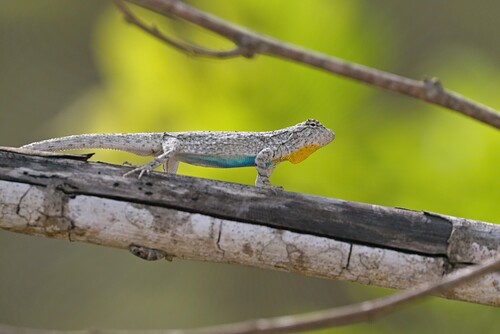
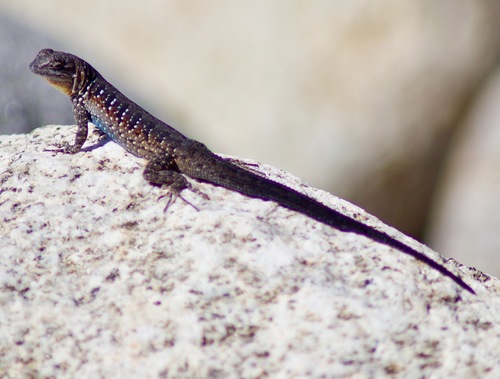
Uma inornata Cope, 1895, commonly called the Coachella Valley fringe-toed lizard, is well adapted to its desert habitat. It has a wedge-shaped nose that lets it burrow through loose, fine sand. Elongated scales cover its ears to block blowing sand, and specialized nostrils allow it to breathe while under sand without inhaling sand particles. This lizard is endemic to Coachella Valley, Riverside County, California. It is restricted to habitats with fine, windblown sand deposits in the valley's sandy plains. Since the 1970s, the estimated area of this species' suitable habitat has decreased by roughly 75% due to human activities. Only a small portion of its original habitat retains the blowsand habitat of moving fine sand that the species needs to survive. Over the past three decades, the lizard's habitat has been harmed by growing human population, urban development, off-road vehicle use, and non-native invasive plants. As a result, the Coachella Valley fringe-toed lizard was listed as federally threatened and endangered in 1980. Severe droughts have also occurred in California and the Coachella Valley; in 2002, yearly precipitation was below 10 millimeters. Low precipitation and frequent droughts reduce plant growth and limit the lizard's food sources. Limited food availability impacts the species' survival, and this may explain the observed decreases in mean reproductive productivity, mean hatchling numbers, and population densities. During breeding season, male lizards reduce time spent foraging to maximize time spent mating. Males prefer to eat easily accessible flowers instead of investing time in extensive foraging. Female lizards follow an energy-maximizing feeding strategy year-round. The Coachella Valley fringe-toed lizard is omnivorous. Its diet includes ants, beetles, flowers, leaves, spiders, and occasionally its own shed skin. Diet composition varies by season: in spring, lizards tend to eat flowers and plant-dwelling arthropods, while in summer they switch to ground-dwelling arthropods and leaves. Adult males and females only have different diets during breeding season: during this period, males eat ants and plants in the mornings, while females feed on ants and other insects throughout the day. Coachella Valley fringe-toed lizards can detect when arthropods are underground, and will dig these prey items out of sand to eat them. They are agile, and sometimes jump to catch flowers that grow too tall to reach otherwise. The lizard likely obtains all the water it needs through its food.