About Uloborus plumipes Lucas, 1846
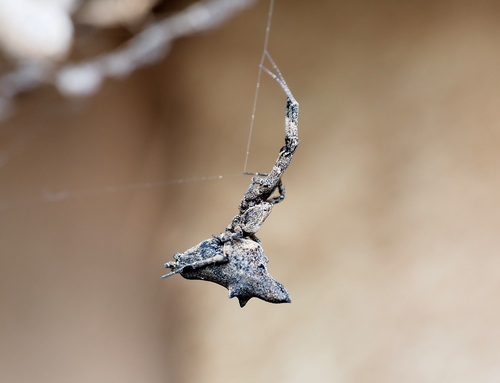
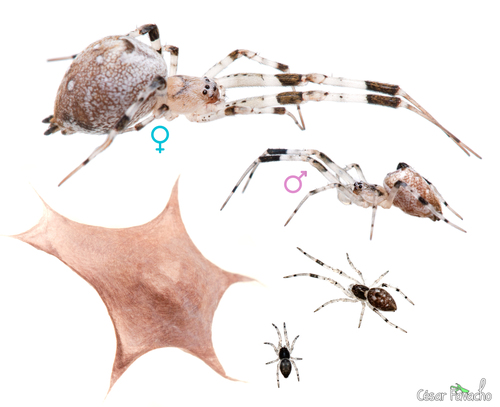
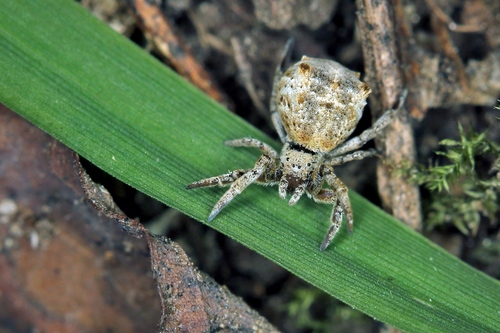
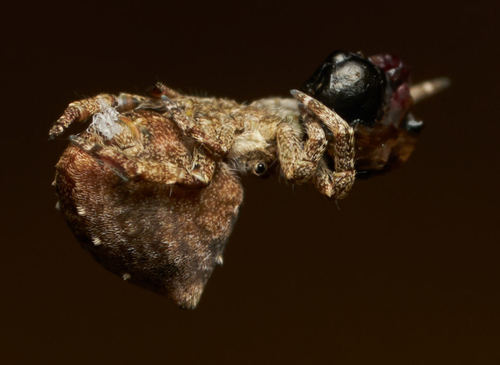
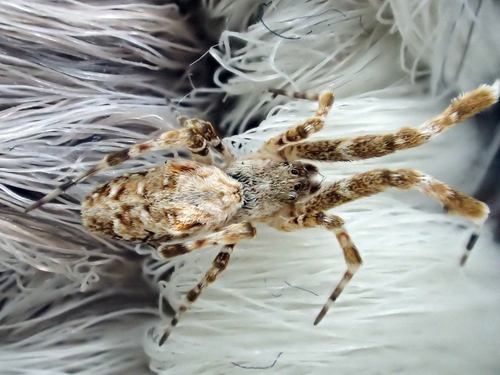
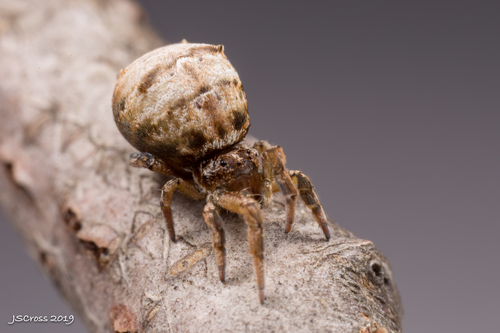
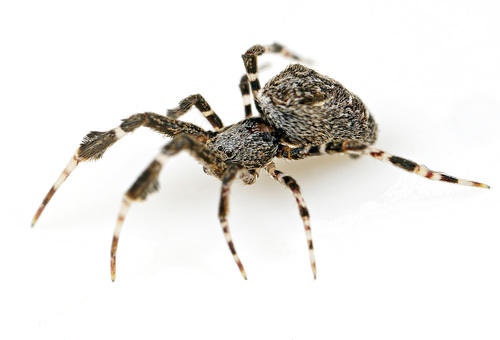
Uloborus plumipes is a small spider species. Adult females reach a length of about 6 mm (0.2 in). Its abdomen is truncated, and marked with a variety of irregular tubercles and granulations. The front pair of legs have an uneven appearance: the tibia is covered in dense hairs, while the naked terminal segments are very slender. The body is some shade of greyish-brown, mottled with white specks. This spider has a widespread distribution across the Old World, and has been introduced to Argentina and the Philippines. It originated in warmer regions of the Old World, where its typical habitat is on tree trunks, or among dead twigs and branches of trees. It has spread to the Netherlands, Belgium, and other parts of Europe, where it occurs in heated greenhouses. It was first recorded in the United Kingdom in 1992, and has since spread to many areas, particularly in the south and east of the country. It is often called the garden centre spider because it is found on houseplants growing in heated hothouses at garden centres, and can survive winter in greenhouses heated to temperatures well above freezing. It may help control whitefly as a useful function.