About Ucides cordatus (Linnaeus, 1763)
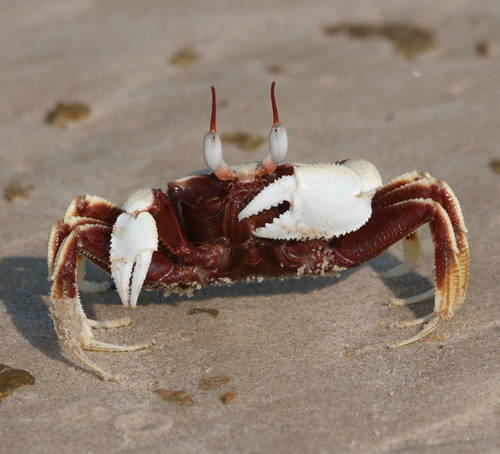
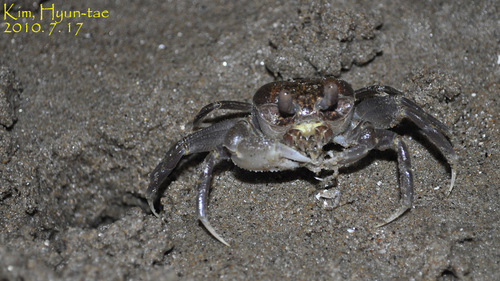
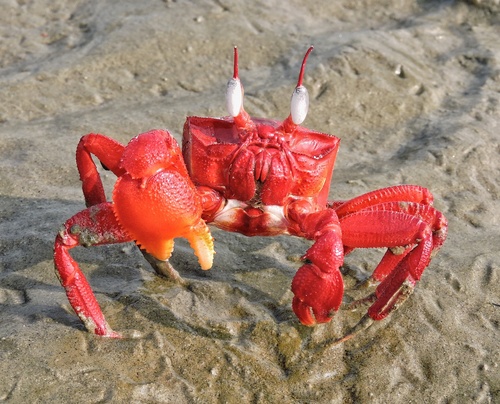
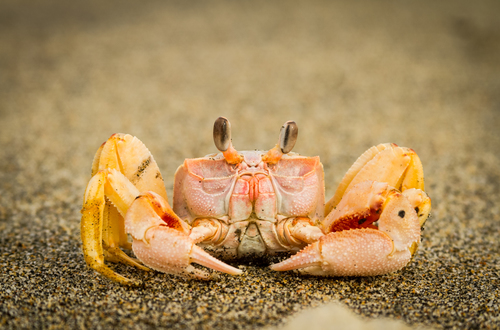
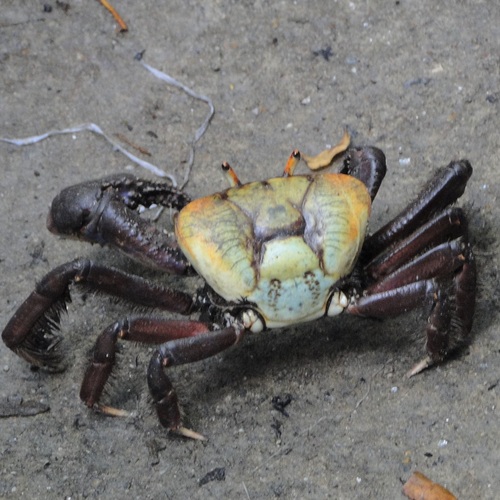
Ucides cordatus, commonly called the swamp ghost crab, and known as caranguejo-uçá in Portuguese, is one of the two species that make up the crab genus Ucides. This crab species is native to multiple coasts along the western Atlantic Ocean, with its native range extending from Florida in the north to Uruguay in the south. It is especially notable in Brazil, where it has important roles in the local economy and serves as a food resource along Brazil's Atlantic coast. Like most crabs, U. cordatus has two distinct claws with different functions: its sharp left claw is used for cutting and feeding, while the much larger right claw is used to crush objects. It has an oval carapace with a unique color pattern. U. cordatus displays sexual dimorphism, with the most obvious difference being that females are larger than males. Males have a flatter oval carapace that is light blue in the center, with beige-white covering the rest of the back. Females, by contrast, have much larger, bulbous carapaces that are a dull dark green with dark purple. The legs of both sexes are dark reddish purple. Ucides cordatus belongs to a mangrove crab genus, and is primarily found in mangrove forests. It is largely terrestrial, and builds burrows for shelter at the base of trees. These burrows can reach depths of up to 1.6 meters. The burrows of U. cordatus play an important role in carbon dioxide balance in mangrove forests: burrowing increases the surface area of sediment, which creates more area for oxidation to occur, particularly during the rainy season. While U. cordatus has been recorded eating animal remains, it is primarily herbivorous. Its diet is made up mostly of mangrove litter, such as leaves, bark, and roots. In the early months of life, this species feeds on polychaete worms and microorganisms found in sediment, and it intentionally ingests sediment collected outside of its burrows. U. cordatus prefers mangroves of the species Rhizophora mangle over Avicennia germinans; the reason for this preference remains unknown. U. cordatus has few predators. Known predators of the species include coati, monkeys, and hawks, and this limited number of predators allows U. cordatus populations to grow well. However, local people, especially those in Brazil, heavily harvest the species, and the total global population of U. cordatus has declined steadily since 1988. Unlike most animals, the sex ratio of U. cordatus populations is skewed toward males; studies report a sex ratio of 53% females to 62% males.